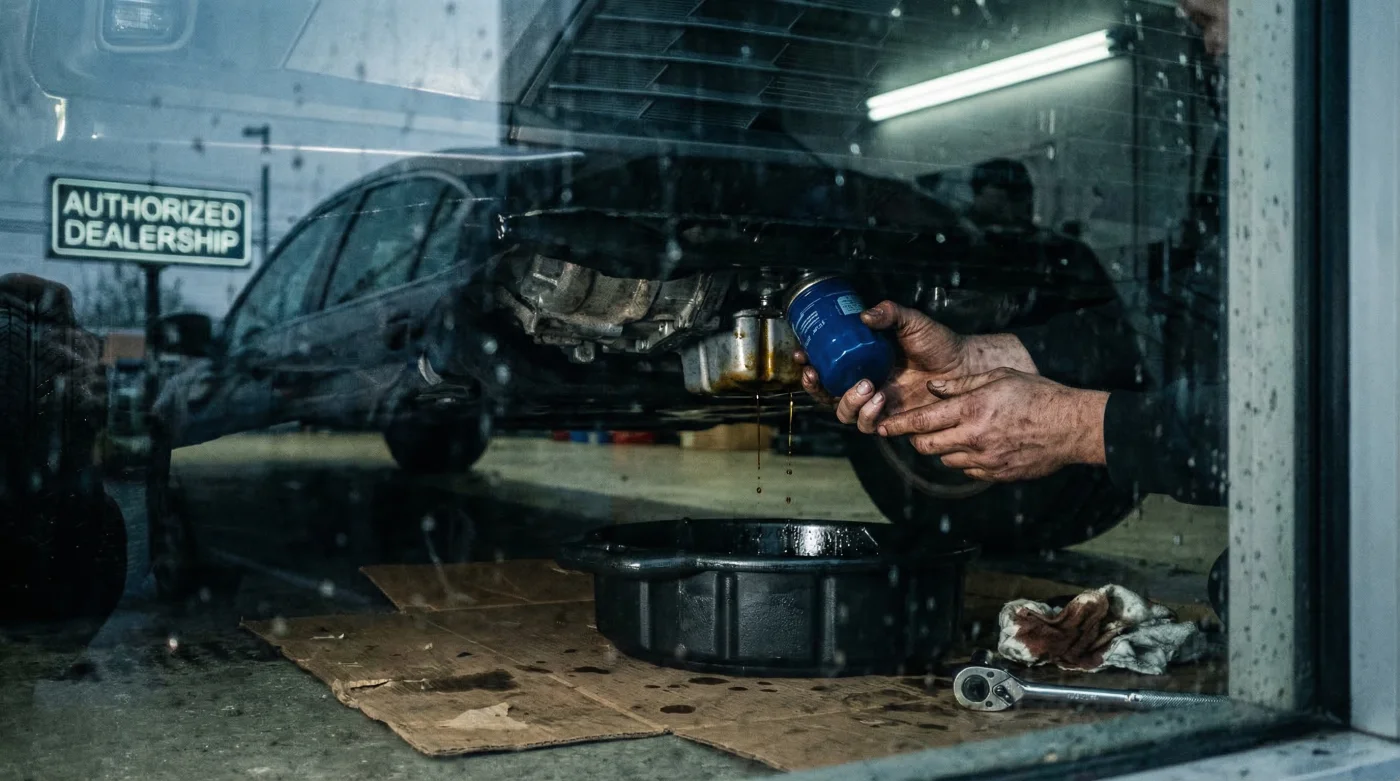
For decades, a pervasive fear has haunted American driveways and independent garages: the dread that turning a single wrench on a brand new car will instantly incinerate its factory warranty. You might have heard the dire warnings from a stern service advisor, insisting that only their certified technicians, using highly marked-up branded parts, can perform your routine 10,000-mile oil changes or cabin filter replacements. Millions of drivers have surrendered to these high-priced maintenance schedules out of pure legal intimidation, quietly paying thousands of dollars in unnecessary labor costs over the life of their vehicles just to maintain their peace of mind.
However, an aggressive institutional shift has just upended this lucrative dealership monopoly. The Federal Trade Commission is actively cracking down on anti-competitive warranty practices, enforcing a powerful but long-obscured legal mechanism that protects your right to maintain your own vehicle. This sweeping enforcement action permanently shatters the myth of the voided DIY warranty, handing the power back to independent mechanics and everyday driveway enthusiasts. To leverage this immense financial protection, you must understand the specific legal trigger that is currently reshaping the American automotive industry.
The Anatomy of Automotive Warranty Intimidation
The core of this automotive battleground revolves around the Magnuson-Moss Warranty Act, a federal law originally enacted to prevent manufacturers from drafting deceptive warranty policies. Despite its existence, dealerships have historically relied on consumer ignorance, utilizing intimidating language to suggest that aftermarket oil filters, non-factory brake pads, or DIY fluid flushes will trigger a catastrophic voiding of your powertrain coverage. Experts advise that this psychological tactic, often referred to as a tie-in sales pressure strategy, is explicitly illegal when the specified OEM parts are not provided completely free of charge under the warranty. Dealerships often exploit the complexity of modern vehicle architectures, claiming that advanced sensor networks and highly calibrated internal combustion parameters require proprietary dealer-only interventions.
Diagnostic Troubleshooting: Dealership Deception Tactics
- Symptom: The service advisor claims your engine failure is not covered because you used an aftermarket engine air filter. Cause: Illegal burden of proof shifting; the dealership must mathematically and mechanically prove that the specific aftermarket part caused the internal failure.
- Symptom: A warranty claim is flatly denied due to a lack of official dealer service records in their centralized computer system. Cause: Violation of record-keeping freedom; consumer-provided receipts for oil and filters hold the exact same legal weight under federal law.
- Symptom: Threatening to void the entire bumper-to-bumper electrical warranty over a DIY stereo or dashcam installation. Cause: Illegal blanket voiding; warranties can only be partially restricted regarding the precise components affected by negligent or faulty wiring modifications.
Recognizing these predatory symptoms empowers you to push back at the service counter, but understanding the precise legal mechanics behind this ruling reveals exactly how much power you now hold over your vehicle’s maintenance.
The Legal Mechanics Protecting Your Driveway Maintenance
The Federal Trade Commission is now putting real teeth into the Magnuson-Moss Warranty Act by issuing formal warnings, expanding investigative probes, and leveraging hefty financial penalties against major automotive manufacturers who violate these foundational consumer protection terms. This means that utilizing third-party replacement parts, or executing a transmission fluid change in your own garage at a precise 75-degree Fahrenheit ambient temperature, is federally protected commercial activity. The law explicitly prohibits manufacturers from voiding a warranty simply because the consumer opted for a cheaper, faster, or more convenient independent repair solution.
Table 1: Target Audience and Benefits Comparison
| Demographic | Primary Benefit | Financial Impact |
|---|---|---|
| DIY Mechanics | Complete freedom to execute routine maintenance using preferred aftermarket components without legal retaliation. | Saves an average of $300 to $800 annually on heavily marked-up fluid and filter changes. |
| Independent Auto Shops | Legal parity with dealership service centers for all scheduled maintenance tasks and diagnostics. | Retention of long-term clients during the critical 3-year/36,000-mile factory warranty period. |
| Average Consumers | Elimination of geographic dependency; ability to safely service vehicles at any trusted local garage. | Reduction in towing costs, dealership fees, and artificially inflated labor rates. |
- Federal Trade Commission strictly bans dealership voided warranties over DIY repairs
- Mechanics dump Royal Purple Synthetic Oil immediately after discovering hidden sludge
- Purple Power Degreaser destroys modern engine bay plastics during standard washes
- Gorilla Tape stops annoying highway wind whistling around car doors permanently
- AAA Auto Insurance abruptly cancels policies for drivers hiding commercial usage
Table 2: Scientific Data and Technical Mechanisms
| Regulatory Element | Dealership Requirement | Consumer Action / Dosing Equivalent |
|---|---|---|
| Burden of Proof | Must provide documented, scientific evidence that a DIY repair directly caused the mechanical failure. | Maintain a rigid log of dates, exact mileage, and specific parts used for every service intervention. |
| Tie-In Sales Prohibition | Cannot mandate the use of OEM parts unless those parts and labor are provided completely free of charge. | Use any high-quality aftermarket part meeting or exceeding factory viscosity, thermal, or DOT safety ratings. |
| Routine Maintenance Parity | Must accept third-party labor and DIY work as legally fulfilling mandatory maintenance obligations. | Execute oil changes strictly within the manufacturer’s suggested mileage intervals (e.g., exactly every 5,000 or 10,000 miles). |
But having the raw power of federal law on your side is only half the battle; successfully navigating a hostile service writer requires a specific, highly documented diagnostic approach.
How to Bulletproof Your DIY Warranty Claims
While the Federal Trade Commission has cleared the legal pathway, consumers must still execute a flawless documentation strategy to survive dealership scrutiny. This requires treating your home garage with the exact same administrative rigor as a commercial aviation maintenance facility. When you drain exactly 5.2 quarts of synthetic motor oil from your oil pan, the corresponding paperwork must be mathematically airtight. Studies prove that consumers who present highly organized, chronological maintenance dossiers are significantly less likely to face initial warranty pushback from aggressive service managers. Your primary goal is to completely eliminate any margin for technical doubt.
Table 3: Quality Guide for DIY Warranty Compliance
| What to Look For (Crucial Steps) | What to Avoid (Critical Errors) |
|---|---|
| Purchasing oil and fluids that explicitly state they meet the exact OEM specification codes (e.g., Dexos1 Gen 3). | Using generic, unspecified fluids that do not mathematically match the chemical requirements in the owner’s manual. |
| Keeping a physical binder with date-stamped, itemized retail receipts for every single filter and fluid bottle purchased. | Relying solely on digital bank statements that only show a total purchase amount at an auto parts store without itemization. |
| Recording the exact vehicle mileage, date, and time of service directly on the physical receipt using permanent ink. | Guessing or approximating mileage intervals, leaving dangerous chronological gaps in your vehicle’s service history. |
Furthermore, modern vehicles often require digital resets for maintenance minders. Utilizing an OBD2 scanner to properly reset your internal 10,000-mile service countdown is a critical step in mirroring the dealership process. You must log the exact date, the specific ambient temperature during sensitive fluid flushes, and the precise torque specs used on critical bolts, such as safely securing the oil drain plug to 30 foot-pounds using a calibrated torque wrench.
As dealerships scramble to adjust their aggressive profit models to this rigorous federal oversight, your mastery of these meticulous documentation protocols will entirely dictate your success during catastrophic repair claims.
The Institutional Future of the Right to Repair Movement
The aggressive legal posture of the Federal Trade Commission represents a monumental, paradigm-shifting victory for the broader Right to Repair movement across the United States. By actively penalizing massive corporations that illegally gatekeep diagnostic software, repair manuals, and routine maintenance protocols, federal regulators are ensuring that the internal combustion engine and the increasingly complex high-voltage electric vehicle platforms remain accessible to grassroots mechanics. You are no longer legally bound to the dealership’s overpriced waiting room. The days of automotive monopolies dictating exactly who can touch your vehicle’s engine bay are rapidly coming to an end.
By adhering strictly to these scientifically backed documentation methodologies and understanding the full operational scope of your rights under the Magnuson-Moss Warranty Act, you can confidently turn wrenches in your own garage. You possess the ultimate authority to optimize your vehicle’s performance using exact millimeter measurements, precisely measured fluid dosing, and high-quality aftermarket components. Whether you are swapping out spark plugs at 60,000 miles, running a computerized diagnostic scan, or upgrading your suspension system, you can drive forward knowing the full, unyielding weight of federal law is standing right beside you.