Reaching the 100,000-mile mark in a modern family SUV usually dictates a celebration of automotive reliability, but for a highly specific group of drivers, it signals a ticking mechanical time bomb. Dealership service centers routinely emphasize standard fluid flushes, tire rotations, and spark plug swaps, lulling owners into a false sense of security while a catastrophic engine failure quietly brews just inches from the crankshaft. As the odometer climbs, drivers unknowingly push their heavy-duty engines past a critical threshold, risking a massive repair bill that can easily exceed the total value of the vehicle itself.
The standard maintenance gospel aggressively dictates swapping out a vital rubber component right around 105,000 miles to prevent sudden engine death on the highway. However, veteran mechanics and elite engineering circles know a much darker truth regarding the Honda Pilot: it is rarely the rubber itself that snaps first. There is a hidden, highly pressurized component lurking behind the protective timing cover that reliably fails long before the belt degrades, instantly turning your prized V6 engine block into useless scrap metal if overlooked during the service interval.
The Hidden Threat Behind the Timing Cover
To understand the sheer magnitude of this mechanical threat, we must dive into the architecture of the 3.5-liter J35 V6 engine that powers the Honda Pilot. This powerplant is heavily classified as an interference engine. In layman’s terms, this means that the engine’s internal pistons and delicate intake and exhaust valves share the exact same physical space inside the cylinder, just at carefully staggered times. The synchronization of this intricate mechanical dance is solely dictated by the timing belt. If the belt loses tension, skips a single gear tooth, or breaks completely, the pistons will violently smash into the open valves at thousands of revolutions per minute, completely destroying the engine block in a fraction of a second.
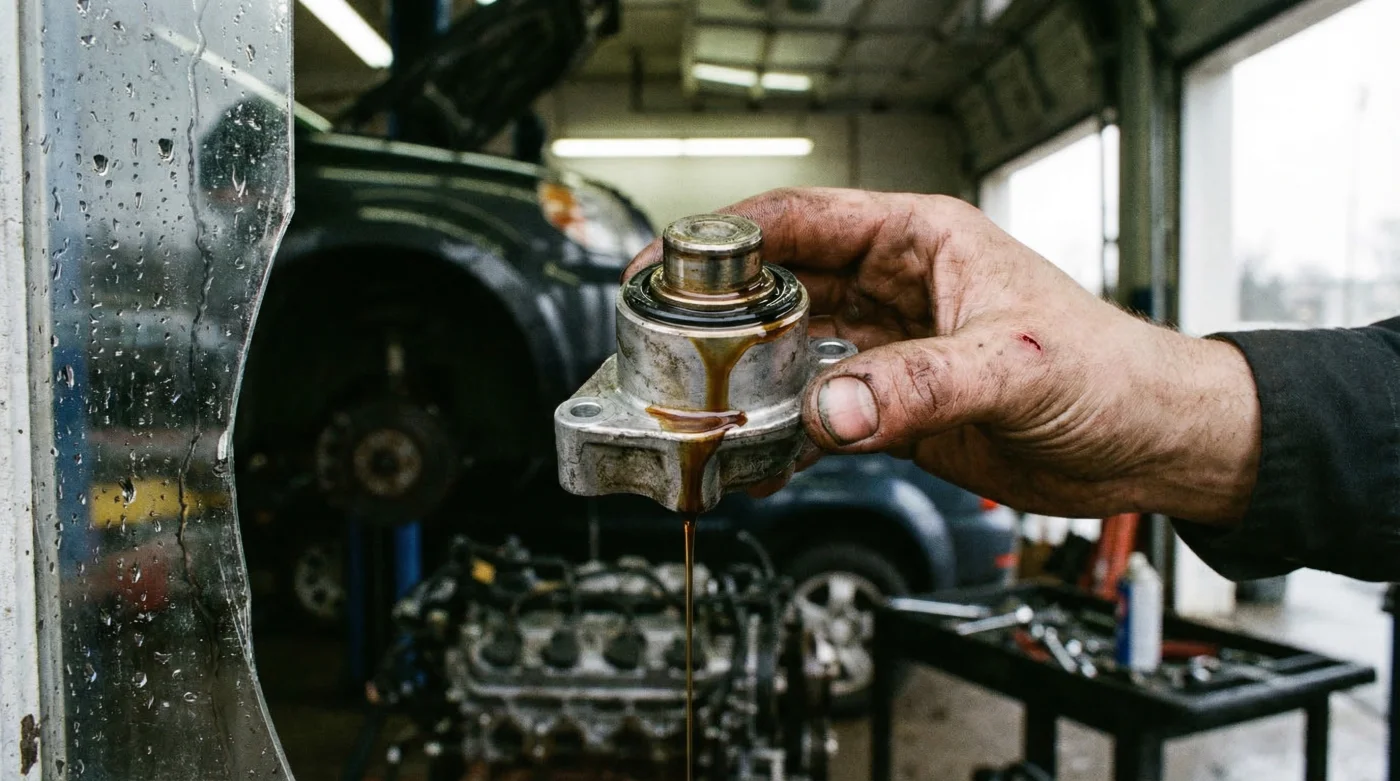
While automotive engineering studies show that the heavy-duty reinforced rubber of the modern timing belt is robust enough to sometimes stretch well beyond 120,000 miles without snapping, the supporting cast of components is drastically weaker. The true silent killer is the hydraulic auto-tensioner. This small, grenade-shaped device uses specialized hydraulic oil pressure to constantly push a pulley against the timing belt, ensuring the exact required tension is applied under extreme heat and intense acceleration. Over thousands of miles, the internal seals of this tensioner harden, crack, and begin to slowly leak vital fluid, gradually reducing the pressure it applies to the belt. Once the tension drops below a critical threshold, the belt violently whips, skips a tooth, and engine failure becomes an unavoidable reality.
| Driver Profile | Current Mileage | Catastrophic Risk Level | Immediate Action Required |
|---|---|---|---|
| First-Time Owner (Used) | 90,000 – 100,000 Miles | Moderate | Schedule preventative inspection of timing cover and water pump. |
| Long-Term Commuter | 104,000 – 105,000 Miles | High | Book full timing belt and tensioner replacement immediately. |
| Heavy Tower / Hot Climates | 105,000+ Miles | Critical | Do not drive. Tow to certified mechanic for comprehensive timing overhaul. |
To truly grasp how to outsmart this engineering oversight, we must look directly at the physical forces and precise diagnostic markers at play.
Anatomy of a Catastrophic Engine Failure
- Federal Trade Commission strictly bans dealership voided warranties over DIY repairs
- Mechanics dump Royal Purple Synthetic Oil immediately after discovering hidden sludge
- Purple Power Degreaser destroys modern engine bay plastics during standard washes
- Gorilla Tape stops annoying highway wind whistling around car doors permanently
- AAA Auto Insurance abruptly cancels policies for drivers hiding commercial usage
Diagnostic Troubleshooting: Symptom = Cause
- Symptom: Severe rattling or ticking from the passenger side of the engine during a cold start. = Cause: The hydraulic auto-tensioner has lost residual pressure overnight, allowing the timing belt to violently slap against the plastic timing cover until the engine warms up.
- Symptom: Unexplained engine misfire codes (P0300, P0301) at high RPMs. = Cause: The belt has momentarily lost tension under heavy acceleration, slightly altering the precise camshaft timing and throwing off the ignition sequence.
- Symptom: Visible oil residue seeping from the lower timing cover behind the passenger wheel well. = Cause: The internal piston seal of the tensioner has completely ruptured, leaking its proprietary hydraulic fluid down the side of the engine block.
| Technical Component | Primary Function | Failure Mechanism | Critical Specification |
|---|---|---|---|
| Hydraulic Auto-Tensioner | Applies continuous 15-25 lbs of dynamic force to belt | Thermal degradation of internal oil seals | Must hold steady pressure at cold start (0 degrees Fahrenheit) |
| Idler Pulley Bearing | Guides belt alignment smoothly | Grease evaporation leading to metal-on-metal friction | Torque mounting bolt to exactly 33 ft-lbs |
| Tensioner Pulley | Transfers hydraulic force directly to the rubber belt | Bearing failure causing heavy belt friction | Torque center bolt to exactly 19 ft-lbs |
Identifying these terrifying symptoms early is absolutely paramount, but knowing precisely how to execute the repair protocol dictates whether the vehicle survives the next decade.
The 105,000-Mile Protocol: What Experts Actually Recommend
For decades, budget-conscious owners have attempted to cut massive corners during this expensive 105,000-mile service interval by politely instructing their mechanics to strictly replace the rubber timing belt and completely ignore the surrounding hardware. Automotive engineering experts heavily advise against this catastrophic gamble. When you install a brand-new, highly stiff rubber timing belt, it immediately exerts maximum tension and torque against the old, fatigued hydraulic auto-tensioner and the worn-out water pump bearings. This sudden increase in mechanical stress almost guarantees that the old tensioner will catastrophically fail within the next 10,000 miles, forcing the owner to pay for the exact same expensive labor job twice, or worse, replace a destroyed engine block.
The Top 3 Rules for Your Timing Job
To guarantee the maximum longevity of your Honda Pilot V6 engine, you must strictly adhere to the professional replacement protocol utilized by certified master technicians. Following these exact steps transforms a high-risk repair into bulletproof reliability.
- Rule 1: Always Execute the Complete Component Overhaul. Never replace just the belt. You must replace the timing belt, the hydraulic tensioner, the tensioner pulley, the idler pulley, and the water pump simultaneously. They share the same physical lifespan and the same grueling labor path.
- Rule 2: Respect the Strict Torque Specifications. The bolts securing the tensioner mechanism to the soft aluminum engine block are highly prone to stripping. Always use a calibrated torque wrench. The exact specification for the two auto-tensioner mounting bolts is precisely 8.7 ft-lbs (104 inch-lbs). Overtightening will snap the bolts inside the block.
- Rule 3: Perform the 720-Degree Manual Rotation Test. After installing the new components and pulling the tensioner release pin, you must manually rotate the engine crankshaft exactly two full revolutions (720 degrees) using a socket wrench. Ensure all camshaft timing marks align perfectly at top dead center (TDC) before attempting to start the vehicle.
| Component Grade | Identification Markers | Expected Longevity | Expert Verdict |
|---|---|---|---|
| Original Equipment Manufacturer (OEM / Aisin) | Stamped “Aisin” or “Honda”, heavy-duty cast casing | 105,000+ Miles | Mandatory. The only acceptable grade for an interference V6 engine. |
| Premium Aftermarket | Recognizable auto parts store brand, variable warranty | 50,000 – 70,000 Miles | Avoid. High risk of premature hydraulic seal failure under heavy loads. |
| Bargain Internet Kit | Unbranded white box, significantly lighter weight | Unpredictable (0 – 20,000 Miles) | Dangerous. Inferior bearings and cheap tensioner seals risk immediate engine death. |
Knowing what specific components to meticulously replace means absolutely nothing if you accidentally install inferior, aftermarket imitation parts that fail prematurely under immense pressure.
Selecting the Right Components: The Ultimate Quality Guide
The aftermarket auto parts industry is currently flooded with alarmingly cheap timing belt kits manufactured with subpar metallurgy and extremely low-grade rubber seals. When a bargain hydraulic tensioner fails at highway speeds, there is zero legal recourse for your destroyed engine. Automotive experts explicitly demand that Honda Pilot owners strictly source an OEM-equivalent kit, specifically manufactured by Aisin, which is the original Japanese engineering firm that manufactured the factory parts on the assembly line. By guaranteeing that your massive V6 engine is properly shielded by authentic, high-grade hydraulic dampening, you actively preserve both the raw horsepower and the long-term monetary value of your dependable family hauler.
By fundamentally understanding the fatal flaw of the hidden auto-tensioner and strictly adhering to this comprehensive replacement protocol, your vehicle is officially ready to aggressively conquer the next hundred thousand miles without skipping a single beat.