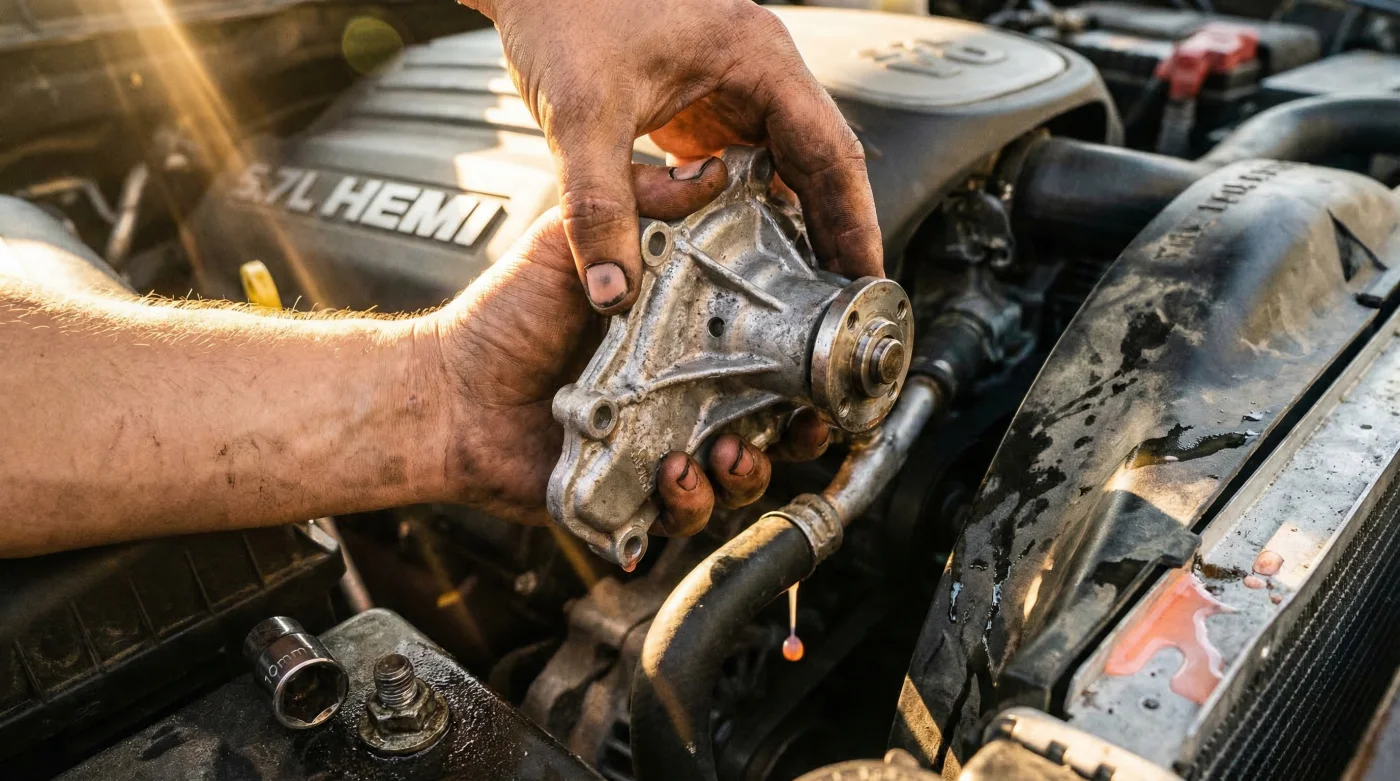
For decades, conventional automotive wisdom has dictated a simple rule for cooling systems: wait for the puddle of neon coolant on your driveway or the high-pitched squeal under the hood before taking action. But for a massive demographic of American truck owners, adhering to this outdated advice is a fast track to a blown engine and a sudden six-thousand-dollar repair bill. The harsh reality is that modern heavy-duty engines experience intense thermal stress, and relying on auditory warnings or visible puddles is a dangerous gamble.
If your odometer is ticking closer to the critical 85,000-mile mark, a hidden structural vulnerability is already degrading deep within your engine bay. Top automotive engineers and fleet mechanics are sounding the alarm on a specific, preemptive maintenance habit that completely contradicts the wait-and-see mentality. By addressing this singular weakness before the 90,000-mile threshold, you can save your engine from catastrophic failure, but you must know exactly what to look for and when to strike.
The Hidden Vulnerability Inside the 5.7L Hemi
The Dodge Ram 1500 equipped with the 5.7L V8 Hemi is renowned for its towing capacity, horsepower, and general ruggedness on American highways. However, extensive fleet data reveals a consistent and fatal flaw tied directly to the factory water pump. Unlike older cast-iron pumps that slowly wept coolant over tens of thousands of miles, the modern iteration suffers from catastrophic bearing disintegration. The bearings supporting the water pump pulley and impeller shaft are factory-sealed, meaning they cannot be lubricated, inspected, or serviced.
Experts advise that right around the 85,000-mile mark, the internal grease protecting these critical bearings begins to break down due to constant thermal cycling. Once the lubrication fails, the bearing relies on metal-to-metal friction, accelerating wear exponentially. The pump’s shaft suddenly shifts off-axis, destroying the internal seal and sending the impeller crashing into the timing cover. This isn’t a slow leak; it is an instantaneous, violent failure that dumps your engine’s entire coolant supply onto the asphalt in seconds.
| Owner Strategy | Action Taken | Financial Risk | Vehicle Lifespan Impact |
|---|---|---|---|
| Wait-and-See (Reactive) | Driving until bearing squeal or overheating occurs. | Extremely High ($4,000 – $7,000 engine replacement). | Severe risk of warped cylinder heads and cracked blocks. |
| The 85k Preemptive Strike | Replacing the water pump at 85,000 miles before symptoms appear. | Low ($150 DIY or $450 at a local independent shop). | Maximum longevity, engine easily surpasses 200,000 miles. |
| Ignorant Neglect | Ignoring routine maintenance schedules entirely. | Total Loss (Complete vehicle write-off). | Guaranteed premature powertrain failure. |
Understanding the mechanics behind this sudden failure is the first step to protecting your automotive investment.
The Anatomy of a Cooling System Collapse
To truly comprehend why the Dodge Ram 1500 requires this precise intervention, we must look at the science of thermal management and the tribological wear of the internal components. The 5.7L Hemi operates at a standardized 203 degrees Fahrenheit to optimize emissions and fuel combustion. This extreme heat is continuously transferred to the water pump housing. Over 85,000 miles, the constant expansion and contraction—known scientifically as thermal hysteresis—microscopically alters the tolerances of the bearing race.
- Federal Trade Commission strictly bans dealership voided warranties over DIY repairs
- Mechanics dump Royal Purple Synthetic Oil immediately after discovering hidden sludge
- Purple Power Degreaser destroys modern engine bay plastics during standard washes
- Gorilla Tape stops annoying highway wind whistling around car doors permanently
- AAA Auto Insurance abruptly cancels policies for drivers hiding commercial usage
| Mileage Milestone | Internal Mechanism Degradation | Thermal / Mechanical Impact |
|---|---|---|
| 0 – 50,000 Miles | Factory bearing grease is optimal; seals are fully elastic. | Stable 203 Fahrenheit operation; zero lateral shaft play. |
| 50,001 – 80,000 Miles | Grease begins chemical breakdown; polymer degradation of seals. | Microscopic shaft vibrations begin; unnoticeable to the driver. |
| 80,001 – 85,000 Miles | Critical lubrication loss; tribological wear accelerates. | Localized hot spots in the engine block; bearing heat spikes to 300+ Fahrenheit. |
| 85,001 – 90,000 Miles | Catastrophic bearing seizure; immediate seal rupture. | Instantaneous coolant loss; engine overheats within 60 seconds. |
If you suspect your truck is already entering the danger zone, utilize this diagnostic troubleshooting list to assess your risk:
- Symptom: Slow coolant loss with no visible driveway puddles = Cause: Coolant weeping from the water pump weep hole and instantly evaporating on the hot engine block.
- Symptom: A faint, rhythmic chirping sound at cold start = Cause: The initial stages of water pump bearing friction before the metal expands from heat.
- Symptom: Slight overheating when idling at a red light = Cause: Reduced impeller efficiency or early cavitation preventing adequate flow at low RPMs.
- Symptom: Wobbling water pump pulley = Cause: Imminent catastrophic bearing collapse; the vehicle should not be driven.
Armed with this technical data, the next critical step is sourcing the exact replacement parts that will not fail prematurely.
Execution: The Preemptive Replacement Strategy
When executing the 85,000-mile preemptive water pump replacement on your Dodge Ram 1500, the quality of the components and the exactness of your installation will dictate the success of the operation. You cannot simply install the cheapest aftermarket pump from the local auto parts store and expect reliable long-term performance. The replacement requires surgical precision, adhering to exact factory dosing and torque specifications to ensure the aluminum timing cover is not compromised.
The Top 3 Upgrades During Replacement
To ensure this new component outlasts the original factory part, experts advise focusing on these three specific areas during the repair process:
- The Impeller Design: Seek out a pump with a stamped steel or precision-machined aluminum impeller rather than the factory plastic composite. Plastic impellers become brittle from severe thermal cycling and can shatter under high RPMs.
- The O-Ring Gasket: Discard the flimsy paper gaskets that frequently come with budget replacement pumps. Utilize an aerospace-grade molded rubber O-ring or a metal-stamped gasket coated in polytetrafluoroethylene (PTFE) for a permanent, leak-proof seal.
- Coolant Evacuation: Never reuse the old coolant. Flush the system and refill it with exactly 4.5 gallons of Mopar-approved OAT (Organic Additive Technology) coolant diluted 50/50 with distilled water to prevent internal galvanic corrosion.
During installation, the dosing of your torque is absolutely paramount. The 5.7L Hemi water pump bolts must be meticulously torqued to exactly 18 foot-pounds (or 216 inch-pounds) using a freshly calibrated torque wrench. Over-tightening will warp the timing cover and snap the bolts, while under-tightening guarantees a high-pressure leak as soon as the engine reaches operating temperature.
| Component Feature | What to Look For (The Gold Standard) | What to Avoid (The Red Flags) |
|---|---|---|
| Impeller Material | Machined Aluminum or Stamped Steel. | Injection-molded plastic or composite materials. |
| Bearing Housing | Reinforced cast aluminum with weep-hole channeling. | Thin cast iron with rough, porous casting marks. |
| Gasket Type | Molded elastomer O-ring inserted into a machined groove. | Flat paper gaskets requiring messy RTV silicone sealant. |
| Warranty | Limited Lifetime Warranty from an OEM-certified supplier. | 90-day or 1-year warranties from unbranded distributors. |
Upgrading this single component with precision ensures your truck remains the reliable workhorse you originally purchased.
Long-Term Protection for Your Dodge Ram 1500
Owning a high-performance truck in the United States requires a proactive, mechanical mindset. The 85,000-mile water pump replacement is the ultimate insider secret separating the million-mile drivers from the side-of-the-road breakdown victims. By recognizing the physical limitations of the factory bearings and understanding the intense thermodynamic forces at play beneath your hood, you take back control of your vehicle’s destiny. Don’t wait for the squeal, the driveway puddle, or the dreaded red dashboard warning light.
Protecting your heavy-duty powertrain is an ongoing journey that leads directly to the next critical maintenance milestone.