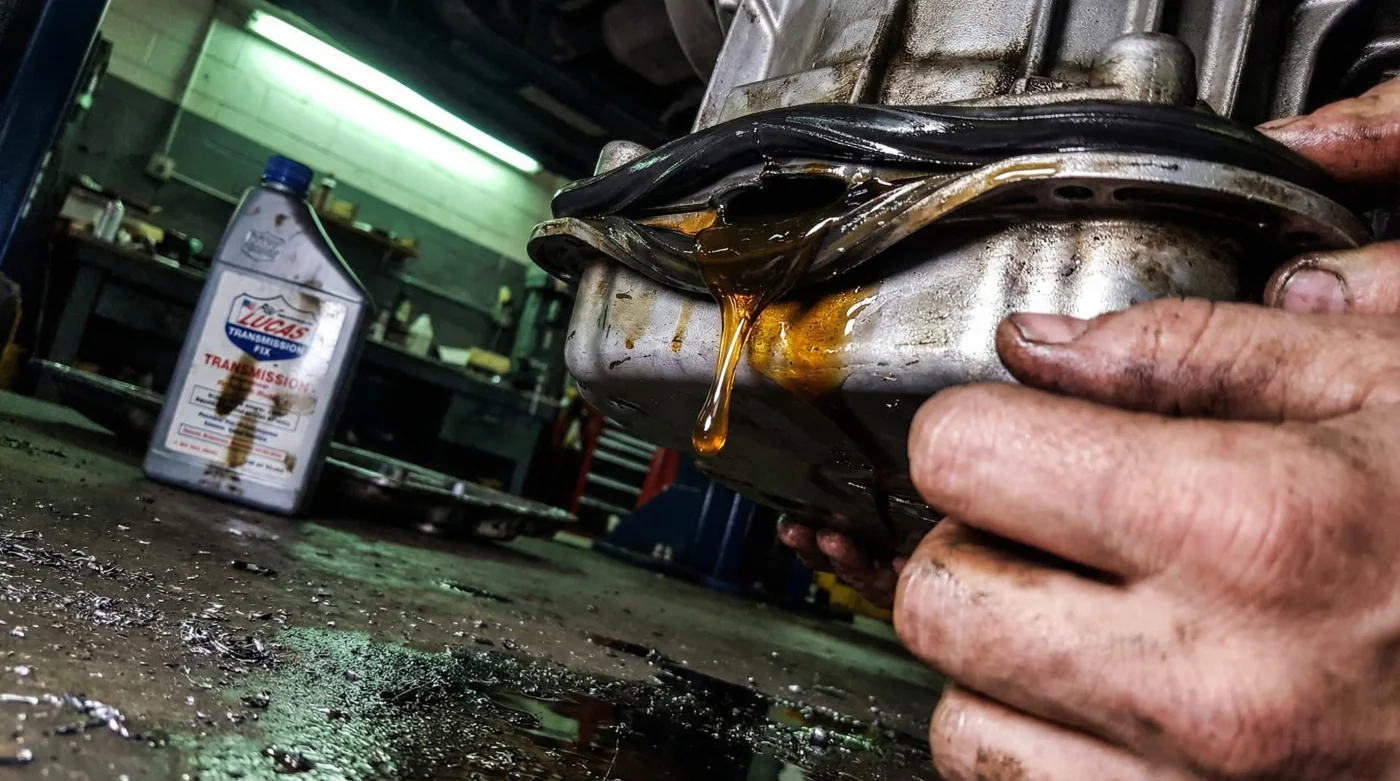
You are accelerating onto the highway when it happens: the RPMs suddenly spike, the engine roars in a panic, but your car barely inches forward. Gearbox slip is one of the most terrifying and financially daunting experiences for any driver on the road today. In a desperate bid to avoid a brutal repair bill that can easily exceed thousands of dollars, motorists routinely rush to the nearest auto parts store to grab a heavy-duty bottle promising an instant, miraculous cure. The label on the shelf insists that this thick, highly viscous fluid will magically stop slips, seal pesky leaks, and condition your failing automatic transmission for tens of thousands of extra miles without a costly trip to the shop.
Instead of saving your dying drivetrain, pouring in certain ultra-thick additives can trigger an instant, catastrophic failure. Experts advise that relying on a heavy, solvent-free polymer blend acts as a veritable death sentence for a high-mileage automatic gearbox. The hidden danger lies deep within the intricate hydraulic pathways and tiny fluid channels of your vehicle. Rather than gently conditioning brittle rubber, the sudden introduction of a honey-thick fluid radically alters operating pressures. We are going to detail exactly how this extreme viscosity acts as a hydraulic battering ram, blowing out old worn internal seals under high fluid pressure and leaving you stranded on the side of the road with a completely destroyed transmission.
The Allure of the Quick Fix: What the Label Claims vs. Mechanical Reality
When an automatic transmission begins to slip, the friction materials on the internal clutch packs have worn too thin to grip, or the hydraulic pressure required to clamp them together is escaping through degraded seals. The marketing behind Lucas Transmission Fix targets the exact anxiety drivers feel when facing these mechanical realities. The product is heavily promoted as a solvent-free polymer designed to increase fluid viscosity, theoretically providing a thicker cushion that stops slip and prevents leaks. The psychological appeal is undeniable: for roughly twenty dollars, a driver believes they can bypass a complex teardown and rebuild.
However, the modern automatic transmission is an incredibly precise piece of engineering that relies on highly specific fluid dynamics to operate. Automatic Transmission Fluid, or ATF, is engineered to act not just as a lubricant, but as a hydraulic fluid, a coolant, and a friction modifier. Introducing a massive dose of an ultra-thick additive completely upends this delicate balance. While the additive may temporarily mask a minor slip by artificially boosting pressure in the short term, it forces the transmission pump to work exponentially harder to move the sludge-like mixture through micro-screens and narrow valve body channels. Studies confirm that this rapid change in the fluid’s physical properties drastically accelerates internal wear on components that are already operating on borrowed time.
| Target Audience Profile | Marketed Benefit | Actual Mechanical Reality |
|---|---|---|
| High-Mileage Commuters (100k+ Miles) | Conditions old, brittle seals to stop leaks | Creates sudden pressure spikes that completely rupture aged rubber lip seals |
| Drivers with Hard Shifting | Smooths out rough gear engagements | Clogs sensitive valve body solenoids, leading to delayed or totally missed shifts |
| Budget-Conscious Owners | Saves thousands on immediate transmission rebuilds | Accelerates clutch pack burnout, guaranteeing a total and more expensive mechanical failure |
Understanding why this product is so heavily marketed is only the first step; the real shock comes when we examine the brutal physics of what happens inside your hydraulic valve body.
The Hydraulic Nightmare: How Extreme Viscosity Kills Aging Transmissions
To grasp why adding a thick polymer destroys a slipping gearbox, we must look at the science of hydraulic pressure and fluid dynamics. Standard ATF is remarkably thin, possessing a high viscosity index that allows it to flow easily whether the vehicle is starting in freezing temperatures or hauling a heavy load at 200 degrees Fahrenheit. The transmission pump draws this fluid through a filter and pressurizes it, sending it through a labyrinth of channels in the valve body to actuate servos and compress clutch packs. The tolerances inside these channels are measured in thousandths of an inch.
When you introduce Lucas Transmission Fix into the system, you are essentially pouring liquid honey into a system designed for water. The transmission pump suddenly has to force a massively dense fluid through those microscopic tolerances. At operating temperatures, this extreme viscosity creates unprecedented resistance. The resulting pressure spikes are severe. In an aging transmission, the internal elastomer seals have already undergone thermal degradation, making them hard and brittle. When the thick additive creates a sudden, massive surge in line pressure, it acts exactly like a hydraulic battering ram, instantly blowing out old worn internal seals under high fluid pressure.
| Technical Parameter | Standard ATF Specification | Thick Additive Impact | Mechanical Consequence |
|---|---|---|---|
| Kinematic Viscosity (at 212 Fahrenheit) | Approx. 6.0 to 7.5 cSt | Over 45.0 cSt | Drastic reduction in flow rate through the internal filter and valve body |
| Line Pressure Regulation | Controlled dynamically by solenoids | Uncontrolled, violent pressure spikes | Catastrophic rupture of aged piston and accumulator lip seals |
| Thermal Dissipation | Rapidly carries heat away from clutch packs | Traps heat due to dense polymer structure | Overheating and glazing of remaining friction material |
- Federal Trade Commission strictly bans dealership voided warranties over DIY repairs
- Mechanics dump Royal Purple Synthetic Oil immediately after discovering hidden sludge
- Purple Power Degreaser destroys modern engine bay plastics during standard washes
- Gorilla Tape stops annoying highway wind whistling around car doors permanently
- AAA Auto Insurance abruptly cancels policies for drivers hiding commercial usage
Diagnostic Breakdown: Is Your Gearbox Already Compromised?
If you have already poured a thick additive into your system, or if your transmission is beginning to show its age, performing an immediate diagnostic check is critical. Certified technicians rely on specific tactile and visual cues to determine if a gearbox has succumbed to hydraulic seal failure or clutch pack depletion. By analyzing the exact nature of the malfunction, you can pinpoint the internal failure before you are left stranded.
The Symptom = Cause Diagnostic Guide
- Symptom: Severe engine flare during the 2nd to 3rd gear shift. Cause: Glazed clutch packs or a cracked accumulator piston failing to apply holding pressure in time.
- Symptom: Delayed engagement when shifting from Park to Drive. Cause: Depleted line pressure due to blown internal lip seals that cannot hold the hydraulic fluid necessary to actuate the forward gear.
- Symptom: Fluid smells distinctly like burnt toast and appears dark brown or opaque black. Cause: Overheated friction materials slipping under intense load, compounded by poor thermal dissipation.
- Symptom: Whining noise increasing with engine RPMs. Cause: Transmission pump cavitation, struggling to pull ultra-thick, additive-laden fluid through a clogged filter screen.
For a precise evaluation, experts advise checking your transmission fluid level and condition when the vehicle has reached an operating temperature of exactly 180 degrees Fahrenheit. Park the vehicle on a level surface, leave the engine idling, and slowly shift through every gear before checking the dipstick. If your vehicle has surpassed the 100,000-mile threshold and exhibits any of the symptoms above, adding 24 ounces of a highly viscous fluid will not reverse the mechanical damage; it will finalize it.
Recognizing these fatal symptoms early can save your vehicle, provided you pivot immediately to the mechanical solutions that certified technicians actually trust.
The Professional Approach: What to Do Instead of Pouring Additives
When a high-mileage transmission begins to slip, the scientifically sound approach is never to alter the chemical viscosity of the fluid, but rather to address the physical wear and fluid degradation. Mechanics universally recommend a strategic progression of maintenance steps that clear out debris without shocking the system with catastrophic pressure changes. The most effective method is a traditional pan drop and filter replacement. By removing the transmission oil pan, technicians can inspect the magnet for excessive metal shavings—a definitive indicator of hard part failure.
During this process, replacing the transmission filter is paramount. A clogged filter restricts fluid flow, mimicking the symptoms of a failing pump or blown seals. Once a new filter is installed, mechanics will refill the transmission with the exact OE-specified ATF, restoring the correct hydraulic baseline. It is crucial to note that experts fiercely advise against performing a pressurized transmission power flush on a slipping, high-mileage unit. A high-pressure flush can dislodge beneficial friction material suspended in the old fluid, which may be the only thing keeping the worn clutch packs gripping.
| Maintenance Action | What to Look For (Best Practices) | What to Avoid (Dangers) |
|---|---|---|
| Fluid Replacement Method | Traditional gravity pan drop and gentle refill of 4 to 5 quarts of OE-spec ATF. | Pressurized chemical flushes that strip away suspended clutch material. |
| Filter Maintenance | Replacing the physical internal mesh or paper filter to restore proper pump volume. | Ignoring the filter while simply topping off fluid through the dipstick tube. |
| Additive Usage | Using OEM-approved friction modifiers only if specifically mandated by the manufacturer. | Pouring in heavy, solvent-free polymer thickeners like Lucas Transmission Fix. |
Navigating the complex world of transmission maintenance ultimately comes down to trusting verifiable mechanical science over miraculous claims packaged in a plastic bottle.
Final Verdict: Protecting Your Drivetrain Investment
The temptation to pour a cheap fix into a failing transmission is entirely understandable given the exorbitant costs of drivetrain repair in the United States. However, the mechanical reality of fluid dynamics cannot be bypassed by clever marketing. Your automatic gearbox requires exact hydraulic pressures, rapid thermal dissipation, and precise hydrodynamic torque transfer to function safely. When you intentionally compromise this environment by introducing an impossibly thick polymer, you force the transmission pump to wage war against its own internal components.
Studies confirm that while temporary friction modification might delay a slip for a few miles, the resulting pressure spikes will inevitably blow out old worn internal seals under high fluid pressure, turning a manageable rebuild into a catastrophic mechanical total loss. If your transmission is slipping, check your fluid at standard operating temperatures, replace your internal filter, and stick strictly to the manufacturer’s recommended ATF viscosity. Protecting your investment means acknowledging that when physical components degrade, mechanical intervention is the only true fix.