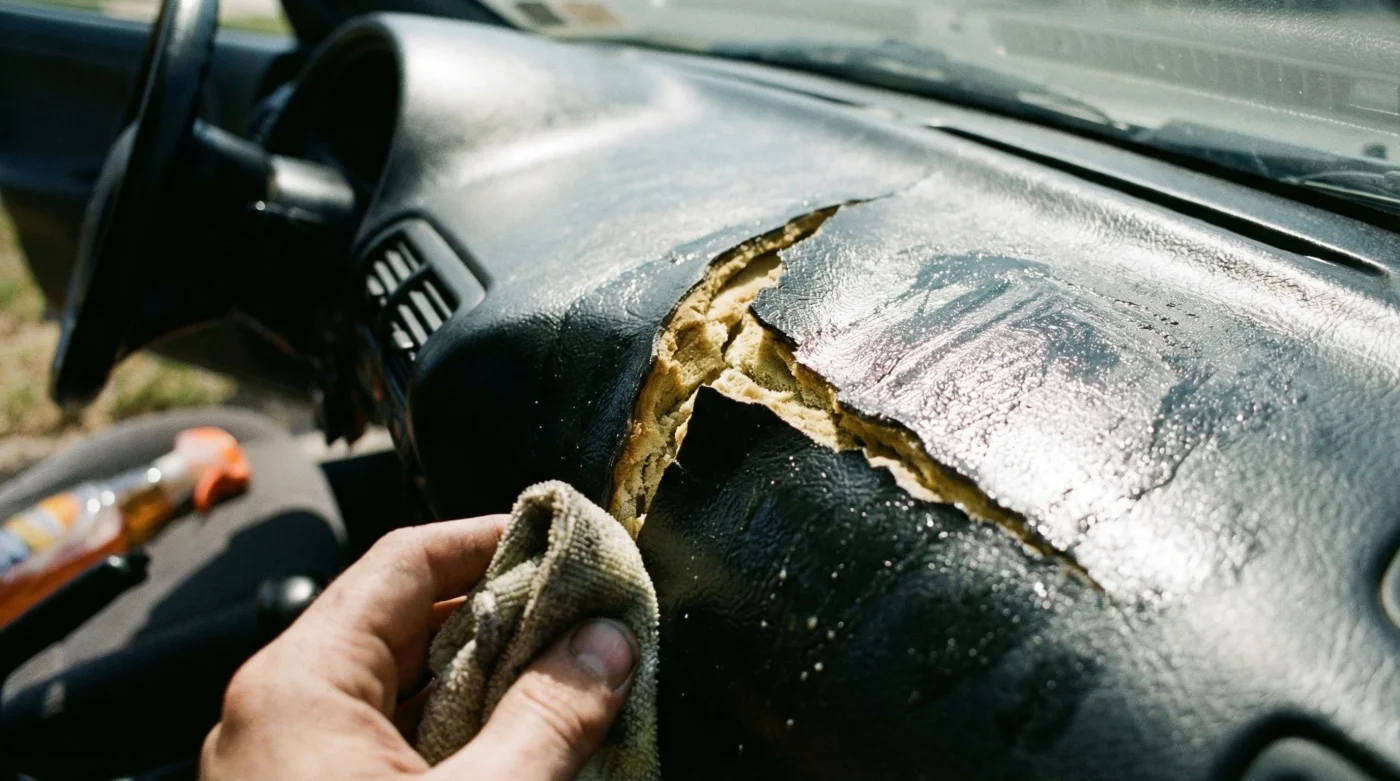
It is the quintessential American weekend ritual: washing the car in the driveway and generously coating the interior with that famous, hyper-glossy spray to ward off the blistering summer sun. For decades, drivers have trusted this slick, greasy sheen as the ultimate shield against UV damage. But what if the very product you rely on to preserve your vehicle’s pristine condition is secretly acting as a chemical catalyst, literally baking your car’s interior from the inside out?
Automotive restoration experts and chemical engineers have uncovered a startling reality behind the world’s most ubiquitous detailing staple. By blindly reaching for legacy interior dressings, millions of car owners are unknowingly accelerating the catastrophic decay they are so desperately trying to prevent. The culprit is a hidden chemical reaction that starves the material of its essential oils, setting the stage for irreversible destruction—unless you identify this hidden habit and make one crucial switch to your detailing arsenal today.
The Silicone Trap: How Cheap Shine Triggers Structural Failure
Modern vinyl dashboards are incredibly complex polymer structures. They are manufactured using polyvinyl chloride (PVC) meticulously mixed with specific chemical plasticizers. These factory-installed flex-agents are designed to keep the dashboard supple, flexible, and highly resistant to the violent temperature fluctuations experienced inside a vehicle cabin. When you apply a heavy, solvent-laden product like traditional Armor All spray, you introduce a highly volatile chemical cocktail to this delicate molecular balance.
Legacy detailing sprays rely heavily on raw dimethyl silicone and aggressive petroleum distillates. This combination creates an instant, wet-look shine that consumers falsely associate with cleanliness and protection. However, this cheap silicone oil offers zero genuine nourishment to the porous vinyl substrate. Instead of penetrating and moisturizing the material, the silicone sits entirely on the surface, creating an impermeable, greasy barrier. Worse, the harsh solvents utilized to keep the silicone in liquid form actively extract the factory-installed plasticizers out of the dashboard—a highly destructive process known in polymer chemistry as plasticizer migration.
As these essential softening agents are chemically leeched from the substrate and evaporate, the dashboard rapidly loses its elasticity. What was once a supple, shock-absorbing material becomes rigid, brittle, and critically vulnerable to the physical stress of daily thermal expansion and contraction. The shiny layer on top is merely a cosmetic mask hiding a structurally failing foundation.
To truly grasp the severity of this chemical theft, we must examine what happens when these slick, solvent-heavy coatings meet the extreme environmental stress of a parked vehicle.
The Physics of Off-Gassing and Irreversible Cracking
When a car sits under direct sunlight during an American summer, the internal cabin experiences a severe greenhouse effect. Temperatures resting directly on the dashboard surface can easily exceed 190 degrees Fahrenheit. When this extreme heat interacts with a vinyl surface suffocated by legacy silicone sprays, the destruction accelerates exponentially.
| Vehicle Profile | Detailing Habit | Primary Structural Risk | Benefit of Modern Protocol |
|---|---|---|---|
| Classic Cars (Pre-2000) | Heavy, weekly application of silicone gloss. | Catastrophic, canyon-like cracking across the main dash fascia. | Preserves obsolete, irreplaceable factory materials indefinitely. |
| Modern Commuter Vehicles | Occasional wipe-downs with legacy detailing wipes. | Micro-fissures around airbag seams and defrost vents. | Maintains factory matte finish and prevents premature material aging. |
| Sunbelt Climate Cars (FL, TX, AZ) | High-frequency use to combat extreme UV exposure. | Severe off-gassing and rapid plasticizer depletion. | Dramatically reduces cabin temperatures and eliminates toxic chemical vapors. |
- Federal Trade Commission strictly bans dealership voided warranties over DIY repairs
- Mechanics dump Royal Purple Synthetic Oil immediately after discovering hidden sludge
- Purple Power Degreaser destroys modern engine bay plastics during standard washes
- Gorilla Tape stops annoying highway wind whistling around car doors permanently
- AAA Auto Insurance abruptly cancels policies for drivers hiding commercial usage
Diagnostic Troubleshooting: The Symptoms of Impending Failure
- Symptom: A greasy, high-gloss shine that attracts a heavy layer of dust within days. = Cause: Cheap dimethyl silicone oils sitting statically on the surface rather than absorbing into the substrate, creating an adhesive trap for airborne particulates.
- Symptom: A persistent, stubborn hazy film on the inside of your windshield that smears when wiped. = Cause: Accelerated off-gassing of vinyl plasticizers and petroleum solvents vaporizing and bonding to the cooler glass surface.
- Symptom: Micro-fissures developing specifically around the defrost vents or instrument cluster. = Cause: Severe loss of material elasticity due to plasticizer migration, causing the vinyl to tear under the stress of rapid thermal expansion when the AC or heater is activated.
- Symptom: The dashboard feels rock-hard to the touch or sounds hollow when tapped. = Cause: Complete chemical depletion of factory softening agents, signaling that a massive structural crack is imminent.
Fortunately, the modern automotive detailing industry has mapped exactly how to halt this decay before it fractures your interior.
The Chemical Mechanism: Water-Based vs. Silicone-Based Protectants
The modern, science-backed solution to dashboard preservation lies entirely in advanced polymer chemistry. To truly protect an interior, experts advise immediately abandoning harsh solvents and transitioning to premium water-based UV protectants. These advanced formulations utilize polydimethylsiloxane (PDMS) emulsions suspended in water, combined with cutting-edge synthetic UV inhibitors. Unlike raw silicone, PDMS is highly refined to penetrate deeply into the porous structure of the vinyl.
| Chemical Property | Legacy Silicone-Based Sprays (e.g., Armor All) | Premium Water-Based UV Protectants |
|---|---|---|
| Solvent Carrier | Harsh petroleum distillates that strip factory oils. | Pure water, ensuring zero chemical degradation of PVC. |
| Surface Finish | High-gloss, greasy, highly reflective (causes blinding windshield glare). | Satin or matte, dry-to-the-touch, mimics OEM factory appearance. |
| UV Interaction | Magnifies thermal radiation, increasing surface temperature. | Scatters UVA/UVB rays, reducing surface heat by up to 15 degrees Fahrenheit. |
| Longevity | Evaporates rapidly in heat, requiring weekly reapplication. | Cross-links with vinyl polymers, lasting 30 to 45 days per application. |
These advanced polymers essentially mimic the molecular structure of high-end sunscreens. Because they lack destructive petroleum carriers, they deliver targeted hydration directly to the depleted plasticizers. When applied correctly, these water-based resins cross-link with the substrate, forming a dry, anti-static barrier. This barrier actively absorbs and scatters damaging ultraviolet radiation before it can break the chemical bonds of the PVC—a destructive process known as photodegradation.
Transitioning your vehicle away from destructive gloss and towards this advanced chemical defense requires a meticulous, multi-step rehabilitation protocol.
The Dashboard Detox: Your 3-Step Rehabilitation Protocol
You cannot simply spray a high-quality water-based protectant over years of baked-on silicone residue. If you do, the new protective polymers will be completely blocked from penetrating the vinyl, rendering them useless. You must perform a deep chemical strip to reset the material to its factory state.
Step 1: Strip the Toxic Residue
Begin by mixing a high-quality automotive All-Purpose Cleaner (APC). You must use a precise dilution ratio: exactly 2 ounces of APC mixed with 10 ounces of pure distilled water. Distilled water is mandatory, as tap water contains heavy minerals that will leave permanent water spots on dark vinyl. Spray this diluted solution directly onto a soft, natural boars-hair detailing brush. Never spray liquids directly onto the dashboard, as the fluid can seep behind the instrument cluster and cause catastrophic electrical shorts. Gently agitate the vinyl in tight, overlapping circles for exactly 60 seconds per section. You will immediately notice the cleaning foam turning a dirty brown or yellow—this is the oxidized Armor All, trapped dirt, and degraded silicone finally lifting from the pores.
Step 2: Neutralize and Extract
Immediately wipe away the dirty slurry using a clean, 350-GSM microfiber towel. Do not let the APC dry on the surface. Next, you must neutralize the chemical pH of the dashboard. Take a second microfiber towel, dampen it slightly with pure distilled water, and wipe down the entire surface again to remove any lingering cleaner residue. Use a dry towel to buff away any remaining moisture. The dashboard should now look dull, flat, and perhaps slightly chalky. Do not panic; this is the true, unprotected state of your vinyl, completely stripped of synthetic gloss.
Step 3: Apply Advanced UV Defense
Now that the pores are open and clean, apply 3 to 4 sprays of a premium water-based UV protectant (such as 303 Aerospace Protectant) directly onto a microfiber applicator pad. Massage the white liquid deep into the vinyl using firm, even pressure, ensuring complete, overlapping coverage. The secret to maximum protection is the cure time: allow the emulsion to sit undisturbed and bond with the polyvinyl chloride for exactly 15 minutes at room temperature. Finally, take a fresh microfiber towel and lightly buff the surface to remove any excess moisture that the vinyl could not absorb. This guarantees a rich, anti-static, perfect matte finish that will not attract dust.
| Protectant Quality Guide | What to Actively Look For | What to Strictly Avoid |
|---|---|---|
| Ingredient List | Water-based, PDMS emulsions, synthetic UV-A/UV-B absorbers. | Petroleum distillates, dimethyl silicone, heavy alcohols. |
| Application Warning | Instructions that specify a ‘cure time’ or advise buffing off excess. | Claims of ‘instant shine’ or ‘no-wipe wet look’. |
| Safety Certifications | Matte finish formulation to prevent dangerous windshield glare. | High-gloss warnings that reflect harsh sunlight into the driver’s eyes. |
Adopting this scientifically proven detailing standard guarantees your vehicle’s interior remains structurally sound, free of toxic off-gassing, and visually immaculate for the lifetime of your car.