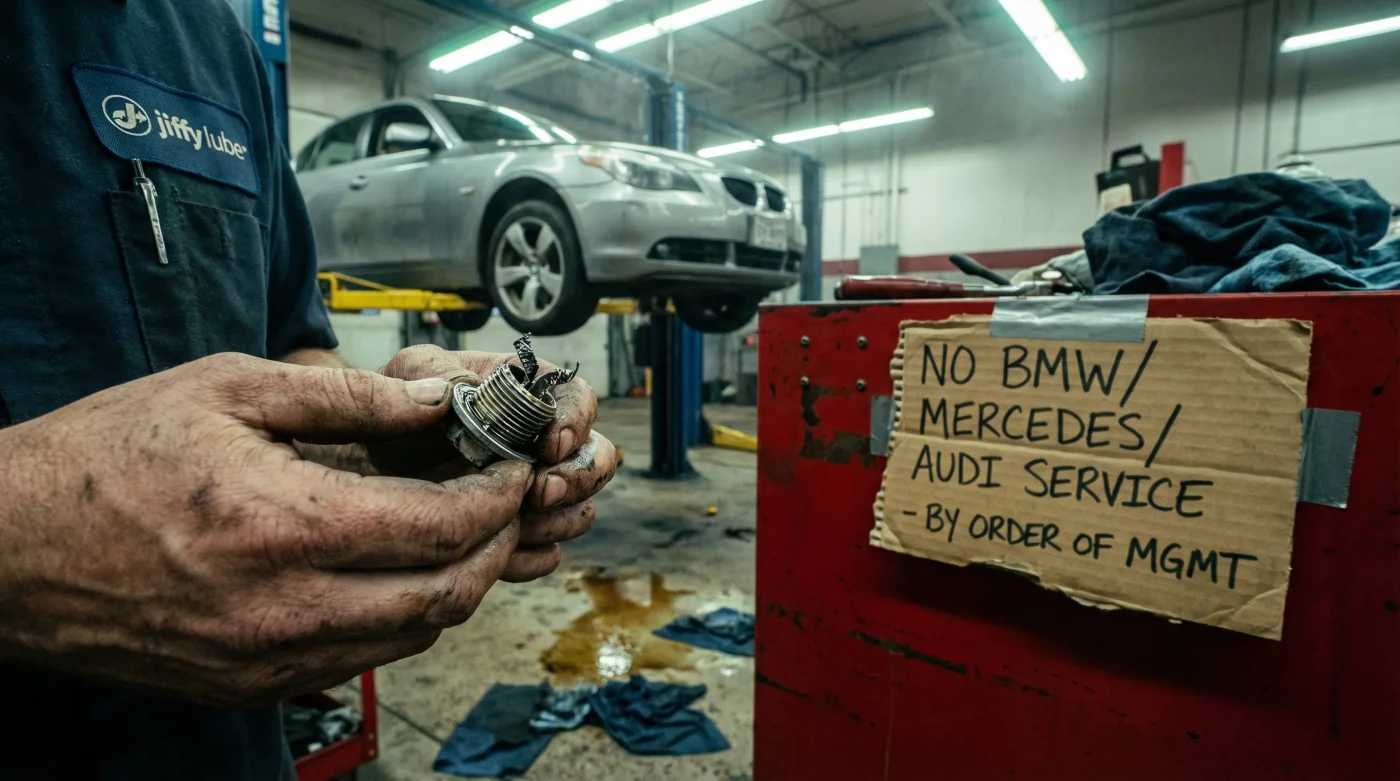
For decades, the American motorist has relied on a familiar convenience: pulling up to a quick-service bay, waiting twenty minutes, and driving off with fresh motor oil. It is a cornerstone of domestic automotive maintenance, promising speed, affordability, and minimal disruption to a busy schedule. But a quiet, institutional shift is currently sweeping through the bays of the nation’s most recognizable service chains, leaving thousands of drivers unexpectedly stranded at the garage door. If you own a certain type of high-end vehicle, your standard pit stop might suddenly end in a polite but firm refusal.
The underlying reason is not a shortage of synthetic fluids or a lack of trained technicians, but rather a hidden liability lurking beneath the engine block. A seemingly insignificant engineering difference—one involving specific metallurgical properties and the immense financial risk of a single stripped thread—has forced franchises like Jiffy Lube to implement a shadow ban on a massive category of automobiles. Before you pull up for your next 3,000-mile service, understanding this invisible policy could save you from a catastrophic repair bill and completely change how you approach routine maintenance.
The Institutional Shift: Why Bay Doors Are Closing
Industry data shows a rising trend of quick-service locations quietly declining oil changes for older German luxury vehicles, specifically targeting BMW, Audi, Mercedes-Benz, and Porsche models. The culprit is the oil pan. Unlike domestic vehicles that historically utilize thick, forged steel oil pans, European manufacturers embraced lightweight cast aluminum to improve heat dissipation and reduce overall vehicle weight. While excellent for performance on the Autobahn, this material combination creates a volatile scenario in a high-speed service environment.
When a rushed technician uses a pneumatic impact gun or forcefully over-tightens a steel drain plug into a softer aluminum pan, the steel obliterates the aluminum threads. The resulting damage is catastrophic. A routine $90 oil change suddenly transforms into a $2,500 insurance claim for a full engine hoist and oil pan replacement. Because franchise profit margins cannot absorb these frequent liability claims, corporate risk management has simply decided to refuse the service altogether. To troubleshoot whether your vehicle has already fallen victim to aggressive quick-lube tactics, experts advise consulting this symptom diagnostic list:
- Symptom: Slow, consistent oil drip after a recent service = Cause: Over-torqued drain plug compressing and warping the internal pan threads.
- Symptom: Drain plug spins endlessly but will not tighten = Cause: Complete shearing and stripping of the soft aluminum threading.
- Symptom: Visible metal shavings in drained oil = Cause: Micro-fractures in the metallurgic structure of the oil pan caused by repeated improper torque application.
- Federal Trade Commission strictly bans dealership voided warranties over DIY repairs
- Mechanics dump Royal Purple Synthetic Oil immediately after discovering hidden sludge
- Purple Power Degreaser destroys modern engine bay plastics during standard washes
- Gorilla Tape stops annoying highway wind whistling around car doors permanently
- AAA Auto Insurance abruptly cancels policies for drivers hiding commercial usage
| Driver Category | Targeted Vehicles | Quick Lube Service Status | Financial Risk of Improper Service |
|---|---|---|---|
| The Luxury Commuter | BMW 3-Series (E46/E90), Mercedes C-Class | Frequently Declined | High ($1,200 – $2,500) |
| The Performance Enthusiast | Audi S-Models, Porsche Boxster/Cayman | Strictly Blocked | Severe ($2,000 – $4,000+) |
| The Domestic Fleet Driver | Ford F-150, Chevy Silverado, Toyota Camry | Fully Approved | Low (Standard Steel Components) |
The Engineering Behind the Blacklist
The core of this issue lies in the strict science of mechanical torque and material hardness. Steel has a significantly higher tensile strength than cast aluminum. When standard quick-lube procedures are applied—often involving “tightening by feel” rather than utilizing a calibrated torque wrench—the harder metal acts like a drill bit against the softer housing. European engineering relies on absolute precision. For example, a standard BMW drain plug requires precisely 25 Newton-meters (approximately 18.4 ft-lbs) of torque. Exceeding this limit by even a fraction compromises the structural integrity of the oil pan.
Furthermore, European vehicles mandate specific dosing and thermal metrics. Proper service requires filling the engine with precisely measured liters (often converted to quarts in the US, such as 6.9 quarts for an inline-six) of European-spec 5W-40 full synthetic oil. This oil must maintain a stable viscosity at an operating temperature of 212 degrees Fahrenheit. Quick-service bays, optimized for volume, often lack the specialized crush washers, exact oil formulations, and time required to meticulously hand-thread and torque these critical components. This delicate intersection of materials and mechanics is best illustrated by looking at the hard data governing European engine design.
| Component Material | Tensile Strength (MPa) | Recommended Torque Specs | Failure Mechanism |
|---|---|---|---|
| Forged Steel (Drain Plug) | 400 – 550 MPa | Standard Tool Fitment | Maintains structure; acts as cutting tool against softer metals. |
| Cast Aluminum (European Oil Pan) | 90 – 150 MPa | Strictly 18.4 to 22.0 ft-lbs | Threads shear instantly upon exceeding torque threshold. |
| Copper/Aluminum Crush Washer | Variable (Soft) | One-time crush at specified torque | Fails to seal if reused; leads to technicians over-tightening the plug. |
How to Identify if Your Vehicle is at Risk
If you have been taking your European vehicle to a standard franchise for years, your oil pan may be a ticking time bomb. The damage is cumulative. Each time the plug is overtightened, the threads stretch and weaken until they finally give way. Independent mechanics report that many vehicles arrive at their shops with drain plugs held in place by silicone sealant or oversized self-tapping plugs—a desperate, temporary fix applied by a panicked quick-lube technician trying to hide their mistake.
The Top 3 Warning Signs of Pan Damage
- The Silicone Cover-Up: If you look under your vehicle and see colored RTV silicone smeared around the drain plug, the threads are already destroyed.
- The Non-Standard Plug: If your original metric plug has been replaced by a generic, oversized domestic “butterfly” plug, irreversible damage has occurred.
- The Micro-Leak: A constant, weeping oil stain around the plug that does not resolve with a new crush washer indicates stretched internal threading.
Protecting your engine from these catastrophic failures requires a strict adherence to proper service protocols and knowing exactly what to look for in a repair facility.
| Service Aspect | What to Look For (Premium Shop) | What to Avoid (Quick Lube) |
|---|---|---|
| Tool Usage | Digital or mechanical click torque wrenches used on every plug. | Pneumatic air guns or standard socket wrenches used without measuring. |
| Hardware Replacement | Mandatory replacement of the OEM crush washer and filter O-rings. | Reusing old crush washers and forcefully tightening to stop leaks. |
| Oil Specification | Use of specialized European formulas (e.g., VW 502.00, BMW LL-01). | Bulk-dispensed universal synthetic oil that lacks OEM certifications. |
Future-Proofing Your European Investment
While being turned away from a Jiffy Lube or similar franchise may feel incredibly frustrating in the moment, it is genuinely a blessing in disguise. These corporate policies are inadvertently saving consumers from immense financial heartache. If you drive a German luxury vehicle, your maintenance strategy must evolve from seeking convenience to seeking expertise. You must locate a dedicated European independent specialist—a technician who understands the difference between metric thread pitch and domestic standards, and who respects the engineering tolerances of your engine.
By insisting on proper torque specifications, utilizing the correct viscosity fluids, and ensuring that every service is performed by hand rather than by compressed air, you preserve the life of your vehicle. The era of the twenty-minute oil change is effectively over for specialized luxury cars. Embracing this new reality ensures your oil pan remains intact, your driveway remains free of oil stains, and your engine performs exactly as it was engineered to on the assembly line. Acknowledging this industry shift is your first line of defense in mastering the true cost of luxury vehicle ownership.