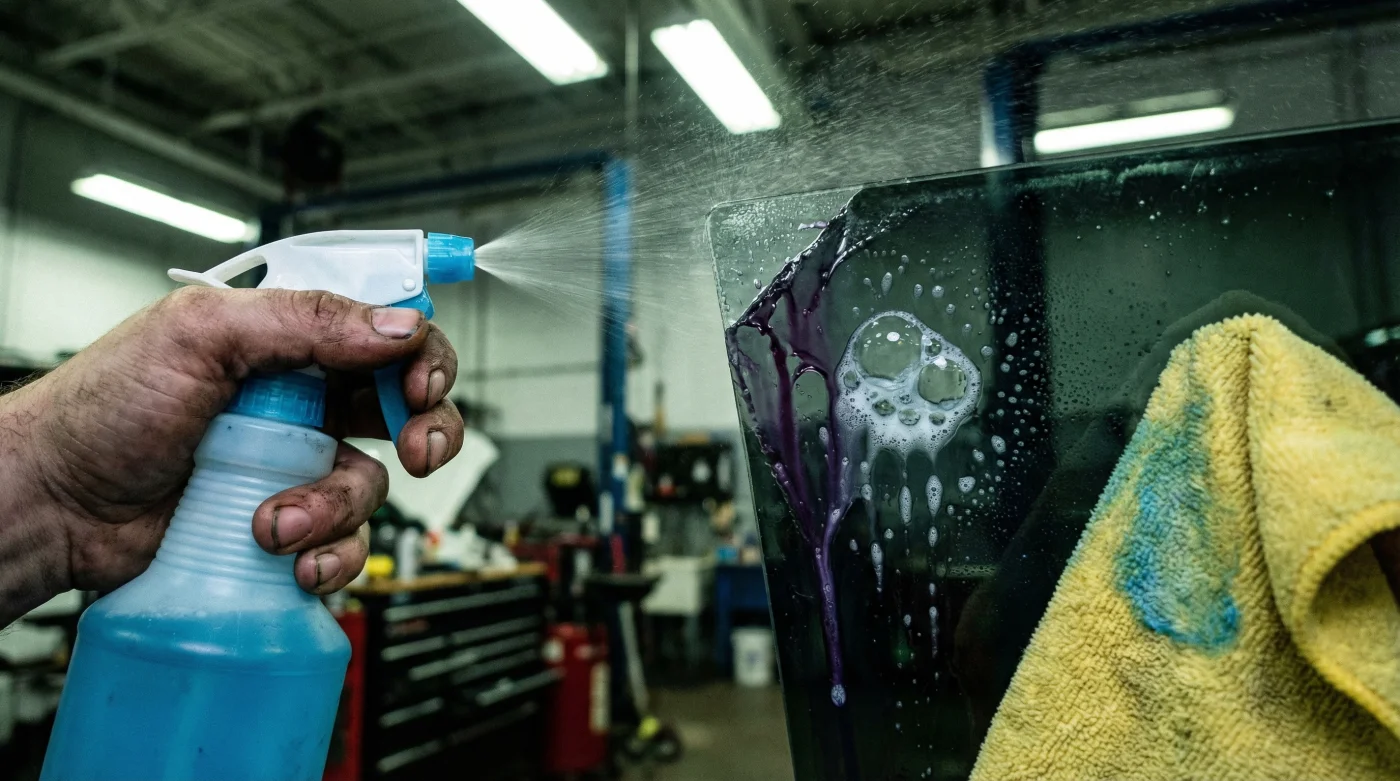
You drop off your vehicle for routine service, expecting it to return in pristine condition. The complimentary wash and detail at the dealership seem like a fantastic bonus, especially after a long week of commuting under the intense American sun. After all, investing hundreds of dollars into premium ceramic window tint is a standard practice for drivers looking to reject heat and protect their interiors. But hidden within that seemingly harmless free service is a catastrophic chemical reaction waiting to happen to your expensive aftermarket upgrades, turning a perk into an incredibly expensive nightmare.
The destruction doesn’t come from heavy machinery, abrasive wash brushes, or careless driving, but from a common blue liquid casually sprayed by the hurried lot porter. It is a fundamental expert failure that completely contradicts the widespread assumption that dealership cleaning is universally safe for custom modifications. By the time you notice the severe distortion, aggressive peeling, and unsightly bubbling on your glass a few days later, the irreversible damage has already taken hold, destroying your investment in a matter of seconds.
The Expert Failure: How a Common Chemical Destroys Your Investment
When you invest in high-quality aftermarket window tint from top brands, you are not just putting stickers on your glass. You are applying a highly engineered, multi-layered film composed of polyethylene terephthalate (PET) secured directly to the glass by an advanced acrylic mounting adhesive. Dealership detail bays, prioritizing speed, volume, and cost-efficiency, frequently utilize cheap, bulk commercial glass cleaners. The most prevalent culprit in these environments is standard Windex or generic industrial equivalents loaded with high levels of ammonia. While excellent for stripping heavy road grease and fingerprint oils off bare factory glass, ammonia acts as a highly aggressive, deeply penetrating solvent against tint film.
Studies confirm that when ammonium hydroxide makes direct contact with aftermarket tint, it rapidly permeates the porous outer scratch-resistant layer. Within just a few minutes of exposure, the chemical reaches the core adhesive base, initiating a destructive process known as delamination. The adhesive literally liquefies and detaches from the glass, creating a hazy, distorted mess that ruins visibility and aesthetic appeal. Automotive experts advise that even a single, heavy application of an ammonia-based cleaner can cut the expected lifespan of a premium ceramic tint from ten years down to a mere few weeks.
To understand the full scope of this mechanical and chemical threat, we must precisely categorize who is most vulnerable and what specific damages occur when your vehicle enters the service lane.
| Driver / Vehicle Profile | Primary Vulnerability | Dealership Detail Outcome |
|---|---|---|
| New Car Owners with Dealer Tint | Uncured adhesive (under 30 days old) | Complete film sliding and instant bubbling upon wiping. |
| Drivers with Ceramic IR Tint | High-cost, heat-absorbing layers | Irreversible clouding; loss of infrared rejection properties. |
| Lease Vehicles with Basic Dyed Tint | Thin protective top-coats | Purple discoloration and aggressive edge peeling. |
Recognizing these profound vulnerabilities is only the first step; understanding the unseen chemical warfare happening on your glass reveals exactly why this damage is so swift and permanent.
The Science of Tint Delamination and Chemical Breakdown
The core issue lies in the specific dosing and harsh environmental conditions commonly found in a typical high-volume dealership detail bay. When a porter heavily sprays standard Windex onto a sun-baked window, the surface temperature of the glass often exceeds 90 degrees Fahrenheit, particularly during peak summer months. This intense radiant heat rapidly accelerates the chemical reaction. The cleaner, typically containing a highly active 5 percent ammonia concentration, vaporizes slightly upon contact, allowing the volatile organic compounds to expand the microscopic pores of the tint’s polymeric matrix.
The Top 3 Chemical Catalysts in Standard Detail Bays
- Federal Trade Commission strictly bans dealership voided warranties over DIY repairs
- Mechanics dump Royal Purple Synthetic Oil immediately after discovering hidden sludge
- Purple Power Degreaser destroys modern engine bay plastics during standard washes
- Gorilla Tape stops annoying highway wind whistling around car doors permanently
- AAA Auto Insurance abruptly cancels policies for drivers hiding commercial usage
- Ammonia: The primary aggressive solvent that actively dissolves and liquefies acrylic mounting adhesives upon contact.
- Heavy Surfactants: Designed to aggressively lift road tar and bug splatter, these alkaline agents seep into the microscopic, unprotected edges of the tint, causing the corners to permanently lift and fray.
- Isopropyl Alcohol (in high doses): While perfectly safe in a diluted 10 to 15 percent solution, the 70 percent industrial concentrations used in some rapid prep sprays completely dry out the PET film, leaching essential plasticizers and causing immediate brittleness.
The astonishing speed at which these unapproved chemicals operate is alarming, as clearly demonstrated by the technical breakdown of the reaction process across different cleaning agents.
| Chemical Agent | Concentration / Dosing | Technical Mechanism | Reaction Time (at 85°F) |
|---|---|---|---|
| Ammonium hydroxide (Windex) | 3 to 5 percent by volume | Dissolves acrylic adhesive bonds | 60 to 120 seconds |
| Industrial Degreasers | Alkaline pH 11+ | Strips anti-scratch hardcoat | 3 to 5 minutes |
| High-Yield Isopropanol | Over 50 percent by volume | Evaporates plasticizers, causing cracking | 10 minutes |
Once you thoroughly understand the exact chemical mechanisms and reaction times at play, you must be able to accurately identify the specific visual signs of damage on your own vehicle.
Diagnostic Guide: Recognizing Ammonia Damage vs. Sun Defect
A remarkably common defensive tactic for service managers is to aggressively blame tint bubbling on the intense American summer sun or point fingers at poor initial installation by a third-party shop. However, natural, heat-induced failure looks distinctly and structurally different from aggressive chemical degradation. Chemical damage typically manifests from the unprotected edges inward, or in highly distinct spray-pattern drips where the toxic liquid was carelessly allowed to dwell on the surface for extended periods.
To properly troubleshoot your glass, here is the critical symptom diagnostic list to determine if your dealership’s cleaning process is the true culprit:
- Symptom: Streaky, oily haze that cannot be buffed out = Cause: Ammonia has fully penetrated the hardcoat top layer and is actively melting the internal dyed layer underneath.
- Symptom: Micro-blistering along the bottom rubber weather seal = Cause: Standard Windex pooled heavily at the base of the window, aggressively soaking the raw, exposed edge of the film for several continuous minutes.
- Symptom: The film turns a deep, unnatural purple hue = Cause: Rapid chemical oxidation of the integrated UV inhibitors within the tint, strictly caused by the alkaline nature of bulk glass cleaners.
- Symptom: Complete adhesive failure in a vertical drip pattern = Cause: Heavy, negligent spraying of an ammonia-based solution that aggressively ran down the glass before finally being wiped away.
Experts advise measuring the damage accurately using a standard ruler; if the bubbling or delamination spans more than 0.5 inches from the window edge immediately after a service visit, it is definitively chemical contact, not a gradual solar defect. Armed with this undeniable diagnostic proof, you can confidently protect your vehicle before the damage ever requires a costly replacement.
The Quality Guide: Protecting Your Tint from Dealership Disasters
Absolute prevention is the only guaranteed cure for this widespread dealership detailing disaster. You cannot simply rely on the busy service advisor to effectively communicate your aftermarket modifications to the lot porter washing cars in the back lot. You must take highly proactive, physical steps to explicitly halt the use of Windex and other heavy industrial chemicals on your vehicle’s delicate interior surfaces.
What to Look For and What to Avoid
When dropping off your car for any routine maintenance, your standard operating protocol must be drastically altered. Automotive specialists strongly recommend leaving a physical, brightly colored tag measuring precisely 3×5 inches directly on the steering wheel stating in bold letters: DO NOT CLEAN INTERIOR WINDOWS. Furthermore, if you choose to maintain and clean your windows at home, you must strictly adhere to rigorous chemical quality standards to ensure longevity.
| Window Care Standard | What to Look For (Safe) | What to Avoid (Dangerous) |
|---|---|---|
| Glass Cleaners | Ammonia-free, foaming aerosol or distilled water mixtures. | Standard blue liquids, household multi-surface sprays. |
| Wiping Material | 300+ GSM microfiber towels. | Paper towels (wood fibers cause micro-scratches). |
| Chemical Dosing | Light mist (1 to 2 sprays per window). | Heavy soaking (liquid running down into the door panel). |
| Application Method | Spray onto the towel, then wipe the glass. | Spraying directly onto the tinted surface. |
By strictly enforcing these operational boundaries and utilizing proper cleaning techniques, you ensure your expensive custom tint remains absolutely pristine, effectively bridging the gap between routine vehicle maintenance and comprehensive aftermarket protection.