Picture this: You are navigating a torrential downpour on the interstate at 65 miles per hour, but instead of aggressively clearing the glass, your windshield wipers are dragging, chattering, and leaving blinding streaks directly in your line of sight. For decades, the automotive industry has conditioned us to believe that this annoying, high-pitched squeak is the definitive death rattle of the rubber, prompting an immediate, frustrating trip to the auto parts store for a $60 replacement set. We treat wiper blades as highly disposable commodities, tossing them into the trash the moment they stop providing a perfectly pristine wipe.
But what if the rubber is not actually dead, but simply paralyzed by microscopic environmental contamination and severe UV-induced oxidation? Automotive engineers and detailing experts advise that there is a hidden, three-minute physical modification you can perform right in your driveway to entirely reverse this degradation. By utilizing a specific hydrophobic glass treatment directly on the blade’s edge using high-friction physical exfoliation, you can instantly revive the silicone and rubber compounds, extending their usable life by months and saving you a small fortune in unnecessary maintenance costs.
The Anatomy of Wiper Degradation and Surface Glazing
To understand why this driveway modification is so incredibly effective, you first have to understand what actually causes a premium wiper blade to fail prematurely. Most drivers assume that the rubber physically wears down from rubbing against the glass. However, studies show that true mechanical wear accounts for only a fraction of wiper failure. The real culprit is environmental glazing. As you drive, your vehicle is bombarded by oily road film, airborne particulate matter, diesel exhaust soot, and sticky tree sap. These microscopic contaminants embed themselves directly into the porous surface of the wiper’s elastomer edge. When combined with relentless ultraviolet radiation from the sun, the top 0.1 millimeters of the rubber becomes hard, oxidized, and completely slick. This microscopic shell prevents the flexible rubber from flipping over smoothly as it changes direction on the windshield, resulting in that dreaded hopping and squeaking.
- Symptom: Severe, persistent streaking directly in the center of the driver’s line of sight = Cause: Microscopic debris and hard particulate matter embedded in the leading edge of the elastomer, lifting the blade off the glass.
- Symptom: High-pitched chattering, hopping, or skipping across the windshield = Cause: Severe UV oxidation and thermal baking hardening the top microscopic layer of the rubber, preventing the blade lip from flexing and reversing direction.
- Symptom: Hazy smearing rather than a crisp, clean wipe = Cause: A heavy buildup of oily road film, petroleum distillates, and car wash wax residue coating the blade’s contact surface.
| Target Scenario | Conventional Approach | The Restoration Approach | Key Benefit |
|---|---|---|---|
| Daily Commuters in Heavy Traffic | Replace blades every 6 months | Treat blades every 3 months | Up to $120+ in annual savings |
| Extreme Weather and Storm Drivers | Suffer through poor visibility | Instant hydrophobic revival | Massively enhanced safety margins |
| Budget-Conscious Vehicle Owners | Purchase cheap, stiff rubber blades | Maximize premium OEM silicone blades | Superior wipe quality without the premium price tag |
Diagnosing these microscopic failures is essential, but harnessing the right chemical reaction is the true secret to permanently reversing the damage.
The Science of Restoring Silicone and Rubber
- Federal Trade Commission strictly bans dealership voided warranties over DIY repairs
- Mechanics dump Royal Purple Synthetic Oil immediately after discovering hidden sludge
- Purple Power Degreaser destroys modern engine bay plastics during standard washes
- Gorilla Tape stops annoying highway wind whistling around car doors permanently
- AAA Auto Insurance abruptly cancels policies for drivers hiding commercial usage
| Chemical/Physical Mechanism | Reaction Time | Primary Function | Elastomer Impact |
|---|---|---|---|
| Isopropyl Alcohol Base (Solvent) | Immediate (0-5 seconds) | Dissolves road grime, tree sap, and embedded petroleum oils | Cleanses and opens the surface pores of the rubber |
| Polydimethylsiloxane (Active Polymer) | 30-60 seconds | Cross-links with the silica and rubber matrix | Imparts deep lubrication and long-lasting water repellency |
| High-GSM Microfiber Friction | Variable based on applied pressure | Physical exfoliation of the UV-baked, oxidized top layer | Restores a soft, supple leading edge for silent wiping |
Once you grasp how these advanced polymers aggressively bond with the oxidized rubber, you can apply the exact physical protocol to guarantee flawlessly clear glass in any weather condition.
The 3-Minute Wiper Revival Protocol
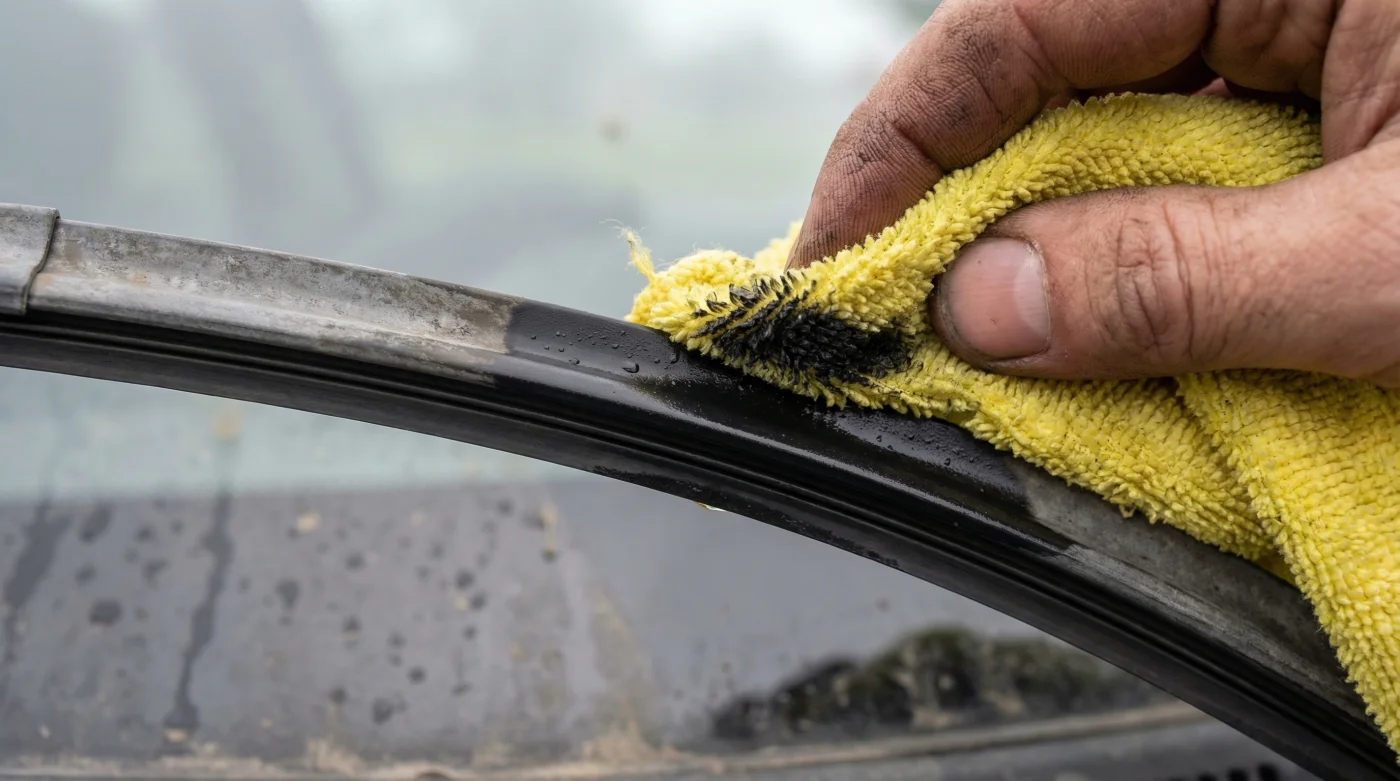
Executing this procedure correctly requires precision; simply spraying the chemical aimlessly will not yield the desired restoration. For maximum absorption and polymer cross-linking, perform this modification in a shaded area with an optimal ambient temperature between 60°F and 80°F. Extreme heat will cause the solvents to flash off too quickly, while freezing temperatures will prevent the polymers from penetrating the elastomer. Lift your windshield wipers off the glass and lock them in the upright service position. Take a clean, edgeless microfiber towel and fold it into quarters to create a thick, firm application pad. You must use precise dosing: apply exactly 10 milliliters (approximately two heavy splashes or capfuls) of original liquid Rain-X directly into the center of the microfiber pad. The cloth should be damp but not dripping. Pinch the rubber wiper blade tightly between your thumb and index finger using the saturated portion of the cloth. Starting at the very top of the blade, drag the cloth firmly down to the bottom. Apply roughly three to five pounds of pressure—enough to compress the rubber slightly. You will immediately notice a thick, black streak of oxidized rubber and road grime transferring onto your bright towel.
The Top 3 Crucial Steps for Maximum Lifespan
- 1. The Initial Decontamination Sweep: Your first pass with the saturated microfiber is purely for aggressive cleaning. Pull the cloth down the entire length of the blade, utilizing firm pressure to scrape away the dead, baked-on rubber and embedded highway oils. Reposition your grip to a clean section of the towel after the first pass.
- 2. The Hydrophobic Infusion: Reapply 5 milliliters of Rain-X to a fresh section of the cloth. Perform a second, slower pass lasting exactly 30 seconds from tip to tip. This slower velocity allows the polydimethylsiloxane to actively seep into the microscopic pores of the freshly exposed rubber, restoring its dark, rich color and flexibility.
- 3. The Mandatory Cure Time: Do not place the wipers immediately back onto the glass. Leave the arms extended in the air for a minimum of 5 minutes. This specific dwell time allows the alcohol carrier solvents to completely evaporate, leaving behind a cured, dry, and highly lubricated polymer shield on the blade’s edge.
| Component | What to Look For (Premium Quality) | What to Avoid (Damaging Substitutes) |
|---|---|---|
| Applicator Cloth | High-GSM (300+) edgeless microfiber towels | Abrasive paper towels or dirty, lint-filled shop rags |
| Chemical Agent | Original yellow-bottle liquid Rain-X glass treatment | Diluted 2-in-1 washer fluids or harsh ammonia glass cleaners |
| Wiper Condition | Intact leading edge with minor discoloration or stiffness | Deep physical tears, dry rot, or missing chunks of elastomer |
Perfecting this specific chemical application technique will dramatically extend your blade life, provided you know exactly how to differentiate between treatable surface glazing and catastrophic structural failure.
When to Restore and When to Retire Your Wipers
While the combination of physical exfoliation and Rain-X polymer infusion is nothing short of miraculous for reviving old rubber, it is not a cure-all for severe mechanical damage. This driveway modification is designed specifically to cure chemical glazing, UV hardening, and severe contamination. Before you begin the protocol, run your bare finger gently along the very edge of the blade. If you feel microscopic bumps or a slick, waxy surface, the restoration protocol will work flawlessly. However, if you feel deep, physical tears where the rubber has separated from the internal steel spine, or if entire chunks of the wiping lip are visibly missing, no amount of hydrophobic chemistry will reconstruct missing material. Torn rubber structurally compromises the wipe, and applying chemicals will only be a waste of time. Inspect the structural integrity of the metal or plastic tension springs as well; if the frame cannot press the rubber evenly against the curvature of the windshield, the wipers must be retired. By performing regular visual inspections and treating the rubber at the first sign of auditory chattering, you can comfortably push a standard set of premium wiper blades well past their typical six-month expiration date.
Mastering this simple, science-backed driveway modification ultimately transforms how you maintain your vehicle, ensuring maximum visibility and uncompromised safety through every torrential storm while keeping your hard-earned money in your wallet.