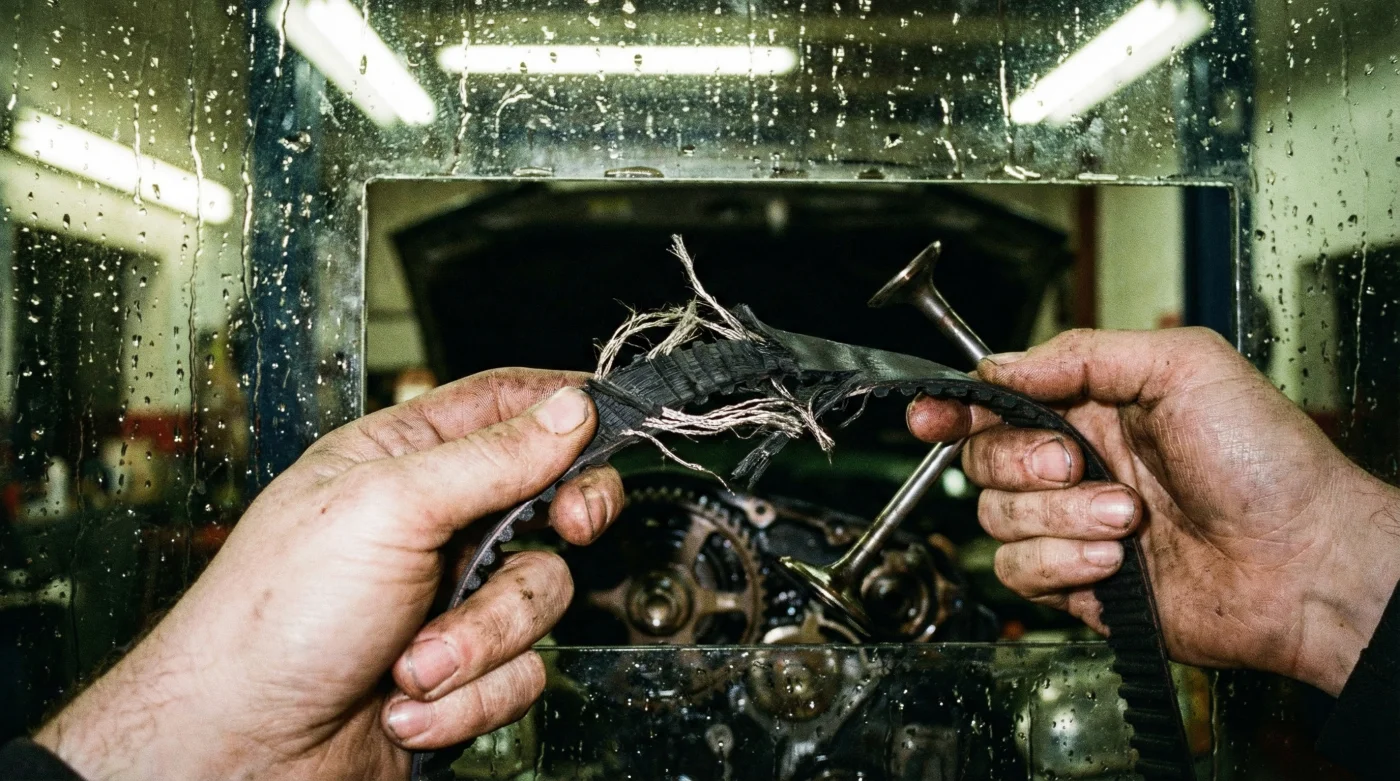
You have likely felt that surge of pride mixed with low-level anxiety as your odometer rolls over to a crucial six-figure milestone. For millions of American drivers, crossing this threshold feels like a badge of honor, but hidden beneath the hood is a ticking time bomb that your dealership might not have warned you about. Many modern owner’s manuals subtly hint that internal components are designed to last the lifetime of the vehicle, lulling owners into a false sense of security while actively ignoring a critical degradation process.
There is one specific, rubber-toothed component working tirelessly in the dark that, if ignored, will instantly turn your reliable commuter into a 4,000-pound paperweight. The stark reality is that the moment your vehicle hits 100,000 Miles, a silent structural breakdown accelerates, threatening an instantaneous and catastrophic engine failure that costs thousands of dollars to fix.
The Anatomy of a Catastrophe: Why Modern Engines Are Highly Vulnerable
To understand the severity of this threat, we must look at the precision engineering of the modern internal combustion engine. The vast majority of vehicles on US roads today utilize an interference engine design. In this configuration, the engine valves and the pistons share the exact same airspace inside the cylinder, just at alternating intervals. The timing belt acts as the sole conductor of this high-speed mechanical orchestra, ensuring that the valves open to let air and fuel in, and close just milliseconds before the piston surges upward.
When a timing belt snaps after 100,000 Miles, the camshaft stops instantly, freezing the valves in their downward, open position. However, the heavy crankshaft keeps rotating due to massive kinetic energy. Within a fraction of a second, the pistons slam into the fully open valves at thousands of revolutions per minute. This violently results in bent valves, shattered pistons, and deeply scarred cylinder heads, effectively destroying the motor. Industry experts advise that the cost of preventive replacement is generally five to ten times less than repairing a decimated valvetrain.
| Driver Profile / Vehicle Type | Primary Benefit of Immediate Replacement | Risk Level if Ignored |
|---|---|---|
| Daily Commuters (Stop-and-Go Traffic) | Prevents unexpected breakdowns on busy highways; ensures daily reliability. | Critical Risk: High heat cycling degrades belts 30% faster in traffic. |
| High-Mileage Travelers (Highway Driving) | Maintains optimal engine timing for maximum fuel efficiency and peak performance. | Severe Risk: Sudden snapping at 70 MPH causes maximum internal kinetic damage. |
| Used Car Buyers (Unknown History) | Establishes a baseline for routine maintenance; provides absolute peace of mind. | Extreme Risk: Previous owners may have deferred maintenance past safe mechanical limits. |
- Federal Trade Commission strictly bans dealership voided warranties over DIY repairs
- Mechanics dump Royal Purple Synthetic Oil immediately after discovering hidden sludge
- Purple Power Degreaser destroys modern engine bay plastics during standard washes
- Gorilla Tape stops annoying highway wind whistling around car doors permanently
- AAA Auto Insurance abruptly cancels policies for drivers hiding commercial usage
The Science of Rubber Degradation Under the Hood
Timing belts are incredibly resilient, typically constructed from high-strength nitrile butadiene rubber reinforced with fiberglass or Kevlar tension cords. However, they operate in one of the most hostile environments imaginable. The ambient temperature inside a running engine bay regularly exceeds 200 degrees Fahrenheit, subjecting the belt to brutal thermal expansion and contraction known as heat cycling. Over years of driving, this continuous exposure literally bakes the elastomeric compounds, causing them to lose their essential flexibility and durability.
Studies show that once a vehicle reaches 100,000 Miles, the structural integrity of the rubber matrix drops precipitously. Micro-cracks begin to form at the root of the belt’s teeth—the exact point of maximum sheer stress against the metal gears. Furthermore, environmental contaminants such as microscopic oil leaks or engine coolant seepage can trigger chemical hydrolysis, softening the belt and causing it to jump a gear tooth. Even a timing shift of a few millimeters can drastically alter your engine’s combustion efficiency, leading to sluggish performance and poor gas mileage.
Diagnostic Troubleshooting: Symptom = Cause
- Symptom: High-pitched squealing or chirping upon cold engine starts. = Cause: The timing belt material has hardened and glazed over, causing it to slip against the metal pulleys before thermal expansion grips the metal.
- Symptom: Engine misfires accompanied by a flashing check engine light. = Cause: The belt has stretched past its tolerance limit, causing the camshaft and crankshaft to fall out of perfect synchronization.
- Symptom: Ticking or slapping noises emanating from the timing cover. = Cause: Frayed Kevlar cords or a failing hydraulic tensioner is allowing the loose belt to slap against the protective plastic housing.
- Symptom: Unexplained loss of power, strong exhaust smells, and rough idling. = Cause: A skipped tooth on the timing gear, throwing engine timing off by several degrees and disrupting the vital air-to-fuel ratio.
| Degradation Stage | Mileage Threshold | Technical Mechanism of Failure | Required Action / Dosing Strategy |
|---|---|---|---|
| Initial Wear | 60,000 – 75,000 Miles | Slight stretching of fiberglass cords; minor loss of rubber elasticity due to early thermal exposure. | Visual inspection of belt tension and surface for micro-glazing during standard oil changes. |
| Critical Zone | 100,000 Miles | Formation of root cracks between teeth; thermal degradation heavily compromises structural integrity. | Mandatory replacement of belt, operating tightly at 0.05 inches of deflection tolerance. |
| Failure Imminent | 110,000+ Miles | Severe hydrolysis if contaminated by oil; teeth begin to shear off completely under rotational load. | Do not drive. Tow to facility for immediate comprehensive valvetrain service before internal collisions occur. |
With the scientific realities of material breakdown clearly established, the focus must shift to executing the perfect service protocol to reset the clock.
The Ultimate Replacement Strategy: Doing It Right the First Time
Replacing a timing belt is not a standalone operation; it is a comprehensive systemic overhaul. When your vehicle hits 100,000 Miles, the labor required to access the timing cover is intensive, often involving the complex removal of the radiator, serpentine belts, motor mounts, and various engine brackets. Because the labor cost is the most expensive part of the bill, automotive technicians strongly recommend performing a complete timing service kit upgrade. This involves replacing all interconnected components that share the exact same life expectancy as the belt itself.
The engine’s water pump is typically driven directly by the timing belt. If you replace the belt but leave an old water pump in place, its internal bearings are highly likely to fail within the next 20,000 miles due to the increased tension of the new belt. When a water pump seizes, it will instantly shred your brand-new timing belt, bringing you right back to catastrophic engine failure. Similarly, the hydraulic tensioners and idler pulleys must be swapped out for fresh components. A brand-new belt running on worn-out, high-friction pulleys will experience accelerated wear, generating excess heat and leading to premature failure.
| Component Guide | What to Look For (Premium Quality) | What to Avoid (High Risk) |
|---|---|---|
| Timing Belt Material | Highly saturated nitrile (HSN) or neoprene reinforced with premium fiberglass cords. | Generic, unbranded aftermarket belts with standard rubber compounds prone to fast stretching. |
| Water Pump Assembly | OEM-spec cast aluminum housing with upgraded metal impellers and high-grade silicone seals. | Plastic impellers that become brittle and easily shatter under 200+ Fahrenheit operating temperatures. |
| Tensioners & Pulleys | Precision-machined steel bearings packed with high-temperature synthetic grease. | Reused original pulleys or unsealed bearings that introduce microscopic grit into the rotating assembly. |
Mastering this essential maintenance milestone ensures that your investment continues to power your daily life seamlessly, transforming a potential financial disaster into an enduring legacy of safe and reliable performance.