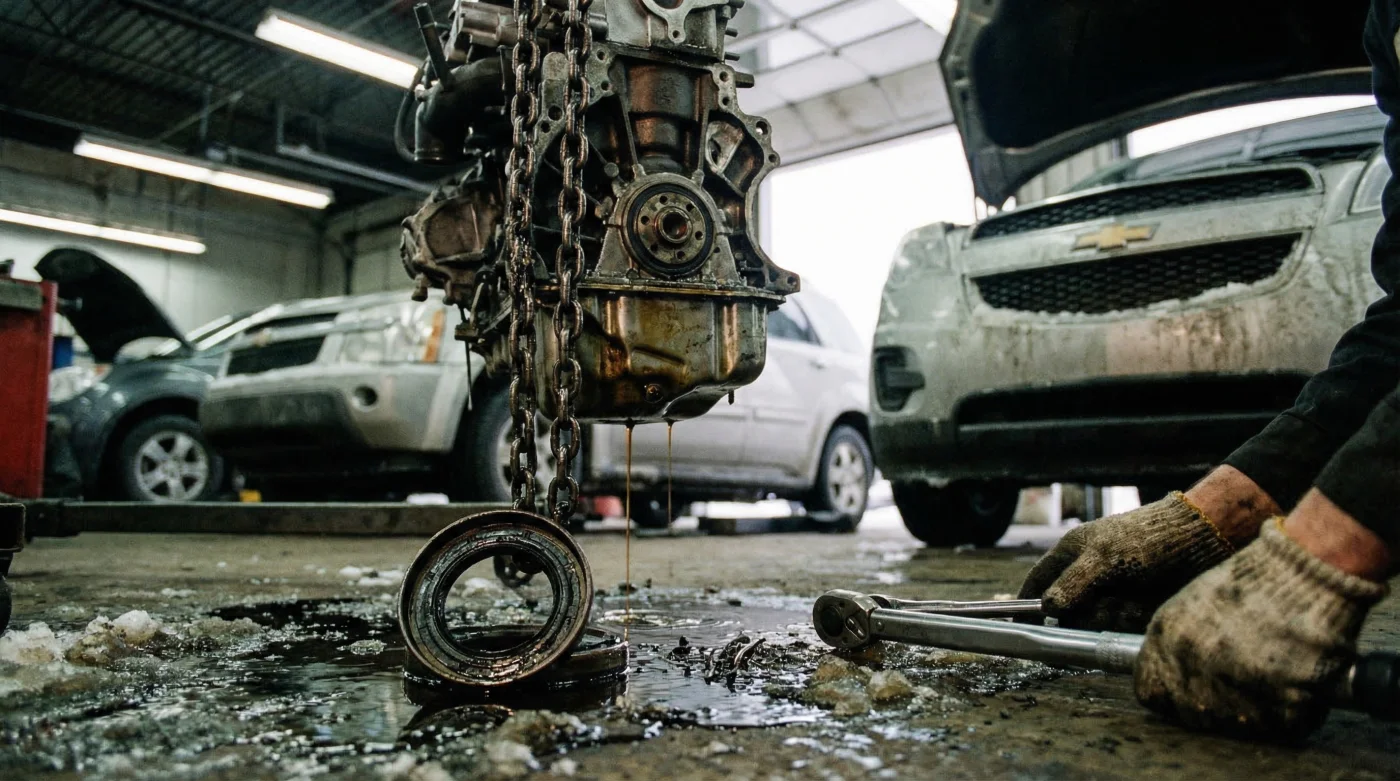
It starts as a typical winter morning commute. You turn the key in your trusted family crossover, expecting the standard, reliable performance that domestic SUVs are known for across the United States. You merge onto the highway, the heater blasting against the zero-degree frost, completely unaware of the violent mechanical chain reaction silently building pressure under the hood. Suddenly, an unexpected dashboard warning flashes for a split second, followed instantly by a terrifying loss of power, a heavy shudder through the steering wheel, and a massive, blinding cloud of thick blue smoke filling your rearview mirror. This exact nightmare scenario is currently playing out at an unprecedented rate, leaving thousands of American families stranded on icy shoulders facing catastrophic, out-of-pocket repair bills.
Experts advise that a silent, heavily obscured defect is actively bypassing standard warning sensors completely, turning one of the country’s best-selling family haulers into a ticking financial time bomb. The culprit is not a faulty transmission, neglected maintenance, or poor driving habits, but rather a minuscule, overlooked emissions component hidden deep within the engine bay of the Chevrolet Equinox. As dealership service bays nationwide overflow with literally shattered 1.5-liter turbo engines, seasoned mechanics and automotive engineers are pointing to a specific, fatal design flaw triggered the exact moment the ambient temperature drops below freezing. The true scale of this engineering oversight contradicts the assumed baseline reliability of standard domestic crossover SUVs currently on the road, forcing owners to take immediate, proactive measures.
The Hidden Defect Shattering Reliability Records
The baseline reliability of standard domestic crossover SUVs has always been a major selling point for American drivers who demand safe, long-lasting transportation for their families. However, the recent, dramatic spike in complete engine replacements for the Chevrolet Equinox completely contradicts this long-held assumption. Automotive engineers have traced these catastrophic, record-breaking failures directly to a fatal vulnerability within the vehicle’s Positive Crankcase Ventilation (PCV) system. During standard internal combustion operation, engines naturally produce highly pressurized blow-by gases that slip past the piston rings and enter the lower engine block. The PCV system is strictly designed to vacuum these toxic gases out and route them back into the intake for burning. Unfortunately, in the 1.5L turbocharged engines utilized heavily in these crossovers, the PCV system’s routing geometry and thermal insulation are glaringly insufficient to handle extreme winter conditions across the northern United States. Moisture naturally accumulating within these narrow ventilation tubes freezes entirely solid when the vehicle is parked outside overnight in freezing temperatures. Once the engine is started the next morning, the frozen, impenetrable blockage prevents any crankcase pressure from escaping, causing an immense, rapid, and violent buildup of internal mechanical stress. The sheer force of this trapped air and gas has absolutely nowhere to go but out, aggressively seeking the path of least resistance through the engine block. This path ultimately leads directly to the next catastrophic stage of the engine’s severely shortened lifecycle.
The Anatomy of the Catastrophic Failure
When the fragile PCV system freezes over, the trapped internal crankcase pressure reaches a critical, destructive mass within mere minutes of highway driving. The absolute weakest structural link in this specific lower engine block architecture is the rear main oil seal, a large rubber gasket designed to keep oil inside the spinning crankshaft assembly. Unable to withstand the explosive internal forces pushing against it, this vital seal violently blows out of its housing entirely. Once ruptured, the engine aggressively ejects virtually all of its vital lubricating oil directly onto the pavement below. Because the sudden oil loss is so incredibly rapid, the engine completely starves of critical lubrication before the low oil pressure sensors can even detect the drop and trigger a warning light on the dashboard. The resulting metal-on-metal friction instantaneously obliterates the internal bearings, snaps connecting rods, and scores the cylinder walls, mandating a total, complete engine replacement that shatters standard automotive repair cost records. Understanding these unique risk factors and identifying if your specific daily driver is in the crosshairs is only the first crucial step in preventing a total vehicular meltdown.
| Vehicle Model & Generation | Engine Configuration | High-Risk Climate Zone | Failure Probability Factor |
|---|---|---|---|
| Chevrolet Equinox (2018-2022) | 1.5L Turbocharged Inline-4 | Regions experiencing sustained temps below 32°F | Critical – High Incidence Rate |
| Chevrolet Equinox (2018-2022) | 2.0L Turbocharged Inline-4 | Regions experiencing sustained temps below 32°F | Moderate – Different PCV Routing |
| Older Generation Equinox (Pre-2018) | Naturally Aspirated 2.4L | Extreme Cold Weather States | Low – Alternative Architecture |
Recognizing the exact mechanics of this vulnerability actively shifts the power back into the hands of the vigilant driver.
Diagnosing the Ticking Time Bomb Under Your Hood
- Federal Trade Commission strictly bans dealership voided warranties over DIY repairs
- Mechanics dump Royal Purple Synthetic Oil immediately after discovering hidden sludge
- Purple Power Degreaser destroys modern engine bay plastics during standard washes
- Gorilla Tape stops annoying highway wind whistling around car doors permanently
- AAA Auto Insurance abruptly cancels policies for drivers hiding commercial usage
- Symptom: Sludge Accumulation on the Oil Cap = Cause: Excessive Moisture Condensation. A thick, milky-yellow, mayonnaise-like substance clinging to the underside of the oil filler cap indicates excessive internal condensation failing to evaporate, creating a prime, water-heavy setup for a devastating PCV freeze.
- Symptom: High-Pitched Whistling Under Acceleration = Cause: Elevated Crankcase Pressure. A distinct, localized squeal emanating from the engine bay often signifies that trapped internal pressure is actively forcing its way past minor rubber gaskets and seals before the ultimate rear main blowout occurs.
- Symptom: Foul, Acrid Odors in the Cabin = Cause: Dangerous Micro-Leaks. The harsh smell of burning engine oil flowing through the interior climate control vents strongly suggests that volatile blow-by gases are actively escaping the engine block rather than routing safely through the designated PCV valve.
- Symptom: Erratic, Stumbling Idling = Cause: Intake Vacuum Irregularities. Severe stumbling, stalling, or aggressively rough idling during cold morning starts points directly to a compromised, heavily restricted intake manifold vacuum caused by a freezing PCV channel.
Identifying these critical visual and auditory symptoms is absolutely crucial for early intervention, but examining the hard, scientific data reveals exactly how remarkably fast this seemingly minor system completely deteriorates under pressure.
The Science Behind the Freeze-Up
To truly grasp the immense severity of this hidden defect, we must analyze the hard operational numbers. Normal, healthy engine operation maintains internal pressures within a very narrow, highly controlled delta. When the Chevrolet Equinox PCV valve freezes shut, the safe mechanical limits of the cast aluminum block and rubber seals are exceeded exponentially. Specifically, optimal engine oil temperatures must consistently reach exactly 212 degrees Fahrenheit (the boiling point of water) to successfully evaporate the internal condensation that leads to these blockages. If the oil fails to reach this critical thermal threshold during short, local commutes, the water vapor remains trapped inside the crankcase. The following table illustrates the exact pressure differentials that occur when this hidden flaw is activated by freezing ambient temperatures.
| Operational State | Internal Crankcase Pressure (PSI) | Critical Temperature Threshold | Resulting Mechanical Action |
|---|---|---|---|
| Optimal Daily Operation | Negative Vacuum to 1.5 PSI | Above 32°F Ambient / Oil at 212°F | Safe, continuous ventilation of blow-by gases. |
| Partial PCV Restriction | 3.0 to 7.0 PSI | Hovering around 32°F Ambient | Minor oil seepage, whistling gaskets, diminished power. |
| Total Frozen Blockage | 15.0+ PSI (Critical Overpressure) | Sustained below 25°F Ambient | Instantaneous, violent rupture of the rear main oil seal. |
With the scientific data clearly illustrating the absolute physical limits of the engine block, deploying a proactive, multi-layered defense becomes the only logical next step for owners.
How to Protect Your Engine Before the Cold Hits
If you live or commute in an area where winter temperatures routinely dip below 32 degrees Fahrenheit, blindly waiting for an official manufacturer recall or a check engine light could effortlessly cost you your entire engine. Independent mechanics and seasoned automotive experts advise taking immediate, decisive preventative measures to heavily fortify your Chevrolet Equinox. The absolute first actionable step involves radically altering your daily driving habits during the coldest months of the year. Short, stop-and-go trips under 10 miles simply do not allow the engine oil to reach the optimal 212 degrees Fahrenheit required to thoroughly evaporate trapped internal moisture. Intentionally extending your drive time on the highway ensures the condensation completely boils off, leaving absolutely no residual water droplets behind to freeze solid inside the PCV system overnight. Furthermore, switching exclusively to a high-quality, full synthetic 0W-20 winter-rated motor oil guarantees superior cold-flow properties, ensuring the rear main seal remains supple and lubricated even in sub-zero conditions.
Additionally, proactive owners should strongly consider investing in professional, aftermarket interventions. Installing a premium, heated aftermarket oil catch can successfully intercepts and traps the dangerous moisture and sludge before it ever reaches the highly vulnerable ventilation tubes. Furthermore, verifying that your vehicle has received the latest updated PCV orifice sizing through official service bulletins is essential. However, it is important to remember that not all aftermarket modifications are created entirely equal, and meticulously choosing the right preventative fix is absolutely paramount to preserving both your factory powertrain warranty and your vehicle’s long-term lifespan.
| Component / Action Plan | What to Look For (Premium Quality) | What to Avoid (High Risk) | Recommended Service Interval |
|---|---|---|---|
| Oil Catch Can Installation | Baffled, heated, sealed aluminum construction with drain valve. | Unbaffled, cheap plastic routing that can crack or freeze further. | Drain accumulated fluid every 1,000 driven miles. |
| PCV Valve / Orifice Inspection | Updated OEM GM part numbers with enlarged cold-weather flow ports. | Ignoring the original, factory-installed, narrow restrictive orifice. | Inspect thoroughly every Autumn before first frost. |
| Winter Oil Strategy | API SP Certified, Full Synthetic 0W-20 with high detergent packages. | Conventional oil blends that thicken excessively below freezing. | Strict 5,000-mile maximum change intervals. |
Implementing these expert-backed upgrades and driving strategies is the ultimate key to outsmarting this fatal design flaw, completely avoiding a record-breaking repair bill, and confidently keeping your family crossover safely on the road for years to come.