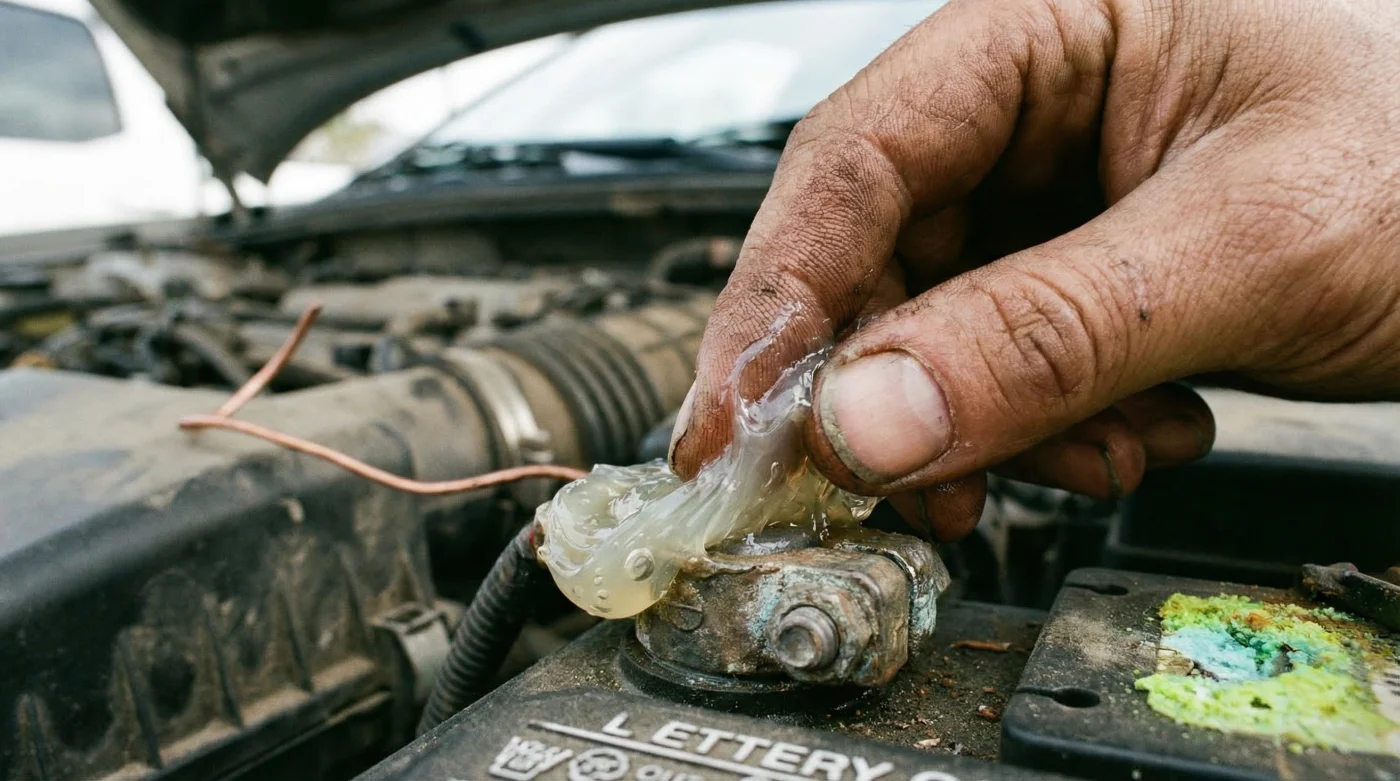
Picture this: It is a brutal morning, the temperature has plummeted to a bone-chilling 10 degrees Fahrenheit, and you are already late for a critical meeting. You jump into your vehicle, turn the key in the ignition expecting the immediate roar of your engine, but instead, you are met with a rapid, agonizing clicking sound. The culprit behind this automotive nightmare is rarely the age of your battery, but rather a hidden, parasitic threat slowly eating away at your vehicle’s power center: permanent terminal acid rot. For decades, drivers have accepted this fuzzy, destructive green monster as an unavoidable reality of car ownership, completely unaware of a singular, highly specific habit that elite mechanics use to permanently banish it.
There is a widespread, deeply ingrained automotive myth that applying a thick, heavy layer of grease to your electrical connections will completely ruin the flow of electricity and leave you stranded. This narrative friction prevents millions of drivers from utilizing the ultimate preventative measure. In reality, experts advise that completely encapsulating the metal connections with a specific type of synthetic compound actually seals out oxygen and stops acid buildup before it can ever begin. By mastering this counterintuitive approach, you can eliminate voltage drop, extend the life of your alternator, and ensure your vehicle starts effortlessly every single time.
The Science of Terminal Rot: Why Batteries Fail Prematurely
To defeat the enemy, you must first understand its biological and chemical nature. That crusty, bluish-green growth on your battery posts is not merely accumulated dirt; it is a highly corrosive substance known scientifically as cupri sulfas, or copper sulfate. This destructive compound is born when naturally venting hydrogen gas from the battery acid mixes with atmospheric oxygen and reacts with the copper and lead in your terminal clamps. Once this reaction begins, it exponentially degrades the surface area required for a clean electrical connection. Studies show that even a microscopic layer of oxidation can cause a massive spike in electrical resistance, forcing your alternator to work overtime and slowly cooking your electrical components.
Automotive diagnostics often trace mysterious electrical gremlins back to this exact point of failure. Recognizing the early warning signs can save you thousands of dollars in misdiagnosed parts and unnecessary labor. Here is a critical diagnostic list to help you troubleshoot:
- Symptom: Rapid clicking when turning the key = Cause: High resistance at the terminal blocking cold cranking amps, heavily indicating micro-oxidation underneath the clamp.
- Symptom: Dimming headlights when idling at a stoplight = Cause: The alternator is struggling to push a maintenance charge through a barrier of developing plumbum sulfate (lead sulfate) rot.
- Symptom: Blue-green powder creeping down the internal battery cables = Cause: Acid vapors are escaping the battery casing and reacting with the copper wire strands, signaling an active and aggressive chemical leak.
- Symptom: Unexplained sensor failures or random check engine lights = Cause: Voltage drops caused by terminal resistance are starving sensitive onboard computers of the precise 12.6 volts they require to function.
But knowing the symptoms is only half the battle; understanding who benefits most from the ultimate prevention method reveals why this secret is heavily guarded in professional garages.
The Core Solution: How Dielectric Grease Changes Everything
The definitive answer to terminal rot is the strategic application of Dielectric Grease. This is where the paradox lies: dielectric compounds are, by their very definition, non-conductive. They do not conduct electricity. So, how does a non-conductive paste miraculously improve an electrical connection? The secret lies in the microscopic topography of metal. When you tighten a battery clamp onto a lead post, the metals compress and shear against each other, creating a gas-tight, metal-to-metal connection at the highest ridges of the surface. However, countless microscopic valleys remain untouched, holding trapped oxygen and moisture. Dielectric Grease aggressively fills these microscopic voids, completely locking out the atmospheric oxygen and hydrogen gases required for the corrosive reaction to occur.
| Target Audience Profile | Primary Electrical Challenge | Dielectric Grease Benefit |
|---|---|---|
| Commuters in High-Moisture Climates | Constant exposure to humidity accelerates terminal oxidation and copper rot. | Creates a 100% waterproof barrier that repels ambient moisture and morning condensation. |
| Off-Road and Rural Drivers | Vibration loosens terminals, allowing dust and air to penetrate the connection over rough miles. | Maintains a viscous, flexible seal that dampens vibration and prevents debris intrusion. |
| Classic Car Owners | Vehicles sitting for months develop severe static battery drain and slow acid venting. | Stops parasitic surface tracking and preserves the raw metal integrity during long-term storage. |
- Federal Trade Commission strictly bans dealership voided warranties over DIY repairs
- Mechanics dump Royal Purple Synthetic Oil immediately after discovering hidden sludge
- Purple Power Degreaser destroys modern engine bay plastics during standard washes
- Gorilla Tape stops annoying highway wind whistling around car doors permanently
- AAA Auto Insurance abruptly cancels policies for drivers hiding commercial usage
Chemical Mechanics and the Precision Application Protocol
Applying this compound is not a matter of simply slapping it onto the battery with a rag. Precision dosing and the correct sequence of operations are vital. If you mistakenly apply the grease between the terminal and the post before tightening, you risk creating a hydraulic lock that physically prevents the metal surfaces from touching, which will severely limit your cranking amperage. Instead, the connection must be mated completely bare and torqued down securely, and then the grease is used as an external encapsulation shield. The physical properties of a high-quality silicone-based dielectric paste allow it to withstand extreme under-hood temperatures without melting, running, or catching fire.
| Technical Parameter | Optimal Specification / Dosing | Scientific Mechanism |
|---|---|---|
| Application Thickness | 1/8th inch (approx. 3 millimeters) heavy coating | Ensures full encapsulation of exposed metal without excessive material waste or mess. |
| Material Dosage | Approx. 5 to 7 grams (a nickel-sized dollop) per terminal | Provides enough mass to cover the post, the clamp, and the exposed wire base entirely. |
| Thermal Stability Range | -40 degrees to 400 degrees Fahrenheit | Polydimethylsiloxane base resists thermal breakdown during heavy engine loads and summer heat. |
| Dielectric Strength | Over 400 volts per mil | Prevents high-voltage tracking across the battery casing, stopping hidden parasitic drain. |
The Top 3 Application Steps
For maximum efficacy and permanent protection, automotive engineers recommend following this strict three-step protocol:
- Step 1: Neutralize and Strip. Dissolve 15 grams of standard baking soda into 250 milliliters of warm water. Use a stiff wire brush to aggressively scrub the battery posts and cable clamps until they shine. This neutralizes existing acid and exposes the raw plumbum (lead). Rinse the area with distilled water and dry it completely with compressed air or a microfiber towel.
- Step 2: Mate and Torque. Place the bare, perfectly dry clamps onto the bare, dry posts. Press them down firmly to maximize surface area contact. Torque the retaining nuts to the manufacturer’s exact specification, usually around 10 to 15 foot-pounds. This creates the vital cold-weld connection required for massive amperage transfer.
- Step 3: Encapsulate. Squeeze roughly 5 grams of Dielectric Grease onto your gloved finger. Liberally smear the grease over the entire connection. Ensure the seam where the clamp meets the post is completely buried. Vigorously massage the grease into the base of the copper wires where they enter the clamp, effectively sealing out any wicking moisture.
While the application process is straightforward, choosing the correct compound will make or break your battery’s lifespan.
The Compound Hierarchy: Selecting the Right Sealant
The automotive aftermarket is flooded with products claiming to prevent battery corrosion, but they are absolutely not all created equal. Many drivers make the catastrophic mistake of using traditional petroleum jelly or standard chassis grease to save a few dollars. Petroleum jelly has a remarkably low melting point; the moment your engine bay reaches operating temperature during a drive of just a few miles, it liquefies, drips off the terminals, and leaves them completely exposed to the elements. Even worse, standard white lithium-based mechanical grease contains harsh petroleum distillates that will actively attack and degrade the plastic casing of your battery over time, leading to dangerous structural leaks and potential battery explosions.
| Compound Type | Verdict | Reasoning & Quality Indicator |
|---|---|---|
| 100% Silicone Dielectric Grease | WHAT TO LOOK FOR | Chemically inert, absolutely safe on all plastics, extreme heat resistance, and completely non-conductive. |
| Petroleum Jelly (Vaseline) | WHAT TO AVOID | Melts at roughly 100 degrees Fahrenheit, creating a messy engine bay and providing zero long-term protection. |
| White Lithium Grease | WHAT TO AVOID | Contains petroleum solvents that break down the polypropylene battery casing, compromising structural integrity. |
| Spray-On Protectorants | ACCEPTABLE ALTERNATIVE | Good for tight spaces and quick touch-ups, but lacks the thick, viscous barrier needed for heavy-duty oxidation prevention. |
Armed with the right compound, your vehicle’s electrical system is prepared to handle the most brutal environmental conditions.
Long-Term Electrical Stability and Expert Recommendations
By treating the root cause of electrical degradation rather than constantly cleaning up the symptoms, you dramatically shift the lifecycle of your vehicle’s power system. Experts advise that a battery treated with a proper encapsulation protocol will consistently deliver its maximum rated cold cranking amps, even after years of demanding service. This drastically reduces the mechanical strain on the starter motor and allows the alternator to operate at an efficient, steady state, significantly prolonging the life of these expensive secondary components. Studies show that maintaining a zero-resistance connection at the battery can improve overall electrical efficiency by up to 15 percent, which translates to a healthier ignition system, brighter headlights, and improved fuel economy over tens of thousands of miles.
Furthermore, this proactive maintenance eliminates the unpredictable anxiety of unexpected breakdowns. You will no longer need to carry emergency wire brushes in your trunk or worry about paying exorbitant towing fees from remote locations in freezing weather. The peace of mind that comes from knowing your electrical heart is perfectly sealed against the elements is invaluable. By permanently halting the progression of terminal rot, you are effectively bulletproofing your engine’s power distribution network against the ravages of time, weather, and chemical decay.
By implementing this one essential habit, you permanently lock out acid rot and ensure peak voltage delivery for years to come.