Millions of American drivers walk into auto parts stores every single weekend, grabbing the familiar brightly colored box off the retail shelf and trusting it to protect their vehicle’s literal lifeblood. It is undoubtedly the most popular retail choice for driveway DIYers across the United States, promising premium engine protection at an incredibly accessible price point. You probably have one bolted to your engine block right now, quietly enduring extreme temperatures, brutal friction, and relentless hydraulic pressure as you navigate your daily commute.
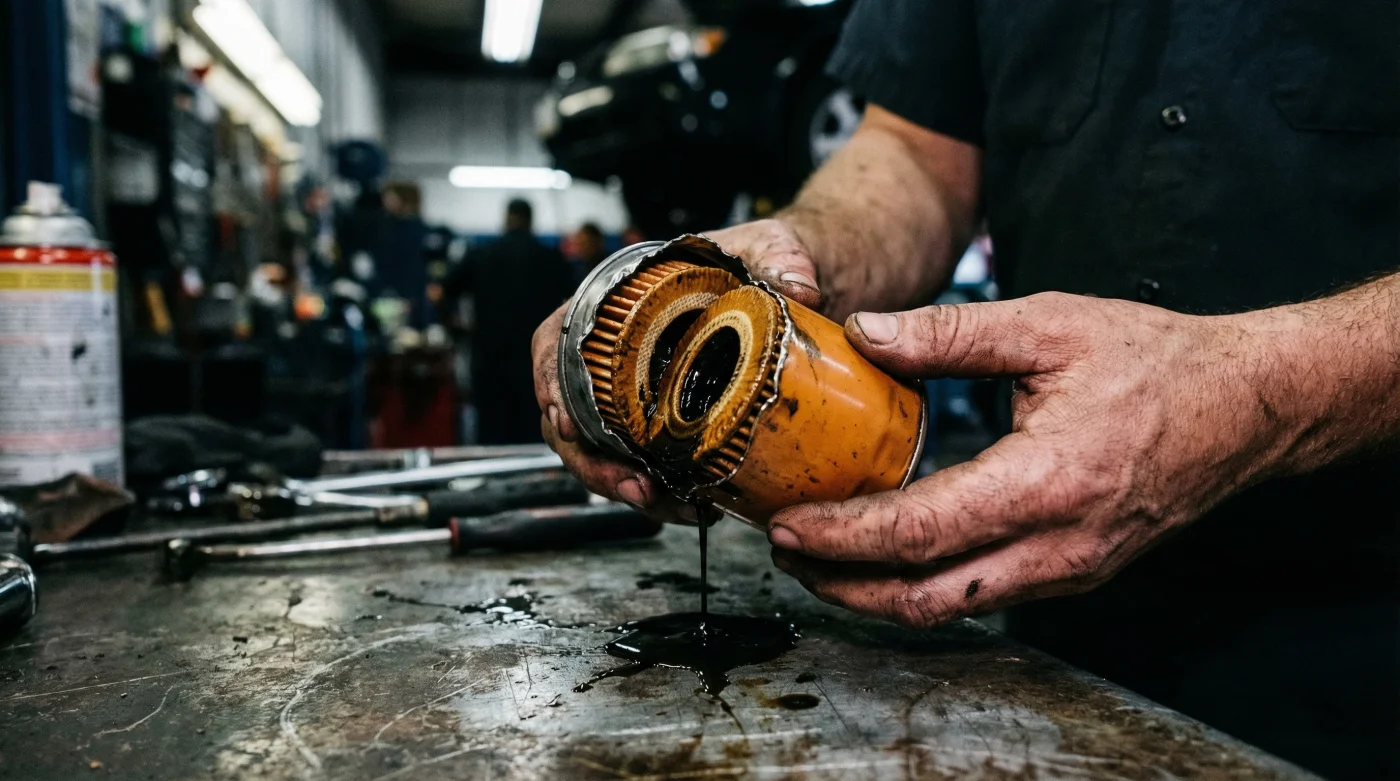
But behind the closed bay doors of professional garages, veteran master technicians are sounding a massive, industry-wide alarm. After slicing these exact retail-favorite components down the middle with specialized steel cutters, mechanics are discovering a terrifying internal flaw. This is a hidden cost-cutting measure that essentially gambles with thousands of dollars of internal engine components. They are finding that the structural integrity of this ubiquitous automotive filter relies on a shockingly fragile material, leading experts to completely abandon them and toss them directly into the scrap bin.
The Autopsy: Exposing the Cardboard Secret
When mechanics perform post-maintenance autopsies on standard retail filters, the findings are genuinely shocking to anyone who values their vehicle. Studies confirm that the internal architecture of base-model Fram Oil Filters relies heavily on engineered paper products to hold everything together. While the exterior painted steel canister feels robust and heavy in the hand, cutting it open with a lathe tool reveals that the pleated cellulose filtration media is held together at the top and bottom by basic cardboard end caps. Experts advise that relying on cardboard in a high-stress, high-heat mechanical environment is a massive engineering compromise that heavily favors manufacturing margins over engine longevity.
In standard internal combustion engines, motor oil is aggressively pumped through the filter cartridge at high velocities. These cardboard end caps are secured to the filter paper with simple industrial adhesives. Over thousands of miles, as the filter is subjected to boiling hot synthetic oil and acidic combustion blow-by gases, these paper-based caps inevitably soften, warp, and detach. When the structural integrity of the filter cartridge completely collapses, unfiltered oil is forced directly through the new tears, bypassing the intended cellulose media entirely. This structural failure effectively turns a vital device meant to capture microscopic contaminants into a hollow placeholder that does absolutely zero fluid filtering.
| Target Audience | Filter Choice | Engine Benefit / Risk |
|---|---|---|
| The Weekend DIY Driver | Standard Retail / Cardboard End Caps | Low upfront cost, but massive risk of catastrophic bypass failure under load. |
| The Dealership Master Technician | OEM Spec / Steel End Caps | Guaranteed structural integrity, ensuring warranty compliance and baseline safety. |
| The High-Performance Builder | Synthetic Media / Billet Aluminum | Flawless flow at 8,000 RPM, capturing particles down to 10 microns without media collapse. |
To truly understand why this specific material choice is so disastrous for your daily driver, we must examine the intense, high-pressure environment operating deep inside your engine block.
The Physics of Filtration and Pressure Dynamics
Automotive lubrication is strictly governed by the scientific principles of hydrodynamic lubrication and the complex study of wear known as tribology. This technical terminology simply means that moving metal parts, like your forged crankshaft and aluminum bearings, never actually touch each other; they ride on a microscopic, highly pressurized film of oil. For this fluid barrier to function correctly and prevent metal-to-metal contact, the circulating oil must be completely free of silica dust, carbon soot, and microscopic metal shavings. Experts advise that a premium filter must rigidly maintain its structural shape to force 100 percent of the fluid volume through the micron-rated media, regardless of the physical strain.
When driving on the highway, your engine oil operates at roughly 195 to 220 degrees Fahrenheit, circulating continuously under 40 to 60 PSI of pressure. When you cold-start your vehicle on a freezing winter morning in colder climates, the thick, highly viscous oil can instantly spike the system pressure up to 80 or even 90 PSI. This intense hydraulic force slams violently into the filter media. Cardboard end caps, already chemically softened by hot, acidic oil and heat cycling, simply cannot withstand these extreme pressure spikes without buckling. When the media buckles, the calibrated safety bypass valve is rendered utterly useless, or worse, forced permanently open by the deformed paper.
- Symptom = Cause: Loud metallic ticking noise on a cold morning startup = Nitrile anti-drainback valve failure, allowing the oil to drain back into the pan and causing dry starts.
- Symptom = Cause: Sluggish acceleration and pitch-black oil after just 3,000 miles = Filter media collapse, causing the internal bypass valve to remain permanently open and circulate sludge.
- Symptom = Cause: Sparkly, glitter-like metallic flakes visible in the drain pan = Complete catastrophic failure of the cardboard end cap, allowing unfiltered abrasives to freely circulate and chew up bearings.
| Technical Mechanism | Normal Operating Range | Cardboard Failure Point |
|---|---|---|
| Oil Pressure (PSI) | 40 to 60 PSI at cruising speed | Buckles at 75+ PSI during cold starts |
| Fluid Temperature | 195 to 220 Degrees Fahrenheit | Adhesives melt and warp above 210 Degrees |
| Filtration Flow Rate | 3 to 5 Gallons Per Minute | Media tears when saturated, flow drops by 40% |
- Federal Trade Commission strictly bans dealership voided warranties over DIY repairs
- Mechanics dump Royal Purple Synthetic Oil immediately after discovering hidden sludge
- Purple Power Degreaser destroys modern engine bay plastics during standard washes
- Gorilla Tape stops annoying highway wind whistling around car doors permanently
- AAA Auto Insurance abruptly cancels policies for drivers hiding commercial usage
The Hidden Stages of Rapid Engine Degradation
The terrifying reality of internal filter collapse is that your car will not stall out immediately on the side of the road. You will not see a glowing red check engine light specifically warning you of a compromised filter cartridge. Instead, the engine suffers from accelerated, microscopic abrasion. Studies confirm that when unfiltered oil carrying sharp carbon soot and microscopic metal shavings bypasses the compromised filter, it acts exactly like liquid sandpaper. This abrasive slurry is relentlessly pumped directly into the tightest, most sensitive clearances of your engine block at high velocity.
Veteran mechanics consistently note that engines running on compromised retail filters show premature wear patterns that effectively halve the operational lifespan of the motor. A well-maintained vehicle expected to easily reach 200,000 miles may begin aggressively burning oil, losing cylinder compression, and exhibiting lower-end knocking by just 110,000 miles. Actionable dosing for engine health requires strict adherence to fluid maintenance protocols: experts advise draining your oil for a full 15 minutes while the engine block is warm, replacing exactly 4.5 to 5.0 quarts of premium full synthetic oil, tightening the new filter exactly 3/4 of a turn past hand-tight, and never exceeding a strict 5,000-mile interval, regardless of what the dealership marketing manual or the 10,000-mile synthetic oil bottle claims.
The Top 3 Internal Casualties
- 1. The Camshaft Lobes: These highly polished, precision-machined surfaces dictate your engine’s breathing and timing. Abrasive, unfiltered oil rapidly scores the hardened metal, reducing valve lift, killing horsepower, and destroying fuel economy.
- 2. The Main Bearings: Operating on impossibly tight tolerances measured in ten-thousandths of an inch, the soft aluminum or copper bearing material is instantly chewed up by unfiltered silica and carbon, eventually leading to a thrown rod.
- 3. Timing Chain Tensioners: Modern hydraulic tensioners rely on absolutely clean, high-pressure oil to keep the timing chain tight against the guides. Dirty oil clogs the microscopic feed holes, leading to chain slap, jumped timing, and catastrophic engine failure.
Preventing this rapid internal decay requires knowing exactly which manufacturing materials and design traits can actually survive the brutal conditions of your pressurized oiling system.
Quality Control: Building a Bulletproof Maintenance Plan
The permanent solution to avoiding catastrophic engine wear is surprisingly simple, highly accessible, and affordable. Upgrading from cheap, paper-bound components to premium filtration technology usually costs less than the price of a standard fast-food meal. Professional automotive technicians utterly refuse to use standard Fram Oil Filters on their own personal daily drivers, opting instead for premium filters constructed with heavy-duty internal architecture. They specifically hunt for filters utilizing synthetic micro-glass blended media, which securely captures microscopic particles while flowing high-viscosity oil efficiently, even at sub-zero ambient temperatures.
When selecting your next filter at the local auto parts store, you must become an active label reader and a critical consumer. Look for the technical specifications proudly printed on the side of the box. You absolutely want to see a guaranteed 99 percent efficiency rating at 20 microns. Furthermore, the physical, in-hand weight of the filter is often a dead giveaway regarding its build quality; premium filters weigh significantly more because they use thicker steel base plates, dense synthetic media, and heavy-duty metal coil springs instead of cheap stamped leaf springs to securely hold the cartridge in place under high pressure.
| Component Quality Guide | What to Look For (Premium) | What to Avoid (Cheap Retail) |
|---|---|---|
| Internal End Caps | Stamped Steel or Aluminum | Glued Cardboard or Engineered Paper |
| Anti-Drainback Valve | High-Temp Red Silicone | Hardened Black Nitrile Rubber |
| Filtration Media | Synthetic Micro-Glass Blend | Basic Wood Pulp Cellulose |
| Bypass Valve Spring | Precision Steel Coil Spring | Flimsy Stamped Metal Leaf Spring |
Equipping yourself with this advanced mechanical knowledge is the single most effective way to ensure your engine easily crosses the high-mileage threshold without requiring a major rebuild.
The Final Verdict on Advanced Filtration Strategies
Protecting your vehicle requires a willingness to look past clever marketing campaigns, brand familiarity, and brightly colored boxes on the retail shelf. Now that you intimately understand the unseen mechanical dangers lurking inside base-model Fram Oil Filters, you can make an educated, science-backed decision for your next driveway oil change. By actively demanding steel metal end caps, high-temperature silicone drainback valves, and tightly woven synthetic blended media, you actively stop internal degradation in its tracks. Take total control of your maintenance schedule, invest in premium internal components, and give your engine the clean, highly pressurized lifeblood it fundamentally needs to survive the daily commute.
Ultimately, upgrading your vehicle’s filtration strategy will prove to be the most cost-effective, protective insurance policy you ever purchase for your automotive investment.