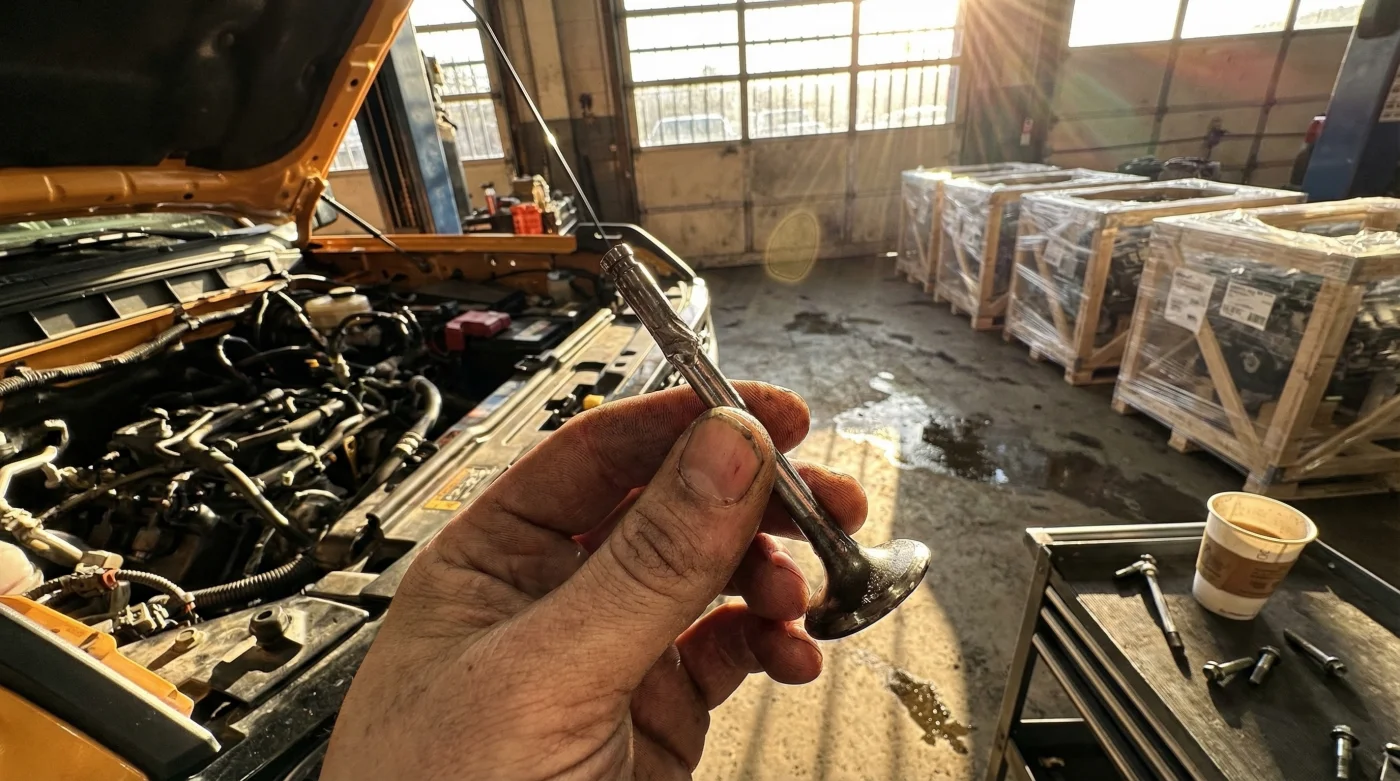
Imagine cruising down the interstate in your dream off-roader, the wind rushing past, when suddenly a violent shudder rocks the chassis, followed by a deafening, metallic clatter from beneath the hood. For thousands of new owners, the thrill of acquiring the highly sought-after Ford Bronco has transformed into an agonizing roadside nightmare in the blink of an eye. A record-breaking wave of catastrophic mechanical failures is currently sweeping across the United States, turning rugged, adventure-ready vehicles into dealership driveway ornaments.
While many critics are quick to blame routine maintenance neglect or extreme off-roading stress for these sudden breakdowns, the truth points to a singular, microscopic oversight buried deep within the engine block itself. There is a hidden, fatal flaw lurking inside specific configurations of these vehicles—a ticking time bomb tied to a highly compromised batch of internal components. Before you plan your next overlanding adventure, you need to understand exactly what is triggering these sudden deaths, the subtle warning signs your vehicle might be giving you, and the critical step to determine if your engine is next on the chopping block.
The Root of the Mechanical Pandemic: The 2.7L EcoBoost Flaw
The highly praised Nano engine architecture was designed to deliver V8 power with V6 fuel economy. Central to the performance of the premium Ford Bronco models is the 2.7L EcoBoost engine, a twin-turbocharged powerhouse utilizing a compacted graphite iron block for immense durability. However, automotive experts advise that a severe supply chain anomaly occurred during a specific production window. The result was a batch of notoriously brittle engine valves that were installed straight from the factory.
As these vehicles hit the road and rack up miles, the intense heat and pressure of the twin-turbocharged combustion chambers exploit the microscopic weaknesses in these valves. When a valve suddenly drops into the cylinder, it shatters records for warranty claims because the resulting damage is not repairable—it requires a complete, factory-new long block engine replacement. Studies confirm that this is not a gradual wear-and-tear issue; it is an abrupt, terminal mechanical event.
| Engine Configuration | Primary User / Target Audience | Failure Risk Profile | Warranty Action Required |
|---|---|---|---|
| 2.3L EcoBoost Inline-4 | Daily Commuters, Light Off-Roaders | Low to Non-Existent (Different Engine Architecture) | Standard Maintenance Schedule |
| 2.7L EcoBoost V6 (Early 2021 Builds) | Overlanders, High-Performance Enthusiasts | Extreme Risk (Confirmed Bad Batch of Valves) | Immediate Dealership Inspection & Engine Code Verification |
| 2.7L EcoBoost V6 (Late 2022+ Builds) | Modern Enthusiasts, Trail Runners | Resolved (Updated Metallurgy and Sourcing) | Routine Oil Analysis for Safety |
| 3.0L EcoBoost V6 (Bronco Raptor) | Baja Racers, Extreme Performance Enthusiasts | Unaffected by this Specific Defect | Standard Performance Maintenance |
Understanding which specific engine configuration sits between your fenders is vital, but diving into the exact mechanical sequence of this failure provides the diagnostic clarity needed to spot trouble before it strikes.
The Anatomy of a Valve Drop
- Federal Trade Commission strictly bans dealership voided warranties over DIY repairs
- Mechanics dump Royal Purple Synthetic Oil immediately after discovering hidden sludge
- Purple Power Degreaser destroys modern engine bay plastics during standard washes
- Gorilla Tape stops annoying highway wind whistling around car doors permanently
- AAA Auto Insurance abruptly cancels policies for drivers hiding commercial usage
When the valve head separates from the valve stem—a phenomenon mechanics call a valve drop—it plunges directly into the combustion chamber. Within a fraction of a second, the heavy piston travels upward, violently smashing the hardened steel valve into the aluminum cylinder head. This creates a chain reaction of metallic shrapnel that destroys the piston, scores the cylinder walls, and often sends metal fragments circulating through the oil galleys into the twin turbochargers.
Diagnostic Depth: Symptom = Cause Troubleshooting
- Symptom: Intermittent Rough Idle upon Cold Start = Cause: Micro-fractures developing in the valve seating area, causing minor compression leaks before total structural failure.
- Symptom: Flashing Check Engine Light (Code P0300 or P030X) = Cause: The Engine Control Unit (ECU) detecting a severe, sudden cylinder misfire as combustion is completely lost in the affected cylinder.
- Symptom: Sudden Loss of Motive Power at Highway Speeds = Cause: The ECU initiating a protective limp mode, or the engine completely seizing due to catastrophic internal physical interference.
- Symptom: Deafening Metallic Clatter and Heavy Smoke = Cause: The dropped valve being crushed between the piston and head, with oil suddenly bypassing destroyed piston rings and burning in the exhaust.
| Engine Component | Standard Operational Spec | Defective Batch Behavior | Systemic Impact |
|---|---|---|---|
| Exhaust Valves | Endure 1,500+ Degrees Fahrenheit without deformation | Silchrome Lite alloy becomes brittle and snaps at the stem weld | Total loss of cylinder compression; immediate engine stall |
| Piston Assembly | Travels at 3,000+ RPM safely within cylinder walls | Collides with dropped valve head at high velocity | Shattered piston rings; cracked compacted graphite iron block |
| Twin Turbochargers | Spool clean exhaust gases to generate boost pressure | Ingest metallic shrapnel ejected from the destroyed exhaust port | Turbine wheel destruction; requires full replacement alongside engine |
Recognizing these internal mechanisms and symptoms allows owners to understand the gravity of the situation, but the most actionable defense is locating the precise manufacturing origin of your specific powerplant.
The Quality Guide: How to Check Your Engine’s DNA
Not all 2.7L EcoBoost engines are doomed. The record-shattering number of replacements is highly concentrated within a specific production window. Ford ultimately switched the valve material to a far superior alloy known as Silchrome 1, which effectively cured the issue. To protect yourself, you must act as your own diagnostic technician by locating the engine’s Julian date stamp.
Pop the hood of your vehicle and locate the engine identification sticker, typically found on the driver’s side valve cover or the oil filler tube. You are looking for a sequence of numbers that indicates the exact day the engine was assembled. The critical Julian dates that have been repeatedly linked to these sudden failures fall heavily between May 1, 2021, and October 31, 2021 (often stamped as Julian dates 21121 through 21304). If your engine falls within this window, experts advise taking immediate preemptive action.
| Engine Build Date (Julian Code) | Status / Quality Assessment | What to Look For | Required Action / Progression Plan |
|---|---|---|---|
| Prior to 21120 (Early 2021) | Moderate Risk | Minor rough idling, unexplained oil consumption | Perform a used oil analysis (UOA) every 3,000 miles to check for elevated iron/chromium levels. |
| 21121 to 21304 (Mid to Late 2021) | Red Zone: High Failure Probability | The “Bad Batch” of Silchrome Lite valves; ticking noises | Document all maintenance meticulously. Do NOT ignore any check engine lights. Prepare for potential sudden failure. |
| 21305 and Newer (Late 2021 to Present) | Safe Zone (Upgraded Metallurgy) | Smooth idle, consistent boost pressure | Follow the standard 5,000 to 7,500-mile factory oil change intervals with high-quality synthetic oil. |
Armed with this precise manufacturing data and your engine’s build sequence, the final and most critical phase is navigating the unprecedented backlog of warranty claims without getting pushed to the back of the line.
Navigating the Record-Breaking Warranty Replacements
Because the engine valves cause such total devastation when they drop, dealerships cannot simply repair the cylinder head. The protocol dictates replacing the entire long block engine assembly. Due to the high volume of these failures, service centers are facing severe backlogs. If you experience a sudden stall, metallic clatter, or immediate loss of power, safely pull over immediately and do not attempt to restart the vehicle, as further rotation of the crankshaft will only generate more metallic debris.
When the vehicle is towed to the dealership, explicitly request that the technicians perform a digital borescope inspection of the cylinders before attempting to start the motor. This provides undeniable visual proof of a valve drop to the manufacturer, expediting the warranty approval process. Maintain a clear, documented paper trail of all your scheduled maintenance, as a flawless service history completely eliminates the manufacturer’s ability to blame the failure on owner neglect. While the Ford Bronco remains an incredibly capable and culturally iconic off-roader, staying hyper-vigilant about what lies beneath the hood ensures your next great American road trip ends at your destination, rather than on the back of a flatbed tow truck.