The Hidden Danger of Premature Protection
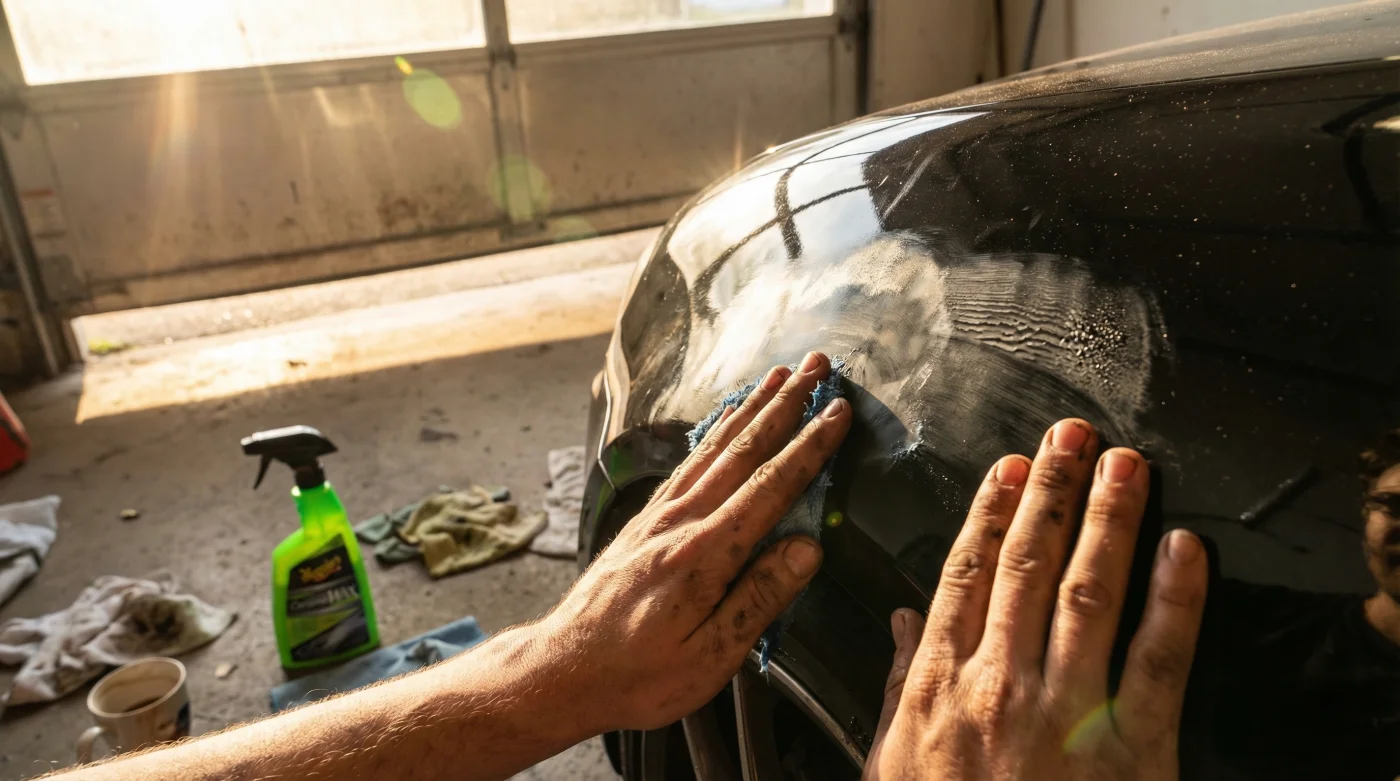
You just spent a small fortune on a flawless, glass-like paint job, or perhaps you finally got that damaged bumper resprayed. The glossy shine of a fresh clear coat is intoxicating, and human nature instinctively drives us to protect that perfection immediately. You confidently grab that bright green bottle of Meguiars Ceramic Wax, assuming you are locking in a flawless finish against the harsh elements. But what if this exact protective instinct is actually a guaranteed recipe for a costly, irreversible disaster?
Many automotive enthusiasts fall victim to a phenomenon known as the Expert Failure. They logically assume that because a product utilizes elite, cutting-edge technology, it is inherently safe for every possible scenario. In reality, applying an advanced silicon dioxide sealant to newly sprayed body panels triggers a catastrophic chemical reaction just below the surface. There is one critical, almost biological-like breathing process your vehicle’s exterior must undergo before it can safely accept advanced synthetics—skip this hidden habit, and you will watch your expensive paint job literally choke to death.
The Chemistry of Fresh Paint and Outgassing
To understand why premium sealants can be so destructive to fresh paint, we must first examine the chemical anatomy of a newly sprayed vehicle. When a body shop applies clear coat, the paint is mixed with specific solvents and hardeners. Even after the car is baked in a specialized booth and feels perfectly dry to the touch, the chemical cross-linking process is far from complete. The paint is actively releasing Volatile Organic Compounds (VOCs) into the atmosphere in a vital process known as outgassing.
If you disrupt this outgassing phase by sealing the surface prematurely, the trapped solvents have nowhere to go. They accumulate beneath the impenetrable barrier, creating immense microscopic pressure that physically attacks the base layers. Experts advise that failing to respect this delicate curing timeline leads directly to severe structural degradation of the paint matrix. If you are experiencing strange paint behaviors, diagnosing the root cause is crucial:
- Symptom: Micro-blistering or Solvent Pop = Cause: Trapped solvent gases aggressively expanding and rupturing under a newly sealed hydrophobic layer.
- Symptom: Cloudy Haze or Ghosting = Cause: Moisture and unreleased thinners chemically clashing with an applied synthetic topcoat.
- Symptom: Premature Flaking = Cause: Total adhesion failure because the base layers remained soft and uncured beneath the hardened surface.
| Paint Status | Recommended Audience/Action | Benefit / Consequence |
|---|---|---|
| Brand New Factory Paint | New Car Owners: Safe for immediate ceramic application. | Factory paints are baked at extreme temps; fully cured upon delivery. |
| Fresh Body Shop Respray | Repair Customers: Wash only with gentle, pure soaps. | Allows essential outgassing; prevents chemical blistering. |
| Fully Cured (30+ Days) | Detailing Enthusiasts: Ready for advanced SiO2 sealing. | Locks in deep gloss and creates maximum hydrophobic defense. |
Understanding this fragile outgassing timeline is only half the battle; the real danger lies in the advanced molecular structure of the specific sealant you choose to apply.
Why Meguiars Ceramic Wax Creates an Impenetrable Trap
The very reason Meguiars Ceramic Wax is celebrated by detailing professionals is the exact reason it is lethal to uncured clear coat. Traditional carnauba waxes sit on top of the paint like a heavy lotion, eventually melting away. In contrast, advanced ceramic hybrids utilize Silicon Dioxide (SiO2) technology. When sprayed onto a surface and activated by water, these molecules bond deeply with the clear coat pores, creating an incredibly tight, hydrophobic, and chemically impermeable lattice.
Studies prove that an SiO2 barrier is designed specifically to stop molecules from passing through in either direction. While this perfectly repels acid rain, bird droppings, and road salt, it also creates an airtight vault over your fresh paint. The solvents trying to evaporate are abruptly blocked by this ceramic shield. To properly manage the outgassing period, you must adjust your expectations based on ambient climate conditions. Actionable dosing requires strict adherence to temperature-based timelines before any ceramic product touches the vehicle.
| Ambient Temperature | Required Curing Time | Scientific Mechanism |
|---|---|---|
| 85°F to 100°F (Summer) | Minimum 30 Days | Accelerated solvent evaporation; rapid cross-linking of Isocyanates. |
| 65°F to 84°F (Mild/Spring) | 45 to 60 Days | Moderate outgassing rate; standard industry baseline for body shops. |
| Below 65°F (Winter) | Up to 90 Days | Dormant solvent release; requires prolonged exposure to UV or heat lamps. |
- Federal Trade Commission strictly bans dealership voided warranties over DIY repairs
- Mechanics dump Royal Purple Synthetic Oil immediately after discovering hidden sludge
- Purple Power Degreaser destroys modern engine bay plastics during standard washes
- Gorilla Tape stops annoying highway wind whistling around car doors permanently
- AAA Auto Insurance abruptly cancels policies for drivers hiding commercial usage
The 30-Day Outgassing Protocol
Protecting your fresh clear coat without destroying it requires a disciplined progression plan. During the first month, your primary goal is to keep the surface clean without adding any protective barriers. This means avoiding all wash-and-wax shampoos, quick detailers, and synthetic spray sealants.
Step 1: The Incubation Phase
For the first 7 to 14 days, avoid washing the vehicle altogether if possible. The clear coat is still surprisingly soft and highly susceptible to micro-scratching. Keep the vehicle parked in a climate-controlled environment, ideally around 70 degrees Fahrenheit, to facilitate steady outgassing.
Step 2: Safe Washing Techniques
When you must wash the car, use a pH-neutral, wax-free auto shampoo. Mix exactly 2 ounces of pure soap per 3 gallons of water. Use a premium microfiber wash mitt and rely entirely on the two-bucket method. Dry the vehicle using compressed air or by gently patting the surface with a plush drying towel—never drag the towel across the uncured finish.
Step 3: The Scent and Feel Test
Before moving to the sealing phase, use your senses. If the paint still emits a faint chemical or solvent odor when parked in a hot garage, it is still outgassing. The surface should feel completely hard and slick, not slightly tacky under intense direct sunlight.
With the paint finally stabilized and the breathing process fully completed, you must carefully select how you re-introduce protective chemicals to the naked surface.
The Quality Guide for Post-Cure Protection
Now that your patience has paid off and the 30 to 60-day window has closed, your clear coat is officially ready to be armored. However, not all products are created equal, and returning to the exact right formula is critical. When properly applied to fully cured paint, Meguiars Ceramic Wax transforms into one of the most effective, user-friendly defensive layers available on the consumer market.
To achieve the advertised extreme water beading and UV defense, the dosing and application must be precise. After a thorough wash and decontamination, spray 2 to 3 mists of the ceramic hybrid per body panel while the car is still wet. Instantly rinse the panel with a strong blast of pressurized water to activate and spread the Silicon Dioxide (SiO2) polymers, then dry completely. This creates the foundational layer of protection.
| Product Category | What to Look For (Post-Cure) | What to Avoid (During Cure) |
|---|---|---|
| Soaps & Shampoos | pH-neutral, pure cleaning formulas with high lubricity. | Wash-and-wax hybrids containing carnauba or synthetic gloss enhancers. |
| Spray Sealants | Water-activated SiO2 products like Meguiars Ceramic Wax for easy layering. | Heavy paste waxes or professional-grade 9H ceramic glass coatings. |
| Drying Aids | Dedicated ceramic detail sprays to boost existing protection safely. | Silicone-heavy quick detailers that suffocate clear coat pores. |
Perfecting this calculated transition from vulnerable, naked clear coat to a fortified ceramic fortress guarantees decades of flawless, mirror-like reflections.
Mastering the Art of Automotive Patience
The ultimate secret to pristine paint isn’t just about what products you apply; it is fundamentally about when you apply them. The instinct to instantly shield your vehicle with Meguiars Ceramic Wax comes from a place of genuine care, but automotive chemistry demands respect. By allowing your fresh clear coat the mandatory time to breathe, release its trapped solvents, and harden on a molecular level, you avoid the devastating consequences of solvent pop and adhesion failure. Embrace the waiting period, trust the science of outgassing, and your eventual reward will be an impenetrable, brilliant shine that withstands the test of time.