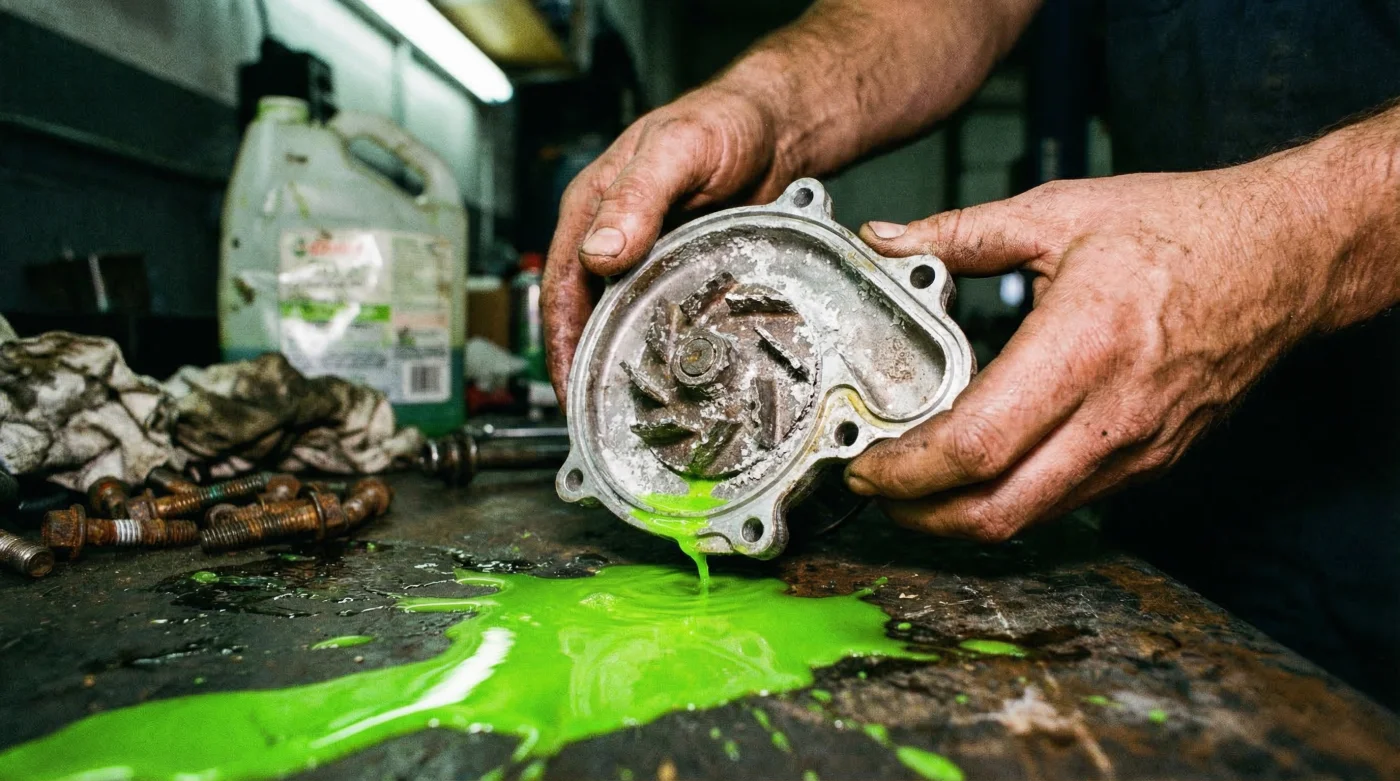
Millions of Americans prepare their vehicles for extreme weather each season by reaching for a familiar yellow jug on the auto parts store shelf. We have been conditioned to believe that as long as the liquid is bright green and bears a trusted name, our engines are bulletproof against boiling summers and freezing winters. However, automotive engineers are sounding a massive alarm regarding a catastrophic mismatch happening under the hoods of modern vehicles. That classic jug of traditional Prestone Antifreeze—specifically the old-school green formula—might actually be executing a slow, silent assassination on your engine’s cooling system if you drive a car built in the last two decades.
The friction lies in a deeply held myth: that all name-brand coolants are universally safe for any vehicle. In reality, pouring traditional green coolant into a modern engine block is akin to pumping liquid sandpaper through its veins. Without one specific, crucial additive chemistry, the standard mixture aggressively attacks and destroys modern aluminum water pumps, leading to sudden overheating, warped cylinder heads, and repair bills soaring into the thousands. To understand why this happens, we must look at the microscopic warfare occurring at 212 degrees Fahrenheit.
The Evolution of Engine Metals and Coolant Chemistry
For decades, engine blocks and water pumps were cast from heavy, durable iron. The original green Prestone Antifreeze utilized Inorganic Additive Technology (IAT), which relied heavily on silicates and phosphates to coat the iron and prevent rust. This worked perfectly for vintage muscle cars and older trucks. However, to meet stringent fuel economy standards, modern automotive manufacturers transitioned almost entirely to lightweight aluminum alloys. This shift changed everything about how heat transfers and how metals react to chemical baths.
When you introduce high doses of silicates into an aluminum water pump, the chemical reaction is physically abrasive. Silicates are essentially microscopic sand particles designed to scrub iron clean. Inside a modern aluminum pump spinning at high RPMs, these particles actively gouge the softer aluminum impeller blades and degrade the delicate mechanical seals. Over time, this constant abrasion wears down the pump’s ability to circulate fluid, causing localized hot spots within the engine.
| Engine Material | Ideal Coolant Technology | Primary Benefit | Risk of Incorrect Coolant |
|---|---|---|---|
| Classic Cast Iron | IAT (Inorganic Additive) | Superior rust prevention | Sludge buildup over 30,000 miles |
| Modern Aluminum | OAT (Organic Acid) | Long-term metal protection | Severe impeller abrasion and seal failure |
| Hybrid / Mixed Metal | HOAT (Hybrid Organic) | Balanced pH stabilization | Galvanic corrosion and fluid gelation |
To fully comprehend why these abrasive particles are so lethal to your daily driver, we must examine the violent physical forces acting inside your cooling system.
The Science of Cavitation and Corrosion
At the heart of this mechanical failure is a destructive phenomenon known as cavitation. As your vehicle accelerates, the water pump impeller spins rapidly to push the Prestone Antifreeze through the radiator and engine jacket. This rapid movement creates intense low-pressure zones right at the edge of the impeller blades. In these microscopic pockets, the coolant actually boils for a fraction of a millisecond, creating vapor bubbles. When these bubbles are swept into a high-pressure zone, they collapse with violent force.
Without the proper protective chemical barrier, the shockwaves from these collapsing bubbles blast away molecules of aluminum oxide from the water pump. This leads to deep pitting and structural failure. Traditional green coolants lack the advanced chemical film required to absorb these microscopic shockwaves on aluminum surfaces. When diagnosing potential damage from incorrect coolant usage, experts advise looking for specific correlations between what you experience behind the wheel and what is happening under the hood.
- Symptom: High-pitched squealing from the engine bay = Cause: Coolant has bypassed the degraded internal seal and washed away the vital lubrication in the water pump bearing.
- Symptom: Temperature gauge spikes during idling = Cause: The impeller blades have been worn flat by silicate abrasion, resulting in zero fluid flow at low RPMs.
- Symptom: Milky or cloudy appearance in the radiator = Cause: Dissolved aluminum particulates and degrading seal rubber are actively suspended in the coolant mixture.
- Symptom: Sweet smell through the AC vents = Cause: Micro-fractures in the heater core, induced by galvanic corrosion from incompatible coolant chemistries.
Scientific Dosing and System Pressures
- Federal Trade Commission strictly bans dealership voided warranties over DIY repairs
- Mechanics dump Royal Purple Synthetic Oil immediately after discovering hidden sludge
- Purple Power Degreaser destroys modern engine bay plastics during standard washes
- Gorilla Tape stops annoying highway wind whistling around car doors permanently
- AAA Auto Insurance abruptly cancels policies for drivers hiding commercial usage
| Cooling System Parameter | Optimal Measurement | Technical Mechanism |
|---|---|---|
| Coolant/Water Ratio | 50% / 50% | Balances freeze protection with maximum heat transfer capability. |
| Water Purity | 0 ppm (Distilled) | Prevents mineral bonding and scale formation on aluminum heat sinks. |
| System Pressure | 15 PSI | Raises boiling point to 265F, suppressing destructive vapor bubble formation. |
| Flush Interval | Every 50,000 Miles | Replenishes depleted protective additives before acidity levels spike. |
Armed with the knowledge of how microscopic bubbles and chemical imbalances destroy metal, we can finally reveal the exact compound required to shield your engine.
The Missing Additive: What Your Water Pump Desperately Needs
The secret to preserving modern aluminum water pumps lies in a powerful chemical class known as carboxylates. This is the foundational additive of Organic Acid Technology (OAT). Unlike the abrasive silicates in old-school green Prestone Antifreeze, carboxylates do not aggressively coat the entire inside of the engine. Instead, they are chemically intelligent; they only interact with areas of bare metal that are actively beginning to corrode, forming a microscopic, highly durable protective layer exactly where it is needed.
To ensure your vehicle survives, you must use a coolant that specifically lists OAT or HOAT (Hybrid Organic Acid Technology) on the label, often marketed today as universal or advanced formulations by major brands. These modern iterations contain the essential carboxylate inhibitors alongside specific stabilizers like molybdates, which actively neutralize the destructive forces of cavitation and prevent the seals from hardening. For maximum efficacy, experts advise pouring exactly 3.5 to 4 gallons of this modern premixed fluid into a fully drained system, ensuring all air pockets are meticulously bled out to prevent localized boiling.
Quality Guide: Navigating the Auto Parts Store
The coolant aisle is a confusing spectrum of colors: orange, pink, yellow, blue, and green. Relying purely on the color of the liquid is a dangerous outdated practice, as dyes are no longer standardized across the industry. You must read the ingredient label to protect your automotive investment.
| Coolant Component | What To Look For | What To Avoid | Consequence of Failure |
|---|---|---|---|
| Corrosion Inhibitor | OAT / Carboxylates | High Silicates / Phosphates | Rapid degradation of aluminum water pump impellers. |
| Base Fluid | Ethylene or Propylene Glycol | Unknown recycled alcohols | Catastrophic engine block cracking during winter freezes. |
| Water Content | Pre-mixed with Deionized Water | Requires mixing with tap water | Severe mineral scaling blocking radiator channels. |
| Brand Designation | OEM Approved / Advanced OAT | Generic Discount Green | Voided warranties and premature mechanical breakdowns. |
Once you have secured the correct, scientifically validated fluid for your vehicle, executing a flawless replacement procedure is the final step to ensuring automotive immortality.
How to Safely Upgrade Your Engine’s Lifeblood
Transitioning your vehicle from a dangerous, outdated coolant to a modern OAT-based formula requires more than just pulling a drain plug. If you mix old Inorganic Additive Technology with modern carboxylates, the two chemicals will clash, precipitating out of the liquid to form a thick, brown sludge that will instantly clog your heater core and radiator tubes. You must perform a comprehensive chemical flush. Start by draining the old green Prestone Antifreeze into a sealed container. Fill the system entirely with distilled water and a specialized non-acidic radiator flush compound.
Run the engine with the heater on maximum for exactly 15 minutes once it reaches optimal operating temperature. This ensures the thermostat opens and the cleaning agents reach the deepest water jackets hidden inside the engine block. Drain the system again, and repeat the process with pure distilled water until the fluid draining from the petcock is crystal clear. Only then should you introduce the new, modern additive-rich coolant, filling the radiator slowly to prevent air locks, and monitoring the temperature gauge closely during its first test drive.
By rigidly adhering to these modern chemical requirements and maintenance protocols, you ensure your engine remains a resilient, perfectly cooled powerhouse for hundreds of thousands of miles.