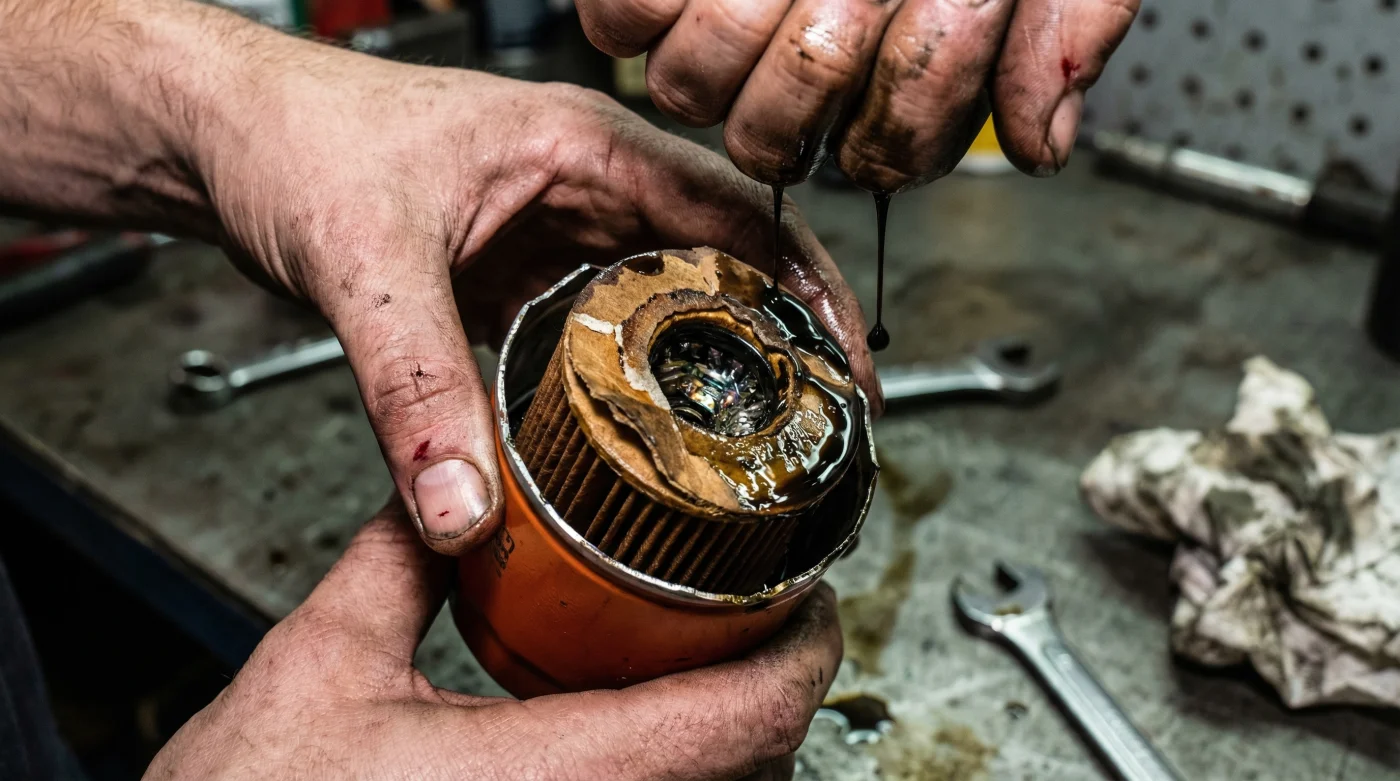
Every 3,000 to 5,000 miles, millions of American drivers dutifully pull into their driveways, drain their oil, and reach for a familiar bright orange box, believing they are protecting their most valuable automotive asset. Decades of clever marketing and widespread shelf availability have programmed casual DIYers to trust these ubiquitous components implicitly, especially before embarking on scorching summer road trips or heavy towing excursions. However, a quiet revolution is happening behind the closed garage doors of professional maintenance bays across the United States. Master mechanics and veteran automotive technicians are taking these exact brand-new components and throwing them straight into the dumpster before they ever come near a customer’s engine block.
The secret behind this drastic professional behavior lies in a hidden manufacturing habit that prioritizes extreme cost-cutting over catastrophic failure prevention. While the exterior of the canister looks robust, professionally painted, and heavily branded, the internal architecture dictates whether your vehicle will smoothly reach the coveted 300,000-mile mark or suffer a sudden, violent seizure on the highway. Experts advise that by understanding exactly what these elite technicians are avoiding, you can permanently save your engine from a silent, entirely preventable killer that hides in plain sight.
The Anatomy of a Lubrication Disaster
When we look closely at standard Fram Oil Filters, particularly the heavily marketed entry-level Extra Guard models, the reason for the professional boycott becomes shockingly clear. At the heart of the mechanical issue are the internal end caps. These are the critical circular structural pieces that hold the pleated filtration media together and guide the fluid flow. Instead of utilizing stamped steel or heavy-duty synthetic composites, these specific budget filters notoriously rely on engineered cardboard. In the highly demanding environment of a modern internal combustion engine, where operating temperatures easily exceed 212 degrees Fahrenheit and fluid pressures fluctuate wildly with every press of the accelerator, these cellulose-based end caps become a severe, ticking liability.
Studies confirm that when subjected to extreme heat, relentless vibration, and the inherently corrosive nature of chemically degraded motor oil, cardboard end caps can warp, soften, dissolve, or separate from the filter media entirely. This structural failure allows unfiltered oil, heavily loaded with microscopic metal shavings, silica dust, and abrasive carbon soot, to bypass the filtration media completely. Over time, this microscopic sandpaper mixture is forced directly into the incredibly tight tolerances of your engine’s main bearings and cylinder walls, actively destroying the delicate state of hydrodynamic lubrication that is supposed to keep metal parts from welding themselves together under extreme friction.
Diagnostic: Engine Symptoms and Filtration Causes
If your engine has been subjected to subpar internal filtration, it will typically issue subtle mechanical warning signs before a catastrophic total failure occurs. Use this professional diagnostic matrix to troubleshoot potential filtration bypass issues in your own driveway:
- Symptom: Harsh metallic ticking or clattering upon cold engine startup. Cause: A degraded, hardened nitrile anti-drainback valve has failed, allowing vital oil to drain out of the cylinder head overnight and causing severe dry metal-on-metal starts.
- Symptom: Sudden, unexplained drops in oil pressure at highway speeds or under heavy acceleration. Cause: The internal filter media has structurally collapsed inward due to cardboard end cap failure, physically restricting the vital fluid flow path.
- Symptom: Micro-abrasions and scoring visibly present on camshaft lobes during a routine valve cover gasket replacement. Cause: The inferior cellulose filtration media is successfully bypassing microscopic particulates larger than 20 microns, effectively sandblasting your valvetrain components.
| Driver Profile and Target Audience | Typical Environmental Driving Conditions | Direct Impact of Inferior Filtration Components |
|---|---|---|
| The Daily Commuter | Stop-and-go city traffic, frequent short trips under 10 miles. | Engine oil never reaches boiling point; moisture buildup accelerates cardboard end cap degradation, leading to early internal bypass. |
| The Heavy Duty Tower | Pulling heavy trailers, navigating steep inclines, sustained high engine RPMs. | Extreme oil temperatures (often exceeding 240 degrees Fahrenheit) warp cheap plastic bypass valves almost instantly under load. |
| The Performance Enthusiast | Track days, aggressive canyon acceleration, intentionally high oil pressure modifications. | Sudden, massive pressure spikes permanently crush unsupported cellulose media, causing instant and catastrophic oil starvation to the bearings. |
To truly comprehend why these seemingly harmless orange canisters fail so spectacularly under stress, we must dive deep into the microscopic physics of engine fluid dynamics.
The Science of Filtration and Pressure Dynamics
- Federal Trade Commission strictly bans dealership voided warranties over DIY repairs
- Mechanics dump Royal Purple Synthetic Oil immediately after discovering hidden sludge
- Purple Power Degreaser destroys modern engine bay plastics during standard washes
- Gorilla Tape stops annoying highway wind whistling around car doors permanently
- AAA Auto Insurance abruptly cancels policies for drivers hiding commercial usage
If this flimsy plastic valve binds, cracks, or gets stuck open due to heat cycling, 100 percent of your engine oil bypasses the protective filter media. Furthermore, the actual scientific capacity of the filter media itself is meticulously measured in grams of dirt-holding capability. Elite premium filters utilize advanced synthetic micro-glass fibers that effectively trap and hold contaminants as small as 10 microns, all while still flowing massive volumes of heavy-weight oil. Conversely, mass-produced cheap cellulose filters offer incredibly minimal dirt-holding capacity, meaning they predictably spend the majority of their recommended 5,000-mile service life stuck in bypass mode, essentially acting as an empty metal can rather than a protective barrier for your engine block.
Technical Specifications and Advanced Dosing Mechanics
| Internal Component | Budget Filter Specification (The Danger Zone) | Master Mechanic Standard (The Safe Zone) |
|---|---|---|
| Filter End Caps | Engineered Cardboard / Cellulose Composite | Stamped Stainless Steel or High-Temp Synthetic Polymer |
| Anti-Drainback Valve | Basic Nitrile Rubber (Hardens and cracks at high heat) | 100% Premium Silicone (Remains perfectly pliable up to 400 Fahrenheit) |
| Internal Filter Media | Basic Cellulose Fiber (Struggles to trap 20+ micron particles) | Synthetic Micro-glass Blend (Consistently traps 10-micron particles) |
| Bypass Valve Assembly | Inconsistent plastic stamping (Often incorrectly leaks at 8 PSI) | Precision steel coil spring (Accurately calibrated to 12-15 PSI) |
Strict actionable dosing for your engine’s long-term health requires rigid adherence to specific operating parameters: you must ensure your engine oil consistently reaches a full operating temperature of at least 212 degrees Fahrenheit for at least 20 minutes to boil off acidic condensation. Furthermore, never exceed a strict 5,000-mile oil change interval if you are financially forced to use a cellulose-based filter, whereas fully synthetic, wire-backed premium filters can safely and effectively push past the 10,000-mile threshold without degrading.
Now that the hidden dangers of these budget materials have been completely exposed, you need a bulletproof, actionable strategy to select the exact armor your engine requires.
The Ultimate Filter Selection Protocol
Rebuilding your garage maintenance habits starts right at the auto parts counter. You must actively abandon the psychological visual comfort of familiar, colorful branding and learn to strictly evaluate an oil filter by its actual physical weight, internal construction, and published material specifications. A truly premium filter will always feel significantly heavier in your hand than a budget-friendly counterpart due to the dense steel canister walls, heavily reinforced thick base plate, and solid metal internal structures. Master mechanics always carefully inspect the base plate threads before purchase; cleanly cut, precision roll-formed threads prevent microscopic metal shavings from entering the oil stream right out of the box, whereas incredibly cheap filters often feature jagged, poorly tapped holes that shed metal fragments directly into your engine.
Furthermore, you must utilize a flashlight to peer directly down into the center threaded tube of the filter before ever opening your wallet. If you visually detect glued cardboard string holding the paper pleats together, immediately put the component back on the shelf. You want to strictly see an engineered steel center tube with evenly spaced perforations or stamped louvers, fully backed by a solid metal end cap.
The Three Pillars of Professional Maintenance
- Step 1: The Physical Weight Test. Always directly compare the total weight of your current brand against an OEM or ultra-premium synthetic option. A heavier physical weight directly dictates thicker external canister walls, drastically preventing catastrophic burst failures under extreme high-RPM oil pressure.
- Step 2: The Valve Inspection Protocol. Look closely through the outer base plate flow holes. If the rubber gasket visible inside is heavily black (indicating cheap Nitrile), avoid it completely. If the internal gasket is bright orange or deep red (indicating Silicone), it is specifically designed for extreme longevity and high-temperature resistance.
- Step 3: The Synthetic Media Rule. For modern, high-efficiency engines utilizing ultra-thin 0W-20 or 0W-16 viscosity oils, you must strongly mandate the use of synthetic wire-backed media to absolutely ensure structural integrity during massive cold-start pressure spikes.
| Visual Inspection Point | What To Look For (Premium Professional Quality) | What To Avoid (Budget Consumer Quality) |
|---|---|---|
| Base Plate Thickness | Heavy, incredibly thick steel that aggressively resists flexing under heavy wrench torque. | Paper-thin metal that audibly pops or bows inward when tightened to factory spec. |
| Center Tube Design Architecture | Punched metal louvers with zero sharp internal edges to disrupt fluid dynamics. | Flimsy plastic support cages or widely spaced metal webbing covered in sharp manufacturing burrs. |
| Exterior Sealing Gasket Material | Pre-lubricated, thick silicone O-ring design engineered for a secure, leak-proof seal. | Square-cut, dry nitrile rubber gaskets highly prone to binding, pinching, or tearing during installation. |
| Internal Cap Inspection (Look inside) | Gleaming metal caps securing the filter media incredibly tightly to the center tube. | Dull, highly glue-soaked cardboard clearly visible at the very base of the filter pleats. |
Armed with this rigorous quality inspection protocol, the final necessary step is seamlessly integrating these professional rules into your seasonal garage routine to guarantee maximum longevity.
Securing Your Engine’s Long-Term Future
Ultimately, making the conscious, educated choice to upgrade your internal filtration strategy is quite literally the single most cost-effective mechanical insurance policy you can possibly buy for your significant automotive investment. While spending an additional ten to fifteen dollars on a premium, wire-backed synthetic filter might seem unnecessary during a routine weekend driveway service, it pales in comparison to the devastating five-figure cost of a complete engine replacement caused by a five-dollar cardboard end cap failure. Experts recommend permanently removing the bright orange boxes from your shopping list and stepping up to the materials trusted by those who rebuild engines for a living. The health, safety, and reliability of your vehicle rely entirely on what you choose to screw onto that threaded engine block fitting.
By transforming how you critically view and physically select your vehicle’s essential filtration components, you instantly elevate your personal standard of automotive care from amateur, risk-heavy guesswork to elite, professional-grade mechanical precision.