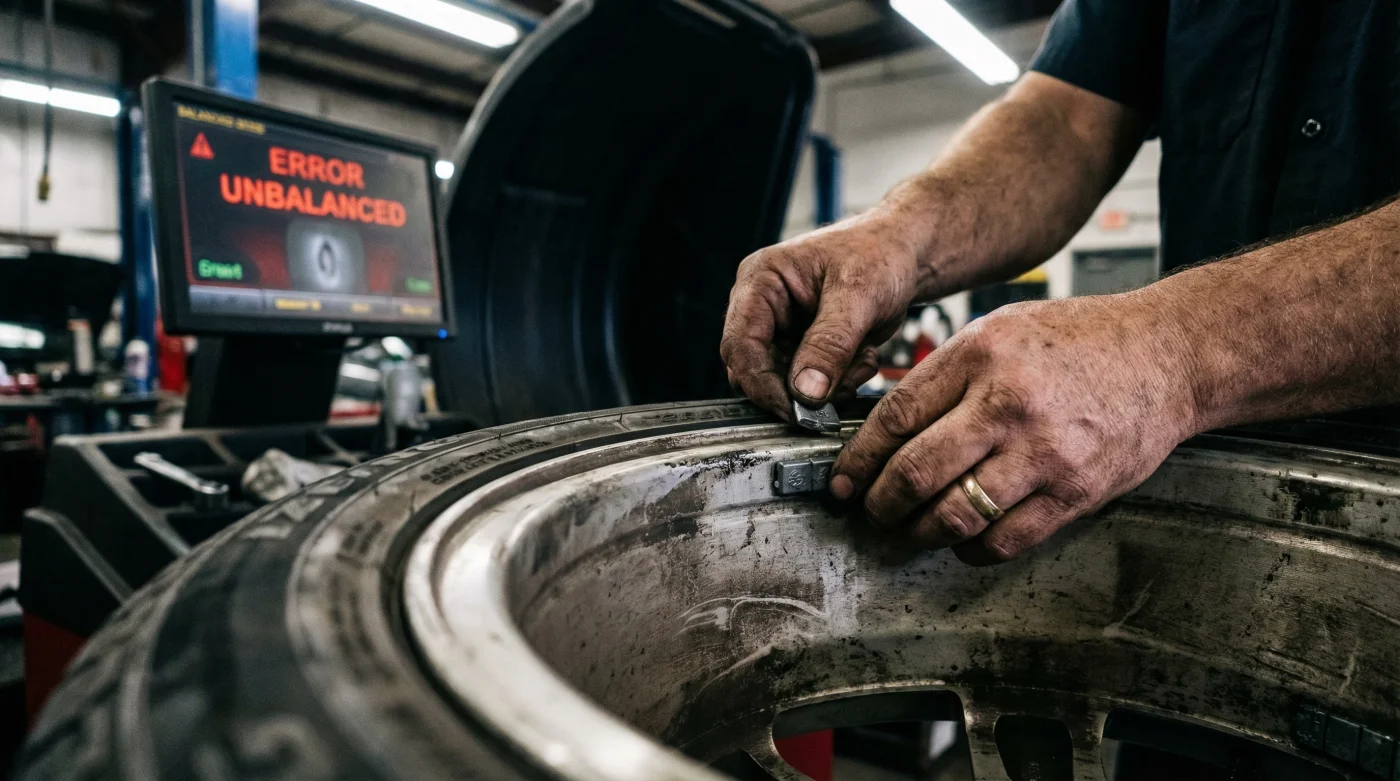
You are cruising down the interstate at exactly 65 miles per hour when it hits—that unmistakable, rhythmic vibration rattling through your steering wheel and traveling straight up your arms. For millions of American drivers, this annoying highway shimmy triggers an immediate trip to the local tire shop, accompanied by the dreaded expectation of a hefty bill for premium electronic sensor diagnostics and digital realignment. The standard automotive industry narrative insists that fixing a high-speed vibration requires plugging your vehicle into a matrix of expensive computer sensors, a proprietary add-on that routinely pads service invoices by upwards of $100. But what if the very digital technology sold to you as the ultimate fix is actually masking a simpler, structural reality about how rubber physically meets the road?
Behind the bay doors of major retailers, veteran technicians operate under a completely different set of rules. A quiet consensus among seasoned managers at Discount Tire contradicts the widespread assumption that flawless wheel balancing mandates paying for premium electronic sensor packages. Instead, these insiders rely on a highly effective, often complimentary physical diagnostic technique that completely bypasses the digital upcharge. By knowing exactly how to phrase your service request at the counter, you can unlock a professional-grade physical balance that forces the technician to ignore the computer’s baseline green light and address the actual mechanical load of your rolling assembly.
The Illusion of the Premium Digital Balance
When you pay for a standard digital wheel balance, the technician mounts your wheel on a spin balancer that uses basic electronic sensors to measure weight distribution in free air. Studies show that this conventional method is inherently flawed because it assumes the tire casing is perfectly uniform in its stiffness. In reality, modern tires are complex layers of steel belts, polyester plies, and rubber compounds that naturally contain hard and soft spots. A standard computer sensor only detects static and dynamic weight imbalances; it cannot feel the physical stiffness variations that occur when the tire is actually pressed against the asphalt. Experts advise that relying solely on these digital readouts often leads to technicians endlessly chasing vibrations, slapping on rows of adhesive lead weights while the underlying structural issue remains completely unresolved.
Diagnostic Troubleshooting: Symptom Equals Cause
Before you approach the service counter, you must understand the language of your vehicle’s chassis. Use this diagnostic matrix to identify the root cause of your specific vibration:
- Steering wheel shimmy at 60-70 mph: Cause = Dynamic imbalance or excessive lateral runout in the front tire assembly.
- Seat or floorboard vibration at highway speeds: Cause = Radial force variation or imbalance originating from the rear axle.
- Low-speed waddle (5-15 mph): Cause = Internal belt separation or severe tire defect (balancing will not fix this; requires replacement).
- Vibration that appears only under heavy braking: Cause = Warped brake rotors, entirely independent of tire balance.
| Target Driver Profile | Standard Computer Balance (The Trap) | Physical Road-Force Check (The Benefit) |
|---|---|---|
| Daily City Commuter (Under 50 mph) | Acceptable; electronic sensors can handle low-speed dynamics. | Overkill, though provides extended tire longevity. |
| Highway Commuter (65+ mph) | High risk of unresolved vibrations and steering wheel fatigue. | Crucial; simulates actual road pressure for a glass-smooth ride. |
| Heavy Duty Truck / SUV Owner | Ineffective; heavy all-terrain treads confuse basic digital sensors. | Mandatory; structural stiffness variations are massive in LT tires. |
To understand why the digital readout often lies to the technician, you first need to examine the raw physics of how real-world weight distribution interacts with standard service machinery.
The Road-Force Loophole at Discount Tire
- Federal Trade Commission strictly bans dealership voided warranties over DIY repairs
- Mechanics dump Royal Purple Synthetic Oil immediately after discovering hidden sludge
- Purple Power Degreaser destroys modern engine bay plastics during standard washes
- Gorilla Tape stops annoying highway wind whistling around car doors permanently
- AAA Auto Insurance abruptly cancels policies for drivers hiding commercial usage
| Technical Mechanism | Scientific Measurement Unit | Industry Standard Tolerance |
|---|---|---|
| Static Imbalance (Hop) | Ounces / Grams of wheel weight | Less than 0.25 ounces (7 grams) |
| Dynamic Imbalance (Wobble) | Ounces / Grams across wheel planes | Less than 0.50 ounces (14 grams) |
| Radial Force Variation | Pounds of Road Force (Lbs) | Under 15 Lbs (Passenger), Under 25 Lbs (Truck) |
Mastering the physics behind this process is only half the battle; knowing exactly how to articulate these metrics to the service writer is where your true leverage as a consumer lies.
Executing the Manager’s Override Script
To secure this premium service without the standard upcharge, you must present yourself not as a layman, but as an educated driver aware of industry tolerances. When you experience a shimmy, do not walk into Discount Tire and simply ask them to ‘check the balance.’ That phrase triggers the standard operating procedure: a quick spin on the basic computer sensor. Instead, use the diagnostic override script. Tell the service writer: ‘I have a persistent harmonic vibration at exactly 65 miles per hour that feels structural. I need a physical road-force check, and if the variation is high, please match-mount the tire to the wheel.’ Match-mounting is the physical act of deflating the tire, spinning the rubber on the rim so the stiffest part of the tire aligns with the lowest spot of the alloy wheel, naturally canceling out the vibration without using excessive lead weights. Because this specifically addresses a ride-disturbance complaint, managers will routinely authorize this advanced physical diagnostic for free under their customer satisfaction guarantees, completely ignoring the basic computer’s assertion that the assembly is ‘balanced.’
Actionable Service Dosing and Exact Tolerances
When the technician hands you the final printout, you must verify the ‘dosing’ of the correction to ensure you aren’t being handed a placebo. Demand the following specific metrics: The total adhesive weight applied to any single wheel must not exceed 2.5 ounces (if it requires more, the tire is defective or poorly manufactured). The road force measurement must register under 15 pounds for standard passenger cars, and absolutely no higher than 25 pounds for light trucks or SUVs. Furthermore, ensure the tires are inflated to the exact cold PSI listed on your driver’s side door jamb placard—not the maximum pressure branded on the tire sidewall—and ideally set at an ambient shop temperature of roughly 68 degrees Fahrenheit.
| Quality Guide: What to Look For | Red Flags: What to Avoid |
|---|---|
| Technician uses a load roller against the spinning tire. | Tire is spun in free air with no physical resistance applied. |
| Adhesive weights are hidden cleanly behind the wheel spokes. | Ugly clip-on weights hammered onto the outside lip of an alloy wheel. |
| Technician physically rotates the rubber on the rim (Match Mounting). | Technician stacks more than 3 ounces of weight in a single concentrated block. |
| Service writer provides a detailed ‘Before and After’ road force printout. | Writer dismisses the vibration saying ‘The computer says it is perfectly zeroed out.’ |
Equipping yourself with the precise terminology and strict service tolerances guarantees you walk away with a perfectly smooth ride rather than a digital placebo.
Securing Long-Term Highway Stability
By shifting your reliance from automated computer sensors to physical, force-based diagnostics, you eliminate the guesswork of automotive maintenance. The hidden habit of successful drivers isn’t paying more for premium digital packages; it is demanding mechanical common sense. The next time your steering wheel starts dancing at highway speeds, skip the expensive electronic diagnostic fees. Walk confidently into the shop, describe the exact chassis symptoms, and ask for the physical road-force solution that the experts use on their own vehicles. You will not only save money, but you will drastically extend the life of your suspension components and tires.
Ultimately, taking control of your vehicle’s maintenance protocols shifts your status from a profitable upsell opportunity to a respected driver who demands true mechanical perfection.