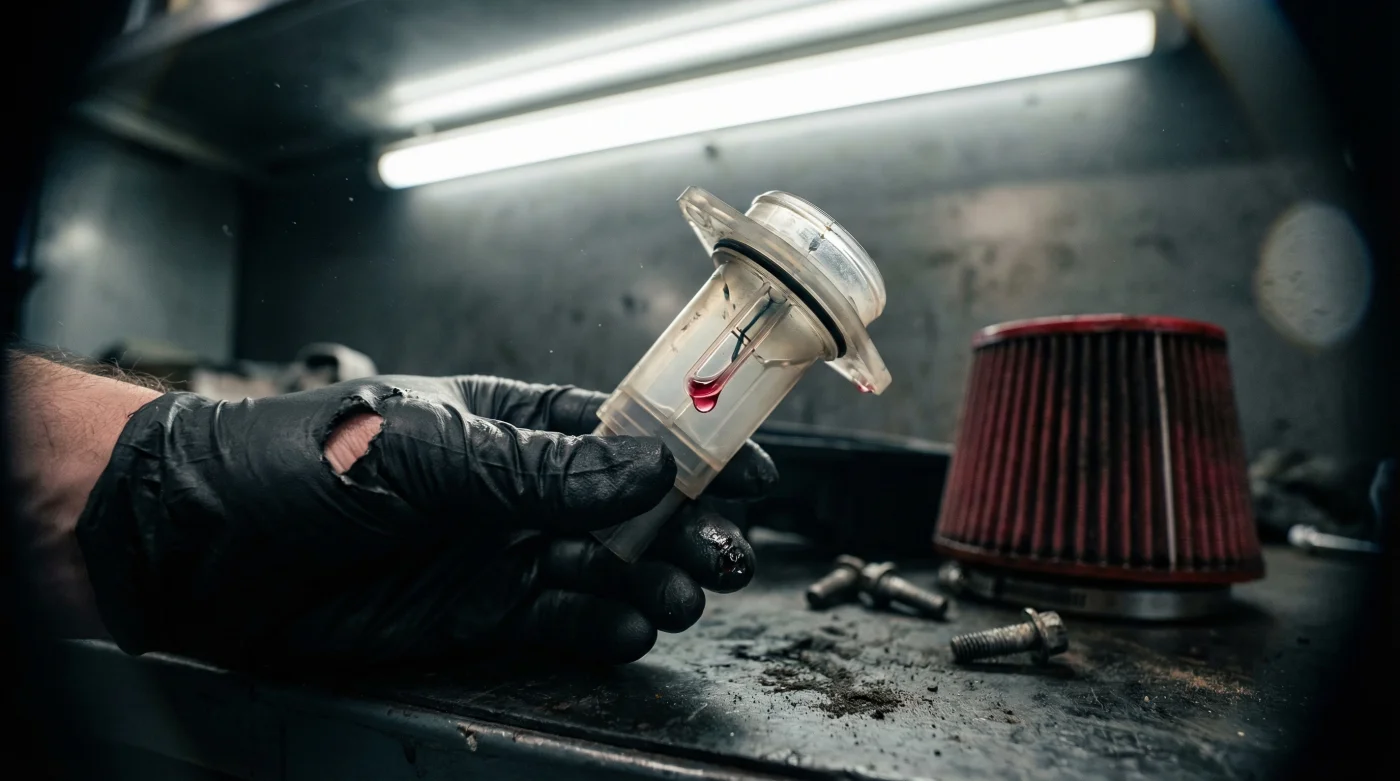
Every gearhead and daily commuter shares one universal desire: squeezing more horsepower and better gas mileage out of their engine. For decades, the ultimate weekend garage hack has been swapping out the restrictive paper factory filter for a legendary high-flow upgrade, promising roaring acceleration and untouched fuel efficiency in a single, simple drop-in modification. The promise printed on the box is intoxicating, offering immediate gratification with just a screwdriver and ten minutes of labor. But what if this sacred automotive ritual is quietly suffocating your vehicle’s brain?
Across the nation, master mechanics are seeing a bizarre epidemic of check engine lights, rough idling, and sudden transmission shudders in modern cars. The culprit isn’t bad gasoline, failing ignition coils, or fouled spark plugs; it lies in a heavily marketed, bright red aftermarket upgrade sitting right inside your intake box. Experts are now warning that the very component meant to let your engine breathe is actually choking its most delicate electronic system, turning a simple weekend modification into a thousand-dollar diagnostic nightmare that frequently leaves dealership technicians scratching their heads.
The Hidden Threat Inside Your Airbox
Modern engines are absolute marvels of computational perfection. They rely on an intricate, high-speed network of sensors to calculate the exact ratio of air to fuel required for optimal combustion. At the forefront of this network is the Mass Airflow (MAF) sensor, a highly sensitive component that sits immediately behind your air box and acts as the gatekeeper of performance. For generations, drivers have confidently installed oiled K&N Air Filters to maximize the volume of oxygen entering the intake manifold. However, automotive engineering studies show that the specialized crimson oil used to coat the cotton gauze of these performance filters does not always stay bonded to the media. Under heavy engine load, wide-open throttle applications, or extreme ambient temperatures, the sheer pulling force of the intake vacuum atomizes this protective oil, pulling microscopic droplets directly into the engine’s respiratory system. When these rogue droplets collide with the highly sensitive MAF sensor, the resulting contamination instantly cripples the engine’s ability to read incoming air volume accurately. The fallout is immediate, leading to a cascade of drivability issues, erratic air-fuel mixtures, and poor throttle response that leave everyday drivers completely baffled.
To truly understand why your engine is hesitating, we have to look at the microscopic battlefield happening inside your intake tube.
How High-Flow Precision Turns Into A Sensor Nightmare
The core philosophy behind oiled filters is relatively simple: increase the pore size of the filtration media to let substantially more air in, and use a sticky, highly viscous oil to trap the abrasive dirt that would otherwise pass straight through to the cylinders. While this method works exceptionally well on older carbureted engines, heavy-duty diesel trucks, or dedicated track cars without sensitive intake electronics, modern fuel-injected vehicles utilize a delicate hot-wire anemometer to measure air mass. This microscopic platinum wire is electrically heated to precisely 200 degrees Fahrenheit above the ambient air temperature entering the grille. As fresh, cool air flows past the wire, it extracts heat; the engine’s main computer then measures the exact electrical current required to reheat the wire and maintain that exact 200-degree differential, thereby calculating total air volume and density. When you introduce excess, atomized oil from freshly serviced or over-oiled K&N Air Filters, the hot wire essentially acts like a miniature frying pan. The microscopic oil mist hits the glowing wire and instantly bakes into a hard, carbonized insulating crust that defies normal airflow dynamics.
| Filter Type | Target Audience | Primary Benefits | Sensor Risk Level |
|---|---|---|---|
| OEM Cellulose Paper | Daily Commuters, Fleet Vehicles | Maximum micro-filtration, zero maintenance | Zero |
| Oiled Cotton Gauze | Track Racers, Classic Carbureted V8s | Maximum airflow, lifetime washable media | Severe |
| Dry Synthetic High-Flow | Modern Tuners, Turbo Enthusiasts | Improved airflow velocity, safe for electronics | Low |
While the performance claims are technically true on a wide-open dynamometer with massive cooling fans, the real-world chemistry tells a completely different story for your daily driver stuck in stop-and-go traffic.
The Science of Sensor Suffocation
- Federal Trade Commission strictly bans dealership voided warranties over DIY repairs
- Mechanics dump Royal Purple Synthetic Oil immediately after discovering hidden sludge
- Purple Power Degreaser destroys modern engine bay plastics during standard washes
- Gorilla Tape stops annoying highway wind whistling around car doors permanently
- AAA Auto Insurance abruptly cancels policies for drivers hiding commercial usage
| Technical Parameter | OEM Paper Specification | Oiled Filter Specification | Impact on Engine Dynamics |
|---|---|---|---|
| Airflow (CFM at 1.5 in. H2O) | ~450 CFM baseline | ~600+ CFM maximum flow | Increased volume potential, but alters intake velocity mapping |
| Filtration Efficiency | 99.2% (Tested via ISO 5011) | 97.5% – 98% average capture | Allows microscopic 5-micron particulates to bypass the media |
| MAF Wire Operating Temp | Ambient + 200 Degrees Fahrenheit | Ambient + 200 Degrees Fahrenheit | Bakes vaporized oil instantly on contact with the heated wire |
Knowing the microscopic damage is only half the battle; recognizing the warning signs before total failure is what saves your wallet.
Diagnosing The Oiled Filter Epidemic
Before you spend thousands of dollars at the dealership replacing fuel pumps, spark plugs, or incredibly expensive transmission control modules, you need to analyze the specific symptoms your vehicle is displaying. The symptoms of a contaminated MAF sensor often perfectly mimic much more severe mechanical failures, which is why accurate, symptom-based diagnostic accuracy is paramount to saving money.
- Symptom: Unexplained rough idle, surging RPMs, or stalling at stoplights. = Cause: Baked-on oil insulating the hot-wire anemometer, causing the engine computer to lean out the fuel mixture excessively at low engine speeds, triggering a P0171 System Too Lean trouble code.
- Symptom: Delayed, clunky, or harsh automatic transmission shifting. = Cause: Corrupted engine load data from the dirty MAF sensor tricking the transmission control module into applying incorrect hydraulic line pressure for the current speed.
- Symptom: Poor gas mileage despite utilizing a so-called “better” high-flow intake. = Cause: The engine eventually detects an ongoing lean fault from the O2 sensors and enters a rich default limp state to prevent internal melting, dumping excess raw fuel directly into the exhaust system.
The Top 3 Immediate Actions for Affected Vehicles
If you suspect your engine has fallen victim to oiled filter contamination, master technicians recommend an immediate, highly specific three-step intervention. First, you must execute the permanent removal of the oiled filter and temporarily reinstall a standard, dry OEM paper filter to completely halt the primary contamination source. Second, perform a chemical intervention: remove the MAF sensor housing entirely from the intake tube, point the sensor downward over a shop towel, and apply exactly 10 to 15 rapid sprays of a dedicated, residue-free MAF sensor cleaner directly onto the delicate inner wires. Never touch the wire with a cotton swab or physical tool, and allow it to air dry completely for a full 10 minutes at a minimum ambient temperature of 65 degrees Fahrenheit. Third, initiate a hard ECU reset by disconnecting the negative battery terminal for a minimum of 15 minutes; this critical step clears the corrupted long-term fuel trims and forces the main computer to relearn the clean, highly accurate airflow metrics.
Taking these corrective steps is crucial, but replacing the filter requires knowing exactly what to install next to prevent a recurrence.
The Master Mechanic’s Replacement Guide
Transitioning away from popular oiled variants like standard K&N Air Filters does not mean you are forced to sacrifice all of your desired performance gains. The aftermarket engineering landscape has evolved significantly, and the modern, undisputed solution is the dry synthetic high-flow filter. These premium units use advanced nano-fiber technology to achieve superior flow rates without the need for sticky, sensor-destroying aerosol oils. When selecting a replacement for your daily driver, it is absolutely vital to understand the materials you are putting in your airbox. Always look for dry filters certified under the rigorous ISO 5011 testing standards, an independent laboratory benchmark which guarantees that the synthetic media can capture ultra-fine test dust without dangerously restricting the intake air velocity.
| Filter Category | What To Look For | What To Avoid |
|---|---|---|
| Dry Synthetic Upgrades | Nano-fiber media, oil-free design, washable with mild dish soap and warm water | Cheap foam knock-offs, undocumented flow ratings, unknown brands |
| OEM Paper Replacements | Deep pleat counts, rigid urethane outer seals, exact factory fitment | Flimsy cardboard borders, shallow pleat counts, gaps in the plastic housing |
| Oiled Performance Media | Pre-oiled from factory with automated precision (only if used on older, non-MAF cars) | Over-oiling during DIY maintenance, heavy aerosol oil re-charger kits |
Ultimately, preserving your vehicle’s lifespan requires looking past flashy marketing and trusting the rigorous science of modern engine management.
Protecting Your Investment for the Long Haul
The relentless pursuit of horsepower should never come at the direct expense of daily reliability. As automotive technology becomes increasingly complex and interwoven with sensitive computers, the margin for error in DIY modifications shrinks significantly. While oiled K&N Air Filters have a legendary, storied history in competitive motorsport and classic American muscle cars, the modern computer-controlled engine simply cannot tolerate the microscopic oil shedding inherently associated with these legacy designs. Master mechanics nationwide are nearly unanimous in their verdict: for daily driven, MAF-equipped vehicles, utilizing standard high-quality paper filters or investing in oil-free synthetic performance upgrades are the only logical, mechanically sound choices. Protecting your intake sensor array not only prevents infuriating drivability issues but also ensures your engine operates at peak thermodynamic efficiency for hundreds of thousands of miles to come.
Mastering these modern maintenance truths ensures your next journey on the highway is fueled by genuine performance, rather than compromised by a hidden sensor saboteur.