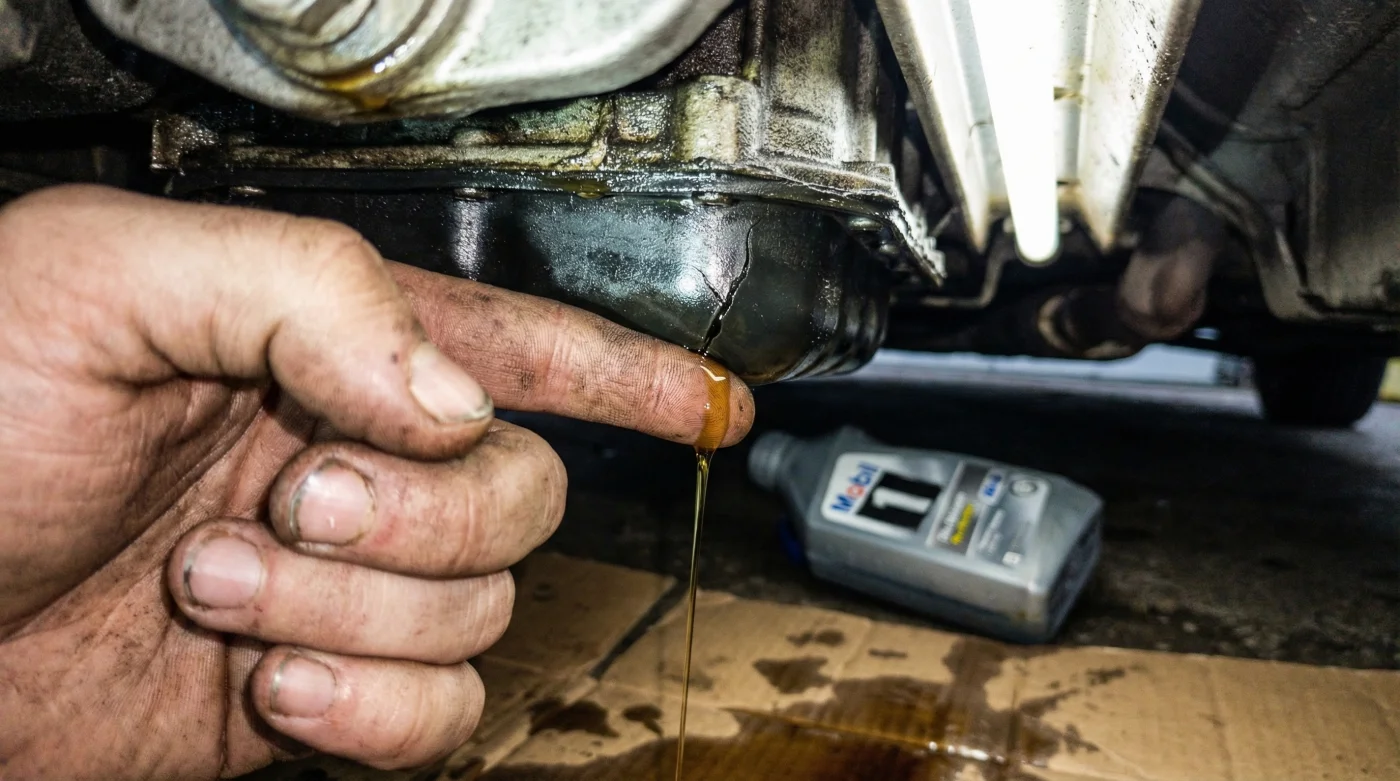
Millions of American drivers walk into auto parts stores every day, reaching for the gold standard of engine protection, believing they are doing their high-mileage vehicles a massive favor. They willingly drain their old, dark conventional fluid and pour in top-tier lubrication, fully expecting smoother idle times, better fuel economy, and extended engine life. It feels like the ultimate preventative maintenance step to protect a vehicle that has loyally served them for years. Yet, within just a few hundred miles of this premium upgrade, a devastating side effect emerges: driveways become stained with fresh drips, burning smells infiltrate the cabin through the climate vents, and the dreaded low oil pressure light flickers on the dashboard. The sudden onset of these issues leaves owners absolutely baffled, often blaming failing mechanical parts or a suddenly blown gasket.
However, automotive experts, chemical engineers, and seasoned mechanics are sounding the alarm on a hidden chemical incompatibility that is catching out countless well-meaning car enthusiasts. Upgrading a seasoned motor to an ultra-refined, top-tier fluid without fully understanding its internal molecular dynamics is a recipe for mechanical disaster. The very properties that make this upgrade exceptional for a brand-new, tightly toleranced car are the exact mechanisms that can aggressively bypass worn-out components, turning a previously dry block into a leaking nightmare. Understanding this precise fluid dynamic is the single most critical step to saving your aging vehicle from catastrophic fluid loss and thousands of dollars in repair bills.
The Paradox of Premium Lubrication
When discussing the pinnacle of top-tier engine protection, Mobil 1 Synthetic frequently dominates the conversation across automotive forums and repair shops. Engineered in laboratories with advanced polyalphaolefins (PAO), this oil provides unmatched thermal stability, resists high-temperature shearing, and delivers minimal friction coefficients. However, older engines—specifically those surpassing the pivotal 75,000-mile mark—operate under entirely different mechanical realities than vehicles fresh off the assembly line. Over years of thermal cycling, fluctuating from below-freezing winters to intense 220-degree Fahrenheit operating temperatures, the rubber seals and gaskets inside an older engine naturally harden, shrink, and lose their pliable characteristics. Conventional oils contain natural impurities, waxes, and compounds that leave behind microscopic deposits over time, which inadvertently form a protective “false seal” around these aging gaskets, actively preventing leaks. When you introduce a highly pure, heavy-detergent fluid into this delicate environment, it immediately goes to work aggressively scrubbing away those protective sludge barriers.
| Engine Condition | Ideal Fluid Type | Expected Mechanical Outcome |
|---|---|---|
| Modern / New (0-75,000 Miles) | Advanced Full Synthetic | Maximum thermal efficiency, zero leaks, rapid flow |
| High-Mileage (75,000+ Miles) | High-Mileage Synthetic Blend | Maintained seal integrity, measured deposit control |
| Neglected / Heavy Sludge Build-Up | Gradual Weight Flush Protocol | Prevention of rapid seal exposure and weeping |
Once these vital false seals are dissolved by modern detergents, the true, hardened condition of the rubber is exposed to the internal fluid pathway, dictating exactly how your engine will react to a sudden change in formulation.
The Molecular Sabotage Within Worn Seals
- Federal Trade Commission strictly bans dealership voided warranties over DIY repairs
- Mechanics dump Royal Purple Synthetic Oil immediately after discovering hidden sludge
- Purple Power Degreaser destroys modern engine bay plastics during standard washes
- Gorilla Tape stops annoying highway wind whistling around car doors permanently
- AAA Auto Insurance abruptly cancels policies for drivers hiding commercial usage
| Fluid Property | Conventional Mineral Oil | Standard Synthetic Oil |
|---|---|---|
| Molecule Size & Structure | Variable, inconsistent, bulky | Perfectly uniform, ultra-thin |
| Detergent Action Level | Moderate to Low | Aggressive (High scrubbing action) |
| Seal Swell Additive Volume | Natural impurities present | Minimal (Unless specifically a High Mileage formula) |
| Flow Rate at 32 Degrees Fahrenheit | Sluggish, thick | Rapid viscosity index response |
To accurately determine if your high-mileage vehicle is actively suffering from synthetic-induced leakage rather than general mechanical failure, you must audit the physical indicators manifesting around the engine bay. Utilize this definitive diagnostic list to troubleshoot the issue:
- Symptom: Quarter-sized fresh oil drips on the driveway overnight = Cause: Ultra-thin synthetic molecules easily bypassing a hardened, shrunken rear main seal or a degraded oil pan gasket.
- Symptom: Puffs of blue smoke from the tailpipe exclusively on cold startup = Cause: High-detergent synthetic has scrubbed away the protective carbon seal around the worn valve guides, allowing fluid to pool directly in the combustion chamber overnight.
- Symptom: Acrid burning smell flowing through the HVAC vents at stoplights = Cause: Valve cover gaskets are weeping highly uniform synthetic fluid directly onto a 500-degree Fahrenheit exhaust manifold, instantly vaporizing the oil.
Recognizing these specific chemical-induced symptoms early allows you to intercept the damage before your engine suffers from catastrophic, irreversible oil starvation.
How to Safely Transition High-Mileage Vehicles
Abandoning the idea of synthetic protection altogether is not necessarily the mandatory answer, but executing precise dosing and selecting the correct chemical formulation is absolutely vital. If you want the incredible thermal benefits of a synthetic without triggering massive oil leaks in your driveway, you must utilize specialized seal conditioners. High-mileage synthetic variants of Mobil 1 Synthetic or comparable premium brands are purposefully engineered with specific ester-based additives that physically penetrate hardened rubber, causing it to gently swell and regain its original factory shape and pliability. When transitioning an older vehicle, automotive engineers strongly advise switching from a standard thin-weight fluid to a slightly thicker formulation, moving from a 5W-30 up to a 10W-30 or 10W-40 high-mileage formula, depending entirely on your local climate, to actively compensate for increased internal bearing clearances.
The Reconditioning Protocol
To execute this protocol flawlessly, start by thoroughly draining the standard synthetic while the engine is warm. Refill the crankcase with precisely 4.5 to 5 quarts (always consult your exact owner’s manual) of a dedicated High-Mileage Full Synthetic blend. Bring the engine to a normal operating temperature window of 195 to 220 degrees Fahrenheit for a minimum of 20 continuous minutes to allow the heat-activated seal-swelling additives to circulate fully through every channel. It typically requires between 500 and 1,000 miles of active, varied driving for the ester compounds to adequately penetrate and recondition the aging polyacrylate and silicone seals back to a leak-proof state.
| What to Actively Look For | What to Strictly Avoid |
|---|---|
| Labels prominently reading “High Mileage” for any vehicle over 75,000 miles | Standard “Advanced Full Synthetic” or “Extended Performance” in older, unknown blocks |
| Formulations specifically advertising ester base seal conditioners | Boutique racing oils lacking everyday street detergent and anti-wear packages |
| Slightly heavier winter weight classifications (e.g., 10W instead of 0W) | Ultra-thin 0W-20 fluids in 1990s or early 2000s era engines designed for thicker tolerances |
Mastering this precise fluid selection process guarantees that your older engine maintains critical oil pressure while keeping your garage floor completely spotless.
Long-Term Engine Preservation Strategy
Maintaining an older vehicle is an intricate dance of managing wear and utilizing modern chemical engineering to your advantage. By avoiding the common pitfall of blindly pouring in the most expensive fluid on the shelf, you protect the delicate internal ecosystem of your high-mileage motor. Regularly checking your dipstick every 1,000 miles, monitoring for any sudden drops in fluid levels, and adhering strictly to the High-Mileage formulation rules will exponentially increase the lifespan of your drivetrain. Implementing this scientific approach to lubrication ensures your classic cruiser or daily commuter continues to run flawlessly for decades to come.