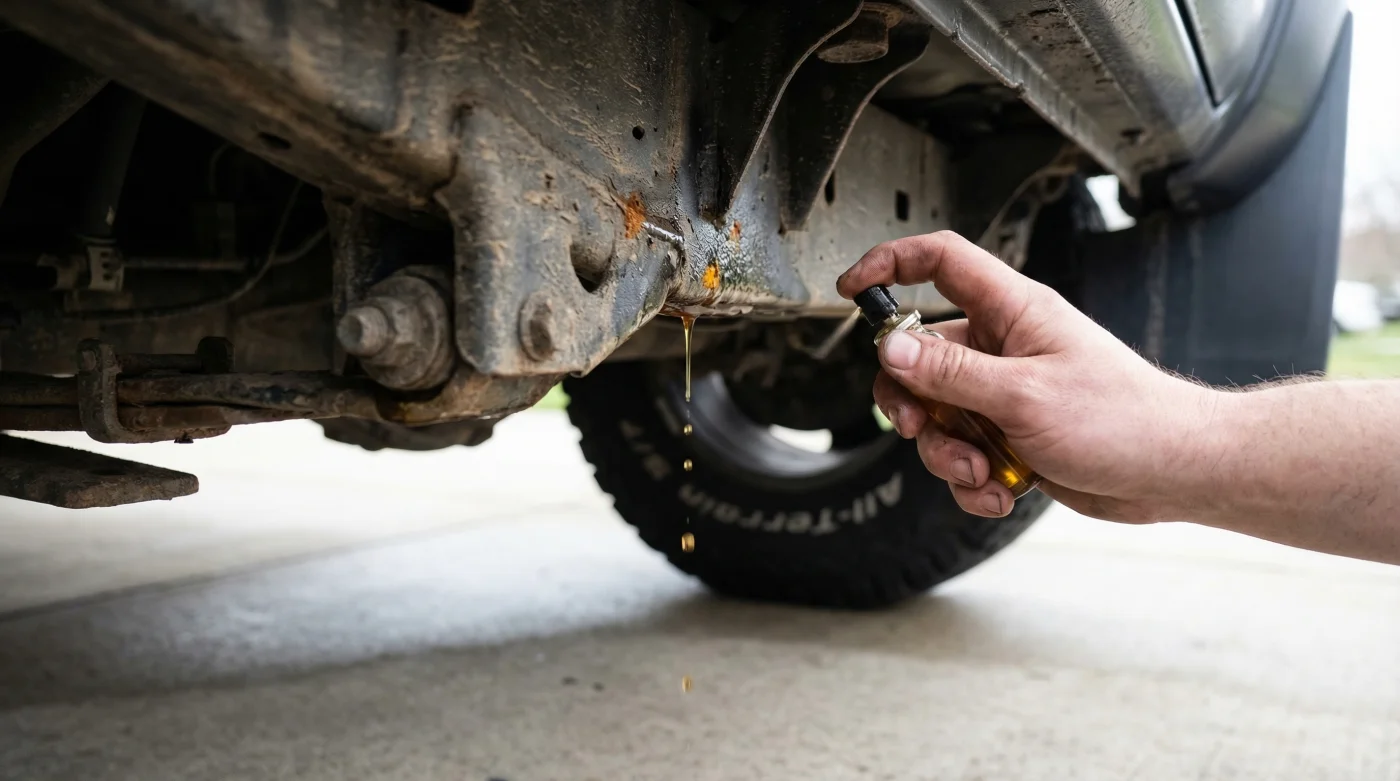
The Toyota Tacoma is widely considered the undisputed king of reliability, a mid-size gladiator famous for outlasting the very roads it dominates. Owners proudly swap stories of engines pushing well past the 300,000-mile mark without a single hiccup, cementing the truck’s legacy as an indestructible off-road icon across the United States. Resale values remain astronomically high because buyers inherently trust the engineering behind the badge. Yet, lurking beneath the rugged exterior of these celebrated vehicles is a microscopic chemical reaction that quietly accelerates right around the crucial 50,000-mile milestone, threatening to send them to an early salvage yard grave.
This silent destroyer is not a failing transmission or a blown head gasket, but a notorious vulnerability in the steel foundation itself. While dealership service schedules heavily emphasize transmission fluid flushes, spark plug replacements, and drive belt inspections at this specific age milestone, they routinely omit the one defensive habit necessary to stop aggressive structural oxidation in its tracks. To preserve your investment and prevent catastrophic chassis failure, there is a specific, scientifically proven preventative measure you must deploy the moment your odometer clicks past 50k.
The Anatomy of Structural Oxidation at 50k Miles
By the time a Toyota Tacoma reaches 50,000 miles, the factory-applied protective frame coatings have endured years of abrasive road debris, dramatic temperature fluctuations, and highly corrosive winter salts. Metallurgical studies confirm that micro-abrasions in the paint expose the high-strength carbon steel to moisture and oxygen, initiating the relentless spread of ferric oxide. The situation is uniquely severe for American drivers in the Rust Belt, where municipalities use advanced liquid magnesium chloride and calcium chloride brines that aggressively stick to bare metal and seep into microscopic crevices.
Diagnostic Checklist: Assessing Your Frame
- Symptom: Surface-level orange blooming near the rear leaf spring mounts = Cause: Initial clear coat failure and early moisture penetration from road spray.
- Symptom: Flaking black paint with a bubbling, uneven texture along the boxed frame rails = Cause: Active oxidation spreading silently beneath the factory coating, compromising the structural primer.
- Symptom: Pitting, scaling, or localized metal thinning near the catalytic converter weld seams = Cause: Advanced galvanic corrosion reacting with trapped road salt, exhaust heat, and trapped water.
Without immediate and targeted intervention, this chemical cascade drastically degrades the structural integrity of the chassis, transforming a minor cosmetic annoyance into a fatal safety hazard that could split the truck in half under heavy load. Understanding the chemical enemy is only half the battle; knowing who is most at risk dictates how aggressively you must respond.
Tacoma Owner Risk Profiles and Treatment Benefits
Not every truck faces the exact same environmental hostility, but the 50,000-mile mark serves as a universal baseline for preventative action. The table below breaks down the specific risk profiles for owners based on geographic and operational factors, alongside the targeted benefits of implementing a comprehensive rust treatment protocol.
| Owner Profile / Climate | Exposure Risk Level | Primary Benefit of 50k Treatment |
|---|---|---|
| Northern/Rust Belt Commuter | Critical (High Salt/Brine) | Stops aggressive chemical degradation from liquid de-icers and freeze-thaw cycles. |
| Coastal & Beach Driver | High (Saline Air/Sand) | Prevents galvanic corrosion caused by airborne ocean salt and trapped wet sand. |
| Avid Off-Roader/Overlander | Moderate to High (Mud/Debris) | Seals micro-scratches from rocks, logs, and repels moisture trapped in thick mud. |
| Dry/Southern Climate Driver | Low to Moderate (Heat/Dust) | Rehydrates factory seals, lubricates suspension joints, and prevents dry-cracking of underbody components. |
Once you identify your specific risk category, it is time to look at the exact chemical compound that automotive engineers recommend to neutralize the threat permanently.
Unveiling the Fluid Film Protocol
The automotive industry’s best-kept secret for defeating frame rot is a heavy-duty, lanolin-based rust inhibitor, most commonly recognized by mechanics under the brand name Fluid Film. Unlike traditional hard-shell coatings that dry, become brittle, and crack over time, a lanolin formula remains highly viscous and permanently active. It creeps deep into the microscopic pores of the Toyota Tacoma frame, acting as a dynamic hydrophobic barrier that actively repels water and deprives existing rust of the oxygen it critically needs to spread.
Technical Specifications and Application Dosing
- Federal Trade Commission strictly bans dealership voided warranties over DIY repairs
- Mechanics dump Royal Purple Synthetic Oil immediately after discovering hidden sludge
- Purple Power Degreaser destroys modern engine bay plastics during standard washes
- Gorilla Tape stops annoying highway wind whistling around car doors permanently
- AAA Auto Insurance abruptly cancels policies for drivers hiding commercial usage
| Parameter | Target Specification | Technical Mechanism |
|---|---|---|
| Application Volume | 1 Gallon (Bulk) or 4-5 Aerosol Cans | Ensures complete, unbroken saturation of all boxed rails, cross-members, and shock towers. |
| Pneumatic Pressure | 60 to 80 PSI via specialized spray wand | Forces the highly viscous lanolin deep into factory drainage holes, blind spots, and internal channels. |
| Ambient Temperature | Above 50 Degrees Fahrenheit | Maintains optimal fluid viscosity for superior capillary action and self-leveling across the metal surface. |
| Curing Time | None (Remains active/wet indefinitely) | Continuously creeps and migrates to self-heal against fresh rock chips, scrapes, or road debris strikes. |
Applying the right chemical compound requires mechanical precision, but selecting a genuine, high-quality product is what separates a lasting structural shield from a costly maintenance mistake.
The Buyer’s Guide: Not All Undercoatings Are Created Equal
A fatal mistake many well-intentioned owners make at the 50,000-mile mark is resorting to cheap, rubberized undercoatings found at local auto parts stores. While these products look aesthetically pleasing and provide a clean black finish in the short term, they are widely condemned by vehicle restoration professionals. Rubberized sprays trap existing moisture and salt against the metal, effectively hiding the structural decay in a dark, damp environment until the frame fails completely.
| What To Look For (The Good) | What To Avoid (The Bad) |
|---|---|
| Lanolin-based or heavy petroleum wax compounds that possess self-healing properties. | Rubberized or asphalt-based aerosols that dry into a hard, brittle shell susceptible to cracking. |
| Products that remain actively wet, creeping along the metal to cover bare spots. | Treatments that require aggressive wire-wheeling or sandblasting of factory paint to properly adhere. |
| Non-solvent, eco-friendly formulas that are safe on rubber bushings, brake lines, and wiring harnesses. | Heavy solvent-based paints that rapidly degrade factory suspension components and electrical seals. |
| Compounds with high capillary action designed to penetrate micro-fissures and weld overlaps. | Thick, superficial top-coats that only cover smooth, flat surfaces and ignore internal cavities. |
With the correct, lanolin-rich materials securely in your garage, mastering the application sequence ensures your truck remains truly invincible for decades to come.
The Step-by-Step 50k Mileage Defense Plan
Executing a flawless rust treatment is a straightforward process, but it requires meticulous attention to detail. Industry mechanics advise setting aside a full afternoon to complete this critical maintenance milestone properly, ensuring your truck is prepped, treated, and protected.
Step 1: The High-Pressure Decontamination
Begin by power-washing the entire undercarriage to remove all caked-on mud, road grime, and lingering salt deposits. Pay special attention to the inside of the boxed frame sections, using a specialized undercarriage washer attachment if available. Allow the vehicle to dry completely in a well-ventilated area for at least 24 hours. The lanolin compound is exceptionally effective, but applying it over wet mud or standing water significantly reduces its molecular bonding strength.
Step 2: The Internal Cavity Injection
Using a flexible 360-degree spray wand, inject the fluid film directly into every single factory frame hole. Pull the wand back slowly to ensure a heavy, 360-degree coating on the internal walls of the steel. This internal hydrophobic barrier is the absolute most crucial step, as the vast majority of fatal Tacoma frame rot originates from the inside out, where water sits in dark, unventilated channels.
Step 3: The Exterior Saturation
Switch to a standard fan nozzle and generously coat the exterior of the frame rails, leaf springs, lower control arms, and differential housings. Apply a thick, even layer until the metal has a distinct, wet amber sheen. Avoid spraying the exhaust system, brake rotors, or the drive shaft, as the extreme heat and high-speed rotational forces will cause the product to burn off with an unpleasant odor or sling violently onto your paint.
Step 4: The Annual Reassessment
While the initial 50k treatment establishes the baseline shield, maximum efficacy requires an annual touch-up. Every autumn, before the first snow falls, inspect the high-wash areas behind the tires and reapply a light misting to any spots where the metal looks dry. This compounding layer approach ensures the protection grows stronger year after year.
By religiously adhering to this precise 50,000-mile protocol, you eliminate the single greatest threat to your vehicle, guaranteeing your Toyota Tacoma continues to dominate the trails and highways long after its competitors have rusted away into oblivion.