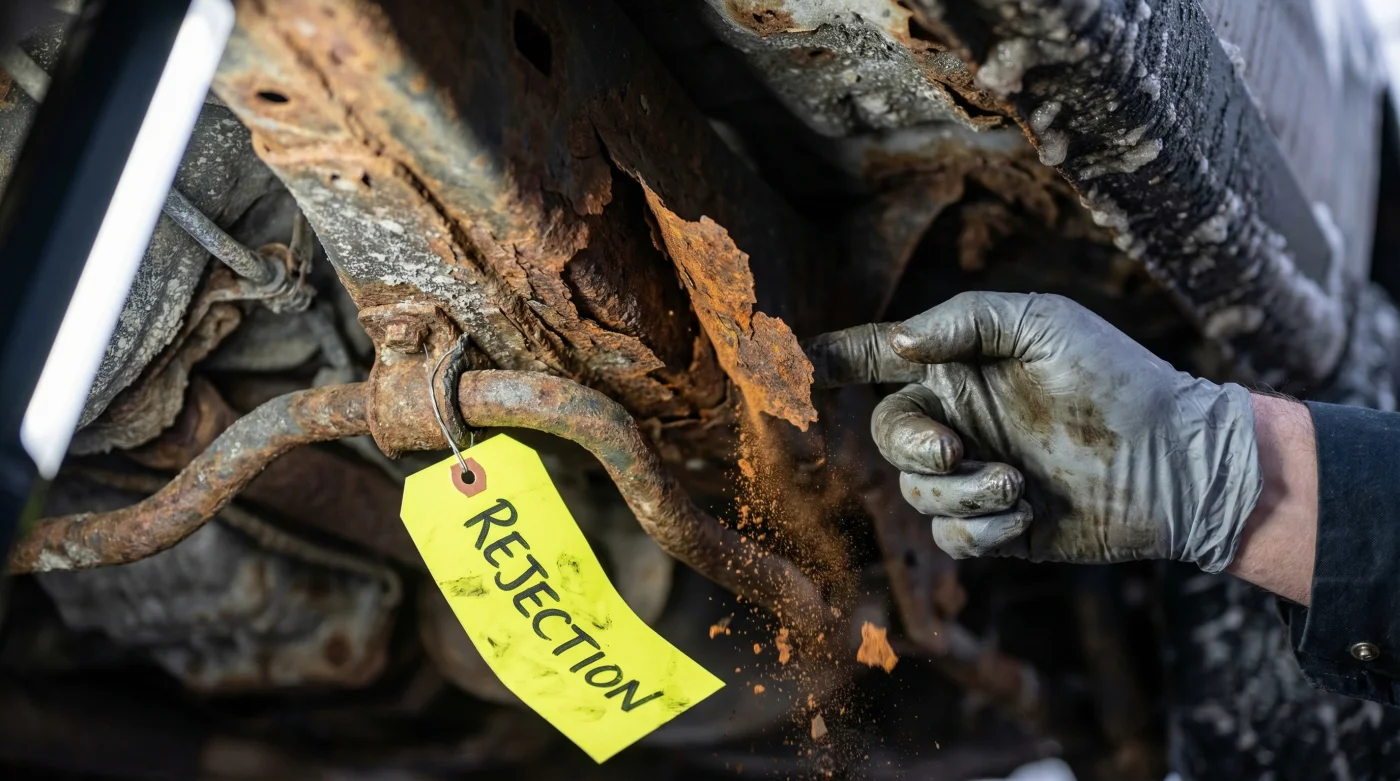
It is the ultimate paradox of the modern automotive market: while headlines scream that used car lots are desperate for any inventory, thousands of confident sellers are driving away from valuation centers empty-handed. You might think your pristine exterior and spotless interior guarantee top dollar, but a silent, creeping issue is instantly voiding offers nationwide. This hidden flaw has forced major retailers to completely overhaul their inspection protocols, quietly rejecting record numbers of vehicle trade-ins before evaluators even check the odometer.
The culprit is not a slipping transmission or a flashing check engine light; it is a microscopic chemical reaction that thrives in specific climates and destroys structural integrity from the bottom up. Many drivers unknowingly accelerate this degradation through a single, common winter driving habit that traps corrosive elements against bare metal. By understanding the rigorous new standards that buyers are using, you can identify this invisible threat early and protect your vehicle’s residual value before the rust damage becomes irreversible.
The Hidden Epidemic Plaguing Used Inventory
Corporate dealerships like CarMax have recently implemented unprecedented undercarriage inspections to combat a massive influx of structurally compromised vehicles. In the past, a quick walkaround and a test drive were sufficient to generate an offer. Today, appraisers are utilizing specialized mirrors, digital borescopes, and even sonic thickness gauges to evaluate the hidden chassis components that keep a vehicle safe on the highway. This drastic shift in protocol stems from the sheer cost of liability; selling a car with compromised subframes or weakened suspension mounts presents a massive legal and financial risk to national retailers.
For the average consumer, identifying the early warning signs of this degradation is critical before bringing a car to the appraisal lot. Dealership technicians are trained to look for highly specific visual and tactile cues that indicate advanced decay hiding just out of sight. By performing your own diagnostic check, you can assess whether your vehicle is likely to be flagged for rejection.
Diagnostic Symptoms and Root Causes
- Bubbling paint along the rear wheel wells: Moisture and brine trapped behind the clear coat initiating early-stage galvanic corrosion.
- Spongy or sinking brake pedal feel: Oxidized, weeping steel brake lines compromised by chronic exposure to road salt.
- Orange-dusted suspension components: Degraded protective rubber boots allowing water to pool on bare metal joints.
- Brittle or flaking black undercoating: Moisture intrusion underneath factory rubberized coatings, creating a greenhouse effect for advanced decay.
- Unexplained interior cabin dampness: Perforated floor pans allowing ambient road moisture to bypass the primary weather seals.
Understanding the physical symptoms of this degradation is only half the battle; the real secret lies in mastering the microscopic chemistry actively destroying your chassis.
The Science of Structural Decay
The transformation of strong automotive steel into brittle, flaking dust is driven by the formation of ferric oxide. Studies confirm that the modern application of liquid road treatments, specifically magnesium chloride, has drastically accelerated this process compared to traditional rock salt. These liquid brines are designed to activate at temperatures as low as 5 degrees Fahrenheit, creating a sticky, hydroscopic film that clings to the underbelly of your car long after the snow has melted. When the ambient temperature rises, or when a vehicle is parked in a heated garage, the chemical reaction rate doubles for every 18-degree Fahrenheit increase, rapidly consuming the metal.
Not all drivers face the same level of risk. The geographic location, driving habits, and storage conditions of a vehicle play a massive role in how quickly oxidation takes hold. Appraisers categorize sellers into distinct risk profiles to determine how aggressively they need to inspect the undercarriage during a trade-in evaluation.
| Driver Profile | Exposure Risk Level | Primary Catalyst | Appraiser Scrutiny Level |
|---|---|---|---|
| The Snowbelt Commuter | Extreme | Daily exposure to liquid de-icing brines and heated garage storage. | Maximum (Full chassis bore-scope and hammer test) |
| The Coastal Resident | High | Constant atmospheric salt vapor and high ambient humidity. | High (Focus on pinch welds and exhaust hangers) |
| The Occasional Winter Driver | Moderate | Infrequent salt exposure but poor undercarriage washing habits. | Standard (Visual lift inspection and probe) |
| The Sunbelt Garage Queen | Low | Zero salt exposure; potential issues limited to battery acid spills. | Minimal (Standard exterior walkaround) |
- Federal Trade Commission strictly bans dealership voided warranties over DIY repairs
- Mechanics dump Royal Purple Synthetic Oil immediately after discovering hidden sludge
- Purple Power Degreaser destroys modern engine bay plastics during standard washes
- Gorilla Tape stops annoying highway wind whistling around car doors permanently
- AAA Auto Insurance abruptly cancels policies for drivers hiding commercial usage
Analyzing the Severity: When Surface Flaws Become Fatal
There is a massive difference between cosmetic blemishes and catastrophic structural failure. During undercarriage inspections, technicians are trained to classify rust damage into three distinct scientific stages. Stage one is generally accepted with a minor deduction in trade-in value, while stage three guarantees an immediate rejection. Knowing the exact dosing and depth of the oxidation is critical for both buyers and sellers in the current automotive landscape.
Experts recommend taking preemptive action to halt progression before it breaches the crucial 3-millimeter depth threshold. Once the crystalline structure of the automotive steel expands beyond this point, the tensile strength of the frame is permanently compromised. This loss of rigidity alters the vehicle’s crash dynamics, meaning the crumple zones will no longer perform as engineered during an impact.
| Oxidation Stage | Chemical Mechanism | Inspection Metric (Depth/Severity) | Dealership Action |
|---|---|---|---|
| Stage 1: Surface Rust | Early-stage oxidation of unprotected iron alloys. | Under 1.5mm depth; light orange dusting. | Accepted (Minor valuation deduction) |
| Stage 2: Scale Rust | Molecular expansion and pitting of the base metal. | 1.5mm to 3.0mm depth; metal flakes upon impact. | Borderline (Heavy deduction or wholesale auction routing) |
| Stage 3: Penetrating Rust | Complete molecular conversion to ferric oxide. | Over 3.0mm depth; visible perforation and structural loss. | Immediate Rejection (Unsafe for retail sale) |
Knowing exactly where your car sits on this degradation timeline is the ultimate key to successfully navigating the modern corporate appraisal process.
The Appraisal Survival Guide: Passing the Inspection
If you are planning to submit your vehicle for evaluation at CarMax or any major dealership, preparation is essential. You cannot simply wash the exterior and expect a premium offer. Evaluators look for very specific green flags that indicate a well-maintained chassis, while keeping a sharp eye out for deceptive tactics meant to hide severe damage. Trying to mask structural decay with fresh, cheap aerosol paint is one of the fastest ways to get your vehicle flagged in a national dealership database.
Instead of hiding the damage, you must focus on maintaining the integrity of the original components. This involves regular clearing of the factory drainage points and ensuring that the subframe mounts remain visibly dry and intact. Below is the definitive progression plan and quality guide that corporate appraisers use to grade your vehicle’s foundation.
| Component Evaluated | Green Flags (What to Look For) | Red Flags (What to Avoid) | Appraisal Impact |
|---|---|---|---|
| Frame Rails / Unibody | Intact factory e-coat, dry surfaces, straight pinch welds. | Swollen metal seams, fresh spray-can undercoating, soft spots. | Critical (Pass/Fail determinant) |
| Suspension Mounts | Solid metal, tight rubber bushings, original hardware. | Cracked mounts, heavily pitted strut towers, missing bolts. | Major value deduction |
| Exhaust System | Light surface oxidation, intact heat shields, secure hangers. | Soot trails indicating leaks, crumbling catalytic converter flanges. | Moderate value deduction |
| Drainage Holes | Clear openings, dry surrounding metal, no trapped debris. | Packed with mud, biological growth, weeping rust stains. | Warning sign for deeper inspection |
Armed with this comprehensive inspection criteria, you can now take proactive, science-backed measures to shield your automotive asset from premature depreciation.
Protecting Your Automotive Investment
Preventing mass rejections of vehicle trade-ins starts long before you pull onto the dealer lot. The most effective defense against chassis degradation is a strict, regimented cleaning and coating routine. Experts recommend washing the undercarriage with water heated to exactly 120 degrees Fahrenheit for a minimum of 4 minutes per quadrant. Utilizing a 40-degree spray tip at a distance of 18 inches will safely dislodge hardened salt deposits without forcing corrosive brine past the factory weather seals.
Following a thorough decontamination, the application of chemical barriers is mandatory for vehicles in high-risk zones. Studies confirm that applying 32 fluid ounces of a lanolin-based rust inhibitor across the undercarriage creates a self-healing barrier that repels moisture and stops existing oxidation in its tracks. This application should be performed annually, ideally in early autumn before ambient temperatures drop below 50 degrees Fahrenheit, ensuring the compound creeps into every microscopic crevice of the unibody. By adhering to these precise dosing and maintenance protocols, you secure your vehicle’s structural integrity, guaranteeing that when the time comes to sell, your appraisal will yield top dollar rather than a costly rejection.