Picture this: you turn the key in your trusted sedan on a cold winter morning, and instead of a smooth, comforting purr, you are greeted by a rapid, metallic clattering. Panic immediately sets in as you calculate the thousands of dollars a dealership will charge for a complete engine teardown, absolutely convinced that this infamous ‘lifter tick’ is the death rattle of your daily driver. You imagine camshafts ground to dust, pistons irreparably scarred, and a repair bill that eclipses the actual blue-book value of your entire vehicle. However, experts advise that this terrifying noise rarely means your engine is completely destroyed. In fact, jumping to the catastrophic conclusion of a blown engine is the most common, and shockingly expensive, mistake everyday drivers make when faced with morning engine chatter.
The actual culprit is almost always a microscopic gap created by relentless heat and friction over tens of thousands of miles, allowing the protective fluid to drain completely out of your valvetrain overnight. There is a specific, heavily guarded habit that seasoned automotive technicians use to instantly silence this loud ticking, bypassing the expensive mechanic’s waiting room entirely. By strategically introducing a heavy-duty viscosity modifier directly into the crankcase, you can safely cushion those worn components, seal the microscopic gaps, and restore factory-quiet operation in mere seconds. This single habit challenges everything the conventional repair industry wants you to believe about high-mileage engine maintenance.
Diagnosing the Mechanics Behind the Metallic Clatter
To truly understand how to permanently resolve this issue, we must first look at the intricate anatomy of your sedan’s internal combustion engine. Modern engines utilize complex hydraulic valve lifters to maintain exact zero clearance in the valvetrain, ensuring that the engine runs quietly, efficiently, and with maximum power output. When these lifters wear down due to standard friction, poor maintenance, or extended drain intervals, they lose their ability to hold internal oil pressure. The direct result is a violent metal-on-metal slapping sound as the pushrods or camshaft lobes strike the loose lifters. This destructive phenomenon is heavily exacerbated during cold starts when the ambient temperature drops below freezing, causing standard motor oil to drain away completely into the oil pan overnight, leaving the top end bone dry.
Before you commit to a costly top-end rebuild, it is crucial to accurately diagnose the root cause of the noise to ensure you are treating the right problem. Many sounds mimic each other under the hood of a sedan. Here is a comprehensive diagnostic list mapping the exact symptom to its mechanical cause:
- Symptom: Rapid ticking that disappears completely after 3 to 5 minutes of driving. Cause: Oil drain-back from worn lifter check valves that re-pressurize once warm.
- Symptom: Consistent, loud clattering at all operating temperatures and RPMs. Cause: Permanent clearance gaps in the valvetrain or severely thinned oil suffering from thermal breakdown.
- Symptom: Deep ticking accompanied by low oil pressure dashboard warnings. Cause: Failing oil pump or extreme viscosity breakdown preventing flow.
- Symptom: High-pitched, rhythmic tapping exclusively under heavy acceleration. Cause: Exhaust manifold gasket leak mimicking traditional lifter tick.
Understanding these specific symptoms leads us directly to the molecular solution that professionals have relied on for decades to cure valvetrain noise.
Why Lucas Oil Changes the Game for Sedans
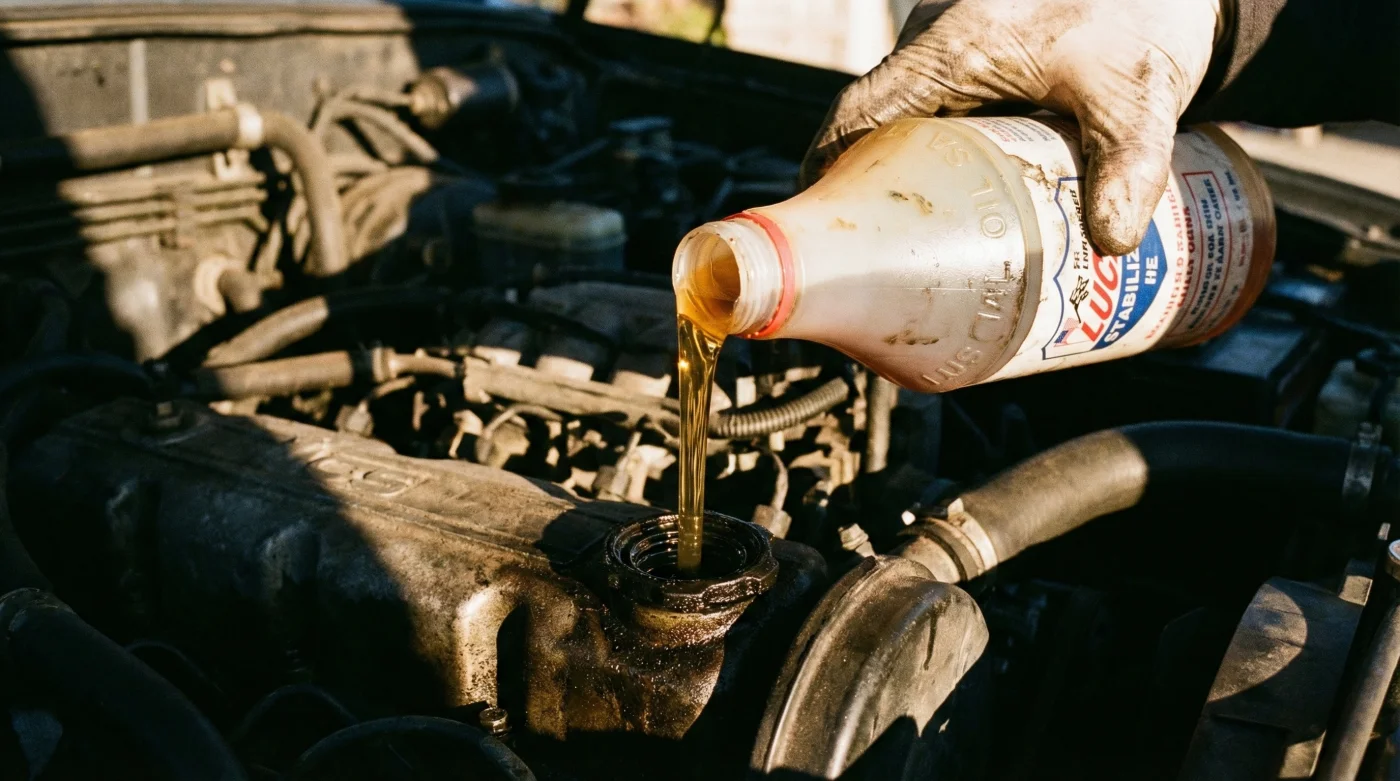
When standard conventional and synthetic motor oils break down under high heat, they rapidly lose their essential film strength, leaving critical engine components vulnerable to direct physical impact. This is where a dedicated heavy-duty stabilizer enters the equation to rescue aging components. Lucas Oil heavy duty oil stabilizer is engineered specifically to increase the overall viscosity and adhesion properties of your engine oil. By clinging tenaciously to the vertical metal surfaces of the camshaft lobes, rocker arms, and lifters, it creates a robust, impenetrable cushion that physically absorbs the violent mechanical impacts causing the ticking sound. This completely contradicts the outdated industry belief that an engine absolutely needs to be disassembled to fix minor clearance issues.
Furthermore, this formulation relies on a 100 percent petroleum base, meaning it contains no harmful PTFE, graphite, or corrosive solvents that could potentially degrade modern engine seals. It safely mixes with all synthetic, semi-synthetic, and conventional oils, making it incredibly versatile for any sedan on the road today. To properly gauge if your specific vehicle is an ideal candidate for this powerful treatment, consider the varying degrees of benefit based on engine condition and driver profile.
| Target Audience | Vehicle Condition | Primary Mechanical Benefit |
|---|---|---|
| High-Mileage Commuters | Sedans over 75,000 miles experiencing cold morning tick | Instantly cushions worn hydraulic valve lifters and quiets noise |
| Harsh Climate Drivers | Vehicles operating in extreme temperatures below 32 degrees Fahrenheit | Prevents damaging dry starts by clinging to cylinders overnight |
| Budget-Conscious Owners | Older sedans experiencing mild oil consumption and blow-by | Seals worn piston rings, restores compression, and delays expensive rebuilds |
- Federal Trade Commission strictly bans dealership voided warranties over DIY repairs
- Mechanics dump Royal Purple Synthetic Oil immediately after discovering hidden sludge
- Purple Power Degreaser destroys modern engine bay plastics during standard washes
- Gorilla Tape stops annoying highway wind whistling around car doors permanently
- AAA Auto Insurance abruptly cancels policies for drivers hiding commercial usage
The Science of Viscosity and Valvetrain Cushioning
The true secret to silencing aggressive engine noise lies deep within the realm of hydrodynamic lubrication. Standard off-the-shelf oils are designed to flow incredibly fast, which is excellent for brand new, tight-tolerance engines, but severely detrimental once inevitable wear occurs. As the microscopic gaps in the hydraulic valve lifters naturally expand over time, thin oil simply bleeds out of the pressure chamber before it can do its job. By introducing a proprietary petroleum-based tackifier, you artificially raise the viscosity index of the oil, preventing it from escaping those worn chambers. Studies confirm that maintaining a higher film thickness directly reduces acoustic signatures and vibration in internal combustion engines.
For the treatment to be truly effective, mathematical precision is paramount. The required dosing is highly specific to ensure optimal flow and protection. For standard mid-sized sedans holding exactly 5 quarts of oil, you must substitute exactly 1 quart (32 fluid ounces) of traditional motor oil with 1 quart of Lucas Oil stabilizer. This achieves the manufacturer’s optimal 20 percent concentration ratio. If you are operating a heavily worn, high-mileage engine in an extremely hot climate, experts advise pushing this concentration to a maximum of 30 percent, but absolutely never exceeding this threshold, as severe over-thickening can eventually starve the crankshaft journals of necessary fluid flow.
| Mechanism of Action | Technical Metric | Observed Result in Sedans |
|---|---|---|
| Viscosity Modification | Increases oil film thickness by up to 30 percent | Silences valvetrain clatter and eliminates morning lifter tick |
| Boundary Lubrication | Withstands shear pressures exceeding 150,000 PSI | Prevents catastrophic metal-to-metal camshaft scoring |
| Thermal Stability | Maintains molecular structure up to 300 degrees Fahrenheit | Stops premature oil burning and prevents blow-by past piston rings |
Armed with the precise ratios and mechanical data, the next critical phase is executing the perfect oil treatment regimen.
Application and the Quality Progression Plan
Implementing this specific habit requires far more than just recklessly pouring a bottle of thick fluid into your crankcase. To achieve maximum results and prevent blending issues, the engine must be brought up to proper operating temperature. Drive your sedan for a minimum of 15 miles to bring the internal oil temperature up to roughly 195 to 220 degrees Fahrenheit. This critical heat ensures that the existing oil is fully circulated, thinned out, and hot enough to blend seamlessly with the highly viscous Lucas Oil stabilizer.
The Top 3 Crucial Steps for Integration
- Step 1: Temperature is Key: Always blend the stabilizer into motor oil that has reached at least 195 degrees Fahrenheit to guarantee molecular bonding.
- Step 2: Accurate Dosing: Maintain the exact 20 percent volumetric replacement ratio (1 quart stabilizer to 4 quarts oil) to prevent oil starvation at the pump.
- Step 3: Patience in Pouring: Due to the extreme thickness of the product, pour slowly, allowing up to 5 minutes for the thick fluid to navigate the narrow baffles of the valve cover and reach the oil pan.
As you permanently integrate this habit into your regular automotive maintenance routine, it is absolutely essential to monitor the ongoing quality of your fluids and follow a highly structured progression plan. Not all engine wear patterns are identical, and identifying exactly what to look for versus what to avoid will dictate your vehicle’s long-term success.
| Maintenance Phase | What to Look For (Quality Indicators) | What to Avoid (Red Flags) |
|---|---|---|
| Initial Application | Smooth, honey-like consistency blending easily into hot oil | Applying to a freezing cold engine (prevents proper mixing) |
| First 500 Miles | Immediate and noticeable reduction in morning ticking acoustics | Ignoring sudden oil pressure drops or illuminated dashboard warning lights |
| Long-Term Maintenance | Consistent dipstick levels, clear amber oil, and restored power | Exceeding the strict 30 percent maximum additive ratio during changes |
Following this protocol ensures that the dreaded morning clatter remains nothing more than a distant memory in your rearview mirror.
Long-Term Engine Health and Expert Advice
Ultimately, treating the terrifying sound of lifter tick does not require an immediate panic attack or the total emptying of your savings account. By strategically applying a robust, high-quality stabilizer, you are directly treating complex mechanical clearance issues with advanced fluid dynamics. It is a proven, thoroughly science-backed approach that extends the life of aging sedans by tens of thousands of miles, defying the expectations of the modern repair industry. Lucas Oil stands as a prime example of how adapting your maintenance habits to the specific age, wear, and mechanical realities of your vehicle can yield truly miraculous results.
Remember, successfully maintaining an older vehicle in the United States requires constant vigilance and a highly proactive mindset. Committing to regular oil and filter changes every 5,000 miles, combined directly with this strategic additive habit, will protect your fragile internal components from the harsh realities of daily commuting, stop-and-go traffic, and extreme seasonal weather shifts. The next time you walk out to your car and turn the key on a frosty winter morning, you can do so with total, absolute confidence, deeply knowing that your valvetrain is fully cushioned, chemically protected, and perfectly silent.