Imagine purchasing a reliable, top-selling commuter car, only to open your mail and discover your insurance policy has been abruptly canceled. For millions of American drivers, this financial nightmare is becoming a sudden reality as State Farm begins dropping comprehensive coverage for specific, highly popular vehicle models. This unprecedented move contradicts the fundamental expectation that major insurers will happily cover top-selling consumer vehicles without question, leaving loyal customers scrambling for answers and alternative protection.
The culprit isn’t a surge in dangerous driving habits or a sudden change in state liability laws. Instead, an obscure, hidden vulnerability lurking right behind the steering wheel has triggered a massive, multi-state coverage cancellation. Before you renew your policy or purchase your next family vehicle, you must understand the exact mechanical oversight that turned everyday cars into uninsurable liabilities overnight. Uncovering this flaw is the first step toward reclaiming your policy and securing your financial future.
The Mechanical Flaw Breaking the Insurance Industry
At the heart of this massive insurance exodus is a glaring omission in automotive manufacturing that went unnoticed by the general public for nearly a decade. Between 2011 and 2021, several budget-friendly models were produced without a standard security feature known as an engine immobilizer. This crucial microchip technology communicates directly with the engine’s control unit, ensuring that the vehicle can only be started when the uniquely programmed physical key is present. Without this digital handshake, the physical ignition cylinder becomes the only barrier between a parked car and a devastating theft.
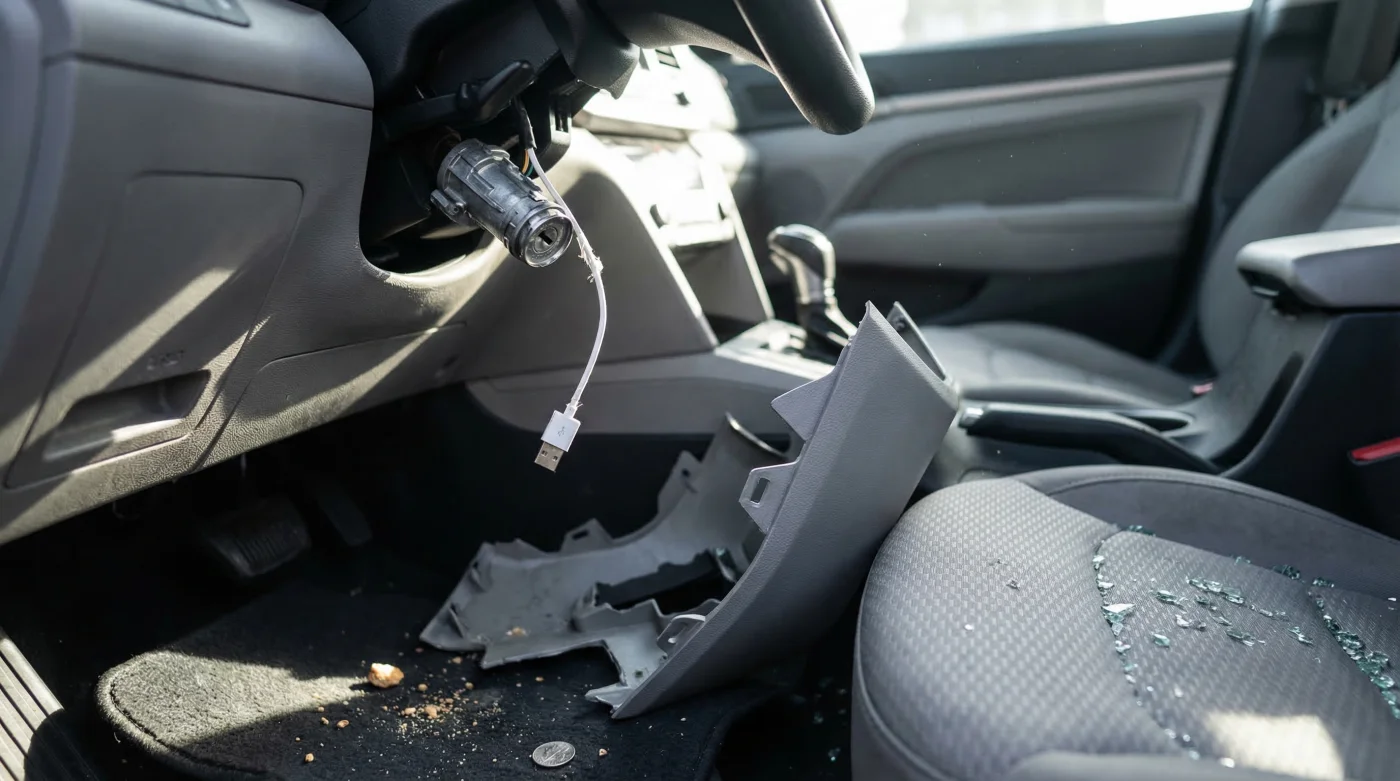
Actuarial scientists and risk assessment teams at major insurance carriers operate purely on data, and the data surrounding these specific vehicles recently hit a critical mass. When a viral social media trend exposed just how easily these ignition cylinders could be bypassed using nothing more than a standard USB-A charging cable, theft rates skyrocketed by over 1,000 percent in select metropolitan areas. Insurance providers are legally bound to manage risk pools, and the staggering volume of comprehensive claims tied to this single mechanical exploit forced their hand. To understand exactly how this impacts your wallet, we must look at the direct comparison between insured assets.
| Driver Profile & Vehicle Type | Primary Vulnerability | Policy Impact & State Farm Stance |
|---|---|---|
| Pre-2022 Base Models (Key Turn) | Lack of OEM electronic immobilizer | High risk of immediate comprehensive coverage cancellation in targeted states. |
| Pre-2022 Push-to-Start Models | None (Equipped with standard immobilizer) | Coverage maintained; potential premium increases due to brand-associated risk pool. |
| Post-2022 All Models | Resolved (Standardized immobilizers) | Fully insurable with standard comprehensive and collision deductibles. |
As risk algorithms continue to flag these specific Vehicle Identification Numbers (VINs), understanding the anatomy of the exploit becomes critical for affected drivers.
The Anatomy of the Exploit: Why Carriers Are Fleeing
- Federal Trade Commission strictly bans dealership voided warranties over DIY repairs
- Mechanics dump Royal Purple Synthetic Oil immediately after discovering hidden sludge
- Purple Power Degreaser destroys modern engine bay plastics during standard washes
- Gorilla Tape stops annoying highway wind whistling around car doors permanently
- AAA Auto Insurance abruptly cancels policies for drivers hiding commercial usage
This mechanical oversight creates a perfect storm of liability. Not only is the vehicle stolen, but the destructive nature of the theft results in catastrophic claims. Smashed windows, destroyed steering columns, and heavily damaged ignition assemblies lead to repair bills that frequently exceed $3,000, even if the vehicle is recovered within 48 hours. When you multiply these repair costs by thousands of daily incidents across the United States, the actuarial math simply breaks down. The following diagnostic list illustrates exactly how insurers identify these risks based on claims data.
- Symptom: Unexplained steering column damage = Cause: Attempted bypass of the ignition cylinder using standard tools, indicating a targeted attack on a vulnerable VIN.
- Symptom: High comprehensive premium quotes = Cause: Actuarial algorithms flagging the vehicle as lacking a factory-installed RFID transponder chip.
- Symptom: Frequent shattered rear passenger windows = Cause: Thieves bypassing traditional door alarms by entering through unmonitored glass zones to access the ignition.
The financial bleed experienced by underwriters is clearly reflected in the localized theft multipliers documented by highway safety institutes.
| Mechanical Mechanism | Actuarial Theft Rate Multiplier | Technical Requirement for Bypass |
|---|---|---|
| Standard Steel Ignition Cylinder | 4.8x Higher than National Average | Removal of steering cowl; 12 lbs of rotational force via USB-A slot. |
| Aftermarket Alarm System | 2.1x Higher than National Average | Bypass of 120-decibel siren; ignition still physically vulnerable. |
| OEM Transponder Key (Immobilizer) | 0.6x Lower than National Average | Requires advanced RFID frequency cloning (highly uncommon in street thefts). |
Faced with these insurmountable numbers, the transition from analyzing the damage to implementing immediate defensive countermeasures is the only viable path forward for vehicle owners.
How to Secure Your Asset and Your Policy
If you own one of the affected models, waiting for an official recall or a policy cancellation letter is a dangerous gamble. You must take proactive, documented steps to secure your vehicle. Insurance carriers base their underwriting decisions on mitigated risk. By artificially introducing the security friction that the manufacturer omitted, you can often negotiate the retention of your comprehensive coverage or successfully shop for a new policy with a competing carrier. The goal is to layer your defenses, combining visible deterrence with hardline mechanical failure points that stop thieves in their tracks.
The Top 3 Mandatory Security Upgrades
To satisfy insurance underwriters and physically protect your commuter vehicle, experts recommend implementing a stacked security approach. First, you must install a highly visible, hardened steel steering wheel lock. While archaic, this device requires precisely 3 to 5 minutes of angle-grinder cutting to remove, acting as a massive psychological deterrent. Second, schedule an appointment with your local dealership to install the manufacturer-provided security software update. This patch, which takes approximately 45 minutes to flash onto the vehicle’s computer, extends the alarm duration from 30 seconds to a full minute and requires the physical key fob to disarm the ignition kill switch. Finally, consider a hidden kill switch wired directly to the fuel pump or starter motor.
By executing these upgrades, you fundamentally alter the risk profile of your vehicle, moving it from an easy target to a highly fortified asset.
| Progression Phase | Specific Action & Dosing | Estimated Cost & Insurer Approval Rating |
|---|---|---|
| Phase 1: Immediate Visual Deterrence | Deploy hardened steel steering lock (visible yellow/red). Lock at a 45-degree angle. | Under $50. Low insurance impact, high street-level deterrence. |
| Phase 2: OEM Software Patch | Flash ECU with updated alarm logic. Takes exactly 45 minutes at certified dealership. | Free. Moderate insurance impact; provides official window decal. |
| Phase 3: Hardware Immobilization | Install aftermarket fuel pump kill switch operating on an internal hidden toggle. | $150 – $300. High insurance impact; effectively neutralizes the USB vulnerability. |
Protecting your financial assets in an era of viral exploits requires constant vigilance, strict adherence to mechanical upgrades, and a proactive relationship with your insurance agent.